





Partnering to Support Guatemala’s Coffee Farmers
TechnoServe partners with the Canadian Trade Facilitation Office and coffee chain Tim Hortons to help small coffee growers in Guatemala.
TechnoServe partners with the Canadian Trade Facilitation Office and coffee chain Tim Hortons to help small coffee growers in Guatemala.
TechnoServe’s Cosechemos Más Café (Better Coffee Harvest) project, in partnership with the U.S. Agency for International Development (USAID), the J.M. Smucker Company, and the PIMCO Foundation, seeks to boost the productivity and the quality of the coffee produced by smallholder farmers of El Salvador and…
The Impulsa Tu Empresa (“Boost Your Business”) program is a business accelerator program, which aims to help 850 small and growing businesses across Guatemala, Honduras, El Salvador, Nicaragua and Burkina Faso. With support from the Argidius Foundation, the Multilateral Investment Fund, the Walmart Foundation, the Citi Foundation and the PIMCO…
Smallholder Honduran coffee farmers are benefiting from agronomy training and direct relationships with buyers.

With the financial support from Gevalia and the Kraft Heinz Company, TechnoServe worked with smallholder coffee farmers in the regions of El Paraíso and Intibucá to increase the quantity and improve the quality of Honduran coffee in a way that creates additional value for smallholder farmers at the origin of the value chain.
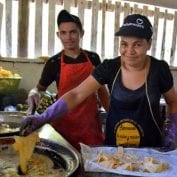
A plantain business in Honduras demonstrates how women's inclusion can translate into higher sales, expanded markets and a more diverse talent pool.
Over 2,900 coffee farmers are benefiting from a gender-balanced TechnoServe training team in Nicaragua.
When it comes to protecting both smallholder incomes and the larger global food supply against climate-induced shocks, there are three important factors to consider.
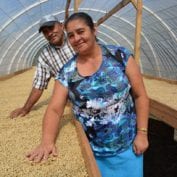
The four-year Sustainable Agricultural Improvement project (Mejoramiento Agrícola Sostenible, or MAS, in Spanish) targeted small and medium-scale coffee and bean farmers in the central region of Honduras. Funded by the U.S. Department of Agriculture’s Food for Progress program, the project supported the Honduran government's national development plan and agriculture sector strategy.
