Help struggling farmers and small business owners lift themselves out of poverty.

Entrepreneurship & SMEs
There are more than 300 million small and mid-sized enterprises (SMEs) in developing countries, which contribute up to 40% of national GDP. They are operated and often founded by women and men aiming to provide greater life opportunities for themselves, their families, and their communities.
How Small Businesses Help Economies in Developing Countries
Led by small business owners, these SMEs promote inclusive development, serving as the main providers of jobs for many low-income individuals; the main suppliers of basic goods and services in poor or isolated communities. Often, they serve as the best market alternative for smallholder farmers. Entrepreneurship also provides critical opportunities for women and youth to earn their own incomes.
Despite its great importance, the SME sector in the developing world faces enormous challenges to unleashing its full potential.
Lack of adequate access to:
- Talent
- Markets
- Financial services
- Challenging operating environments
have prevented these businesses from growing, from achieving optimal productivity, and from contributing strongly to their local and national economies.

Our Work With Small Business Owners & Entrepreneurship
Entrepreneurs and their enterprises come in different shapes and sizes. TechnoServe has partnered with large corporations, multilateral institutions, and governments to provide life-changing support in a variety of settings.
Consider the following examples:
- TechnoServe promotes youth economic opportunity by helping young entrepreneurs in rural Africa to start new businesses
- We support established enterprises to accelerate their growth and impact in Latin America
- We work with food processors in Africa to expand their business
- TechnoServe helps small business owners source more products from small-scale farmers
- Our work helps small shop owners in the micro-retail sector to improve their businesses and profits.
Our successful entrepreneurship portfolio is based on four key pillars:
Careful adaptation for Small Business Owners
We recognize that entrepreneurs face different opportunities and challenges depending on a variety of dimensions including their particular context, gender, age, stage in their growth cycle and personal appetite for growth. Therefore, TechnoServe carefully adapts our methodology to better serve each particular community of entrepreneurs.
Market-driven approach for small business owners
We support entrepreneurs to find markets with untapped demand opportunities to build their growth strategies and encourage them to test and capture these opportunities as quickly and affordably as possible.
Effective capacity development
Recognizing that the entrepreneurs we support are busy, hardworking individuals, we aim to efficiently provide the most relevant and effective trainings. TechnoServe is a leader in reducing poverty because our programs help small business owners worldwide navigate organizational challenges by themselves in the future.
Rigorous measurement and continuous learning
We currently implement nearly 30 enterprise development programs in more than 20 countries, which provide an excellent base of data and learning. By adhering to rigorous measurement, we strive to collectively learn and improve each program to be more effective and efficient.
Featured Entrepreneurship Projects
USAID AFFORD: Fighting Malnutrition through Large-Scale Food Fortification
This global Feed the Future activity is working with the private sector and other stakeholders to improve nutrition, health, and economic growth by supporting large-scale food fortification. Context Diets lacking essential nutrients like vitamin A, iron, folic acid, zinc, and iodine threaten the health and well-being…
FED Zambia: Food processors creating employment, boosting nutrition, and generating economic opportunities for women in Zambia
FED Zambia: Food processors creating employment, boosting nutrition, and generating economic opportunities for women in Zambia Context: Food processing companies that mill flour, pasteurize dairy products, press cooking oils, and make other food products are vital…
Prosper Cashew: Strengthening Cashew Processing in Côte d’Ivoire, Ghana, and Nigeria
Prosper Cashew: Strengthening Cashew Processing in Côte d’Ivoire, Ghana, and Nigeria Prosper Cashew – Context: The global cashew market is a $12 billion industry and has grown almost seven times over the last four decades in terms of volume.
Supporting Micro-Retailer Survival During COVID-19
TechnoServe and the Mastercard Foundation recently launched the Micro-Enterprises Strengthened for Pandemic Adaptation and Resilience in Kenya (mSPARK) program, a one-year partnership to support 28,000 entrepreneurs as they navigate the COVID-19 pandemic and ultimately move toward economic recovery.

Creating job opportunities in South African mining communities
TechnoServe is collaborating with Anglo American on providing enterprise development training to youth in response to South Africa's national priority of reducing unemployment and poverty.

Supporting Young Entrepreneurs in South Africa (Box Shop Program)
This initiative offers a unique approach to supporting young entrepreneurs by creating several Box Shop stores in South African townships. This effort will support 240 young entrepreneurs to bring their products to store shelves and encourage more support for buying and building local brands.

Who Benefits
Entrepreneurs
Training entrepreneurs in business skills and connecting them to better financing and markets helps them earn reliable incomes for the long term. In 2022, TechnoServe helped increase revenue of more than 452,136 people and businesses around the world, 80% of which were women.
Local consumers
Small businesses provide important goods and services to underserved populations in the developing world. Small shops, for instance, supply the vast majority of consumer goods in many countries; and many enterprises meet critical needs like health care in remote areas. When small businesses run better and are more responsive to consumer needs, the whole community benefits.
Local workers
SMEs account for about 70% of all jobs in developing countries. TechnoServe works to boost this engine of employment, helping businesses to improve their operations and profits and to create new jobs. In particular, these businesses can offer important employment opportunities for women and youth.
Women and youth
Entrepreneurship provides women and young people in particular with opportunities to earn their own incomes. This helps women achieve greater financial independence, often improving their decision-making power within families and increasing household spending on needs like education and health. For the millions of youth in developing countries who may struggle to find formal jobs, obtaining the skills to start and expand their own business is not just critical to their own well-being but to their countries’ economic and political security.
Featured Entrepreneurship Blog Posts
8 Eco-Entrepreneurs Fighting Plastic Pollution in India

In Mozambique, a Woman Entrepreneur is Baking for a Brighter Future

Thirteen days, 8,246 miles, a Life-Changing Trip. TechnoServe’s Ripple Effect.

Meet 4 Women who are Changing the Game on Women’s Economic Opportunity
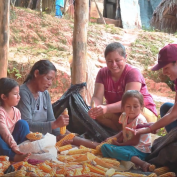
Empowering Women and Communities Through Inclusive Business Practices
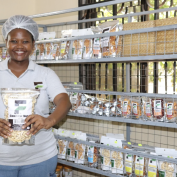
Green Flags: These Women-led Startups are Making a Sustainable Impact

New Jobs Created in 2023

Dreams Come True: Entrepreneurs Reach Their Potential in Chile
Small business owners in Chile
Learn how we help these entrepreneurs build the skills and confidence they need to grow their businesses.
