


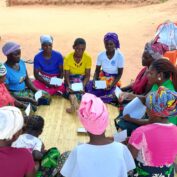
Women Farmers in Mozambique: From Bean Pastries to Bountiful Harvests
Learn how a Mozambican farmer turned her harvest into a thriving business and is now reshaping her community, one bean pastry at a time.
Learn how a Mozambican farmer turned her harvest into a thriving business and is now reshaping her community, one bean pastry at a time.
Seeing ambitious goals come to life through smart, context-driven solutions with the potential to transform the lives of women, that’s worth celebrating. The Women IN Business (WIN) program—a market systems development initiative implemented by TechnoServe and funded by the Embassy of Sweden in Mozambique— has done just that. In…
In international development, visions for programs often look great on paper, with specific activities, targets, and budgets. But when these plans meet the reality of underfunded, complex government entities, they can quickly fall apart. To create lasting impact, initiatives must move beyond abstract goals and ground themselves in the…
Global Coffee Director Paul Stewart shares three key takeaways from TechnoServe and Sustainable Food Lab's new report on how adopting regenerative practices affects coffee-farming households' ability to earn a living income.

Teresa Morgado, 47, relies on her farm in Nampula Province, Mozambique, to support her family. Like many women farmers in Mozambique, she managed her production for years without a defined plan, selling what she harvested and buying what she needed. That is, until a radio soap opera showed her a different way of working.

National Coffee Day 2026 falls on Tuesday, September 29. It is celebrated in the United States on the same date every year. This year, coffee lovers can learn where coffee beans come from and how your daily cup of brew can transform the lives and livelihoods of smallholder coffee farmers around the world.
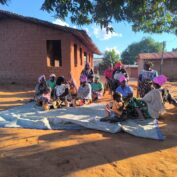
Research, guidance, and tools from WIN 2.0 offer practical lessons for supporting financial service providers to reach women in rural Mozambique.
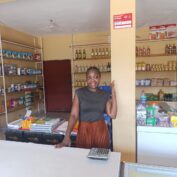
Learn how a digital payment service is helping women entrepreneurs in Mozambique take control of their finances and their futures.
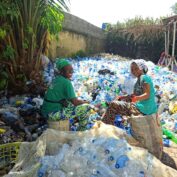
Discover the systemic solutions needed to transform local livelihoods, meet rising domestic demand, and build a circular economy.
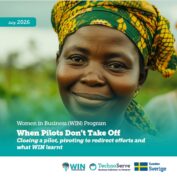
This study is one of a five- part series of learning products and tools designed to help companies to be more gender inclusive. This brief focuses on the learnings from a 12-month pilot, where four clear barriers were identified to successful implementation and the team eventually pivoted to redirect…
