


Regenerative Coffee Production and the Living Income Gap: 3 Takeaways
Table of Contents
- Introduction
- Takeaway 1: At baseline, most coffee farmers are falling far short of living incomes, leaving a wide living income gap
- Takeaway 2: Regenerative practice adoption can make a huge difference to the living income gap
- Takeaway 3: The intersection of prices and practice adoption makes a big difference to the living income gap
- Regenerative practices deliver living incomes in Kenya
Global Coffee Director Paul Stewart shares three key takeaways from TechnoServe and Sustainable Food Lab's new report on how adopting regenerative practices affects coffee-farming households' ability to earn a living income.
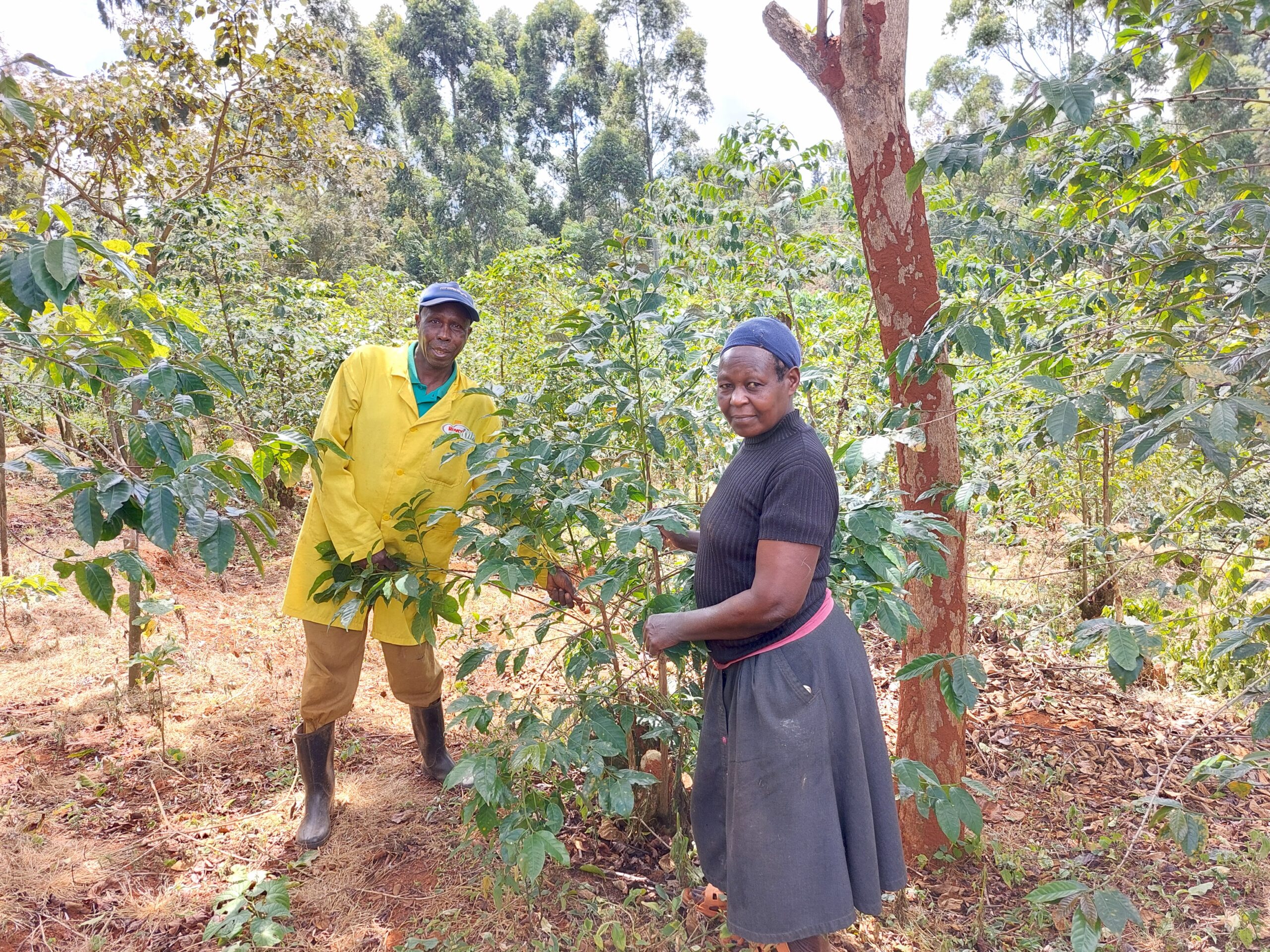
In 2017, Lucy Wacuka and James Kinyua Kamanjiri hoped to harvest 1,000 kilograms of coffee from their small farm in Kenya. They invested time, money, and hope in their coffee crop. But a fungal infection called coffee berry disease swept through the farm, and in the end, they harvested just 100 kilograms—not enough even to cover their costs.
For coffee farmers like Lucy and James, failed harvests–or even poor yields in a typical year–are not just numbers on paper. They represent meals skipped, medical care postponed, school bills left unpaid, and farm investments never made.
That idea motivated a new study by TechnoServe and the Sustainable Food Lab. Fostering Resilience: Regenerative Agriculture and Living Income modeled the living income gap—the difference between what a household earns and the income needed for a decent standard of living in that specific place. It modeled the gap as it exists for coffee-farming households today and under a scenario in which farmers adopt regenerative production practices.
To do this, the study compared the local living income benchmarks with all of a typical household’s income sources: not just what they earn from coffee, but also what they earn from other crops and off-farm work.
The analysis looked at seven key coffee origins: Honduras, Kenya, Uganda, Ethiopia, Vietnam, Peru, and Indonesia. It focused on two questions:
- How big is the living income gap in a typical year for the typical smallholder farming household in each country?
- What happens to that gap when farmers adopt regenerative practices?
Takeaway 1: At baseline, most coffee farmers are falling far short of living incomes, leaving a wide living income gap
The first thing that jumps out is that in all seven countries, household incomes fall below the respective living income benchmark, using 2023 prices as the baseline.
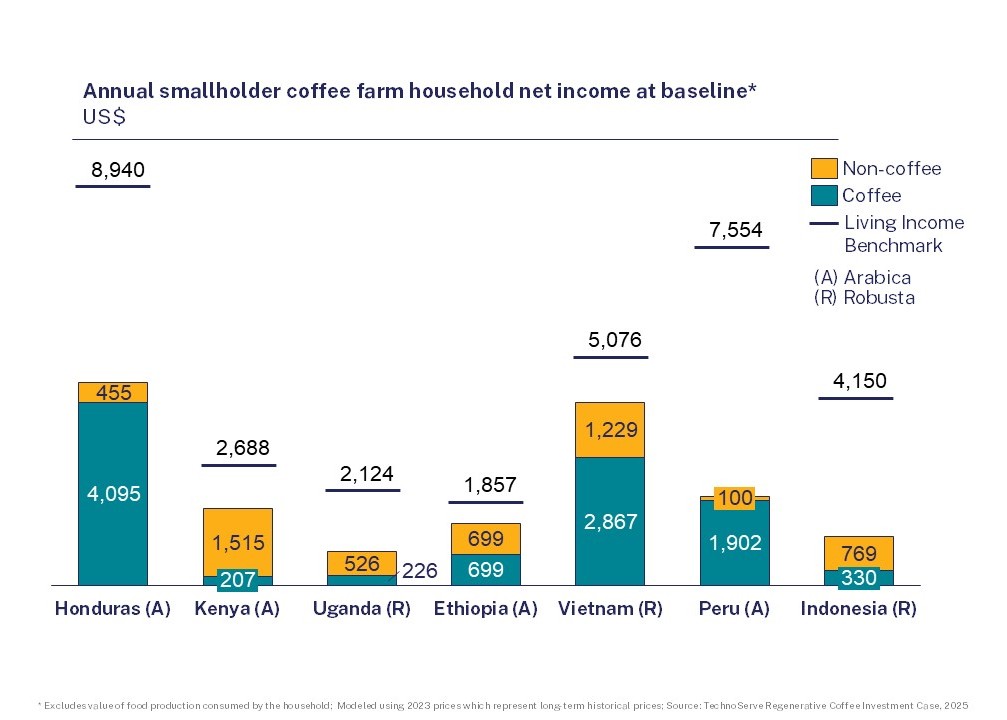
The gap is narrowest in Vietnam, where the typical coffee farming household earns 81% of the living income benchmark. This relatively small gap is driven by the high yields many smallholders achieve there.
The largest gap exists in Peru and Indonesia, where households earn only about a quarter of the living income benchmark. In Uganda, households earn about one-third of the benchmark.
There are several reasons for this. In Peru, high production costs, particularly labor costs, cut significantly into the income that coffee farmers take home. In Indonesia and Uganda, low productivity from typically high-yield Robusta coffee trees is the primary culprit; in Uganda, this is compounded by an average coffee farm size of just 0.5 hectares, which further limits the volume of coffee harvested.
The living income analysis also shows just how differently coffee factors into household incomes across countries. In Peru, coffee accounts for 95% of a coffee-farming household’s total income. In Kenya, it accounts for just 12%.
Takeaway 2: Regenerative practice adoption can make a huge difference to the living income gap
Since much of the living income gap is driven by low productivity, it stands to reason that the adoption of yield-enhancing, regenerative practices is a promising way to close those gaps. That is exactly what the analysis found.
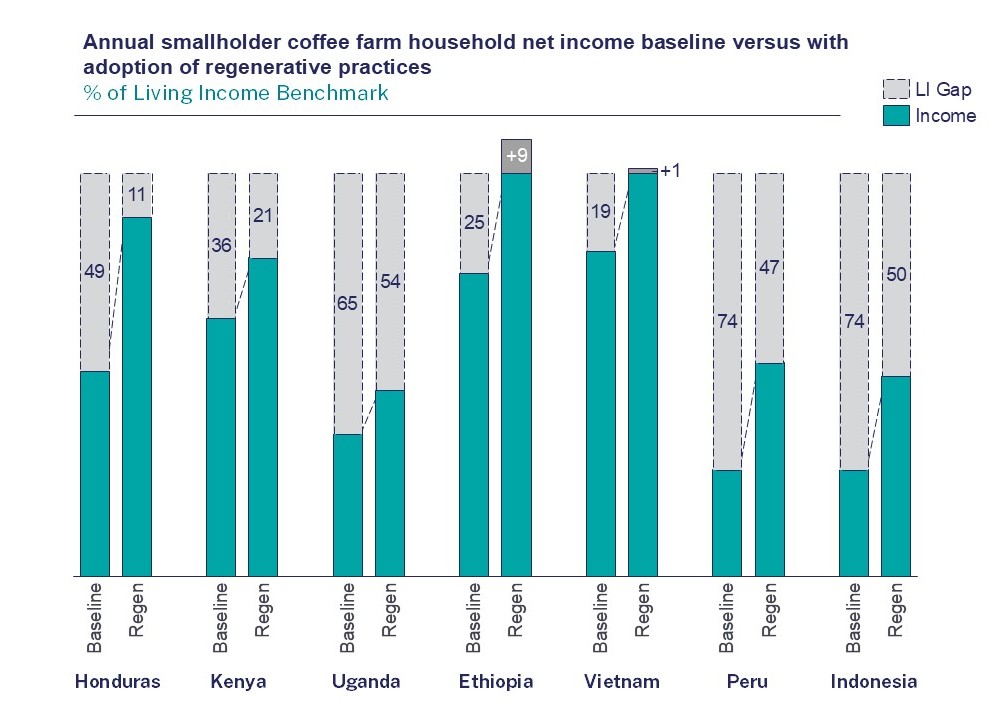
The analysis drew on data from the 2025 Regenerative Coffee Investment Case, which showed that adopting regenerative practices significantly increases coffee farm income by improving yields. In Indonesia and Kenya, for example, farm incomes are expected to increase 166% and 196%, respectively. In Peru and Uganda, farm incomes could be expected to double. Among the seven countries included in the new analysis, the most modest increase in farm income was modeled in Vietnam at 36%.
The new analysis finds that these improvements in farm income would have a significant impact on the living income gap.
Beyond increasing income, regenerative practices also build resilience to production shocks. The Regenerative Coffee Investment Case found that regenerative practices cut extreme-weather losses by 10–40%, allowing farmers to avoid disastrous harvests like the one that affected James and Lucy.
Taken together, the evidence is clear that helping farmers adopt regenerative practices makes a material difference in their quality of life, both in typical production years and in the face of climate disruptions.
Takeaway 3: The intersection of prices and practice adoption makes a big difference to the living income gap
All of this modeling assumes that the prices paid to farmers remain the same. But coffee prices are always in flux. Global coffee prices change depending on supply and demand, which trickles down to farmers. For example, while the analysis was based on 2023 data, global coffee prices have reached historic highs since then: today, the commodity price of coffee is roughly double what it was in August 2023. Meanwhile, changes to the supply chains within each country also impact what farmers are paid.
To understand how price changes would affect these results, we modeled the living income gap under different farmgate price scenarios, assuming farmers adopt regenerative practices. A 25% increase in farmgate prices would eliminate the living income gap in Honduras and significantly narrow it in Kenya and Peru.
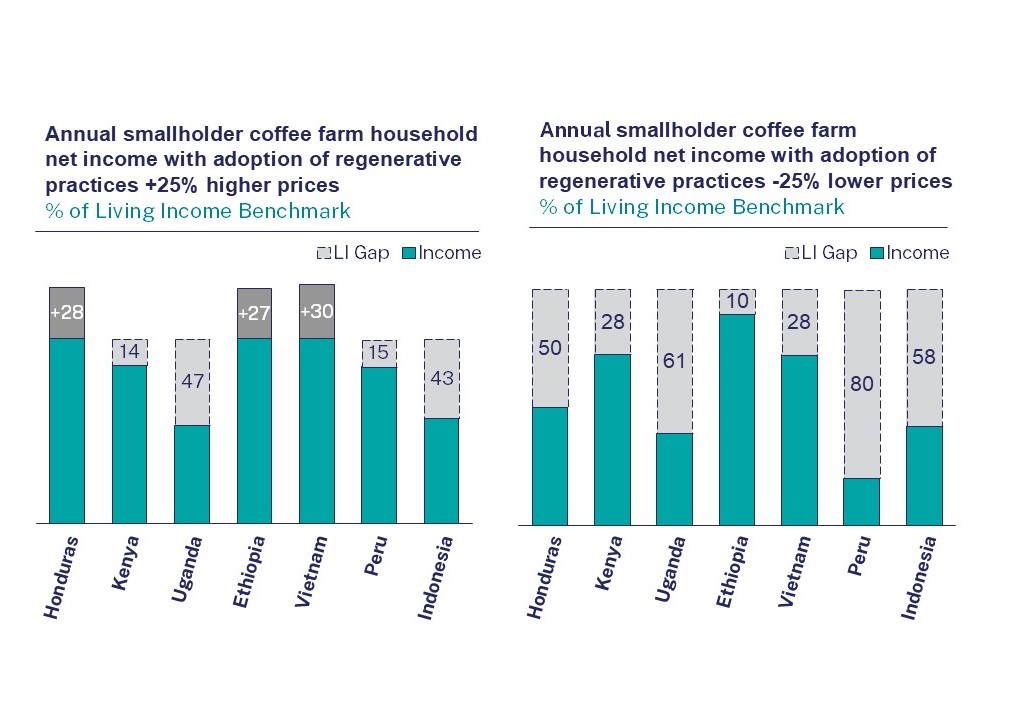
On the other hand, a 25% price decrease largely erases the gains from regenerative farming, returning most countries to the baseline gaps or worse. Price matters most where production costs are high; Peru is the clearest case.
While the prevailing global coffee price is driven by market forces outside any one company’s control, procurement practices and investments can increase the prices paid to farmers. More efficient supply chains, for example, can ensure that smallholders take home a higher share of the export price. In Honduras, for example, TechnoServe supported farmers near the Río Plátano Biosphere Reserve to aggregate their production and sell directly to one of the country’s leading coffee exporters; as a result, their coffee earnings increased by 66%.
Farmers also benefit from sourcing that rewards quality with a price premium, further encouraging the adoption of regenerative practices.
Regenerative practices deliver living incomes in Kenya
For James and Lucy, regenerative farming practices delivered the kind of impact the new study highlights. Through training, they learned and adopted practices like mulching, composting, and pruning, and they began using a plant nutrition regimen that reduced their input use while lowering the risk of future coffee berry disease outbreaks. A year after their disastrous harvest, they produced 1,160 kilograms of coffee cherry.
By 2023, their production had grown to 2,000 kilograms, yielding $1,300 net coffee income. This income, alongside their off-farm income, enabled them to earn a living income. Rather than foregoing essentials, the couple finished their house, paid school fees, and invested in vegetable production.
Around the world, regenerative production can play an important role in helping millions of smallholder farmers like James and Lucy earn a living income.

A Different Way to Make A Difference.
Discover how TechnoServe bridges the gap between “thinking big” and practical business solutions that help hardworking people move from poverty to prosperity around the world.

