


What Is Regenerative Agriculture? Core Principles and the Business Case for Smallholder Farmers
Table of Contents
- Introduction
- What Is Regenerative Agriculture? A Working Definition
- Regenerative vs. Sustainable vs. Organic Agriculture
- The Origins of Regenerative Agriculture
- The 5 Core Principles of Regenerative Agriculture
- 1. Minimize Soil Disturbance (No-Till and Reduced Tillage)
- 2. Keep Soil Covered (Cover Crops and Mulching)
- 3. Maintain Living Roots Year-Round
- 4. Maximize Biodiversity Through Crop Rotation and Agroforestry
- 5. Integrate Livestock and Managed Grazing
- Three Types of Regenerative Agriculture in Practice
- 1. Regenerative Cropping Systems
- 2. Agroforestry and Shade-Grown Systems
- 3. Managed Grazing and Silvopasture
- How Are Regenerative Agriculture Outcomes Measured?
- Soil Health
- Climate Impact
- Biodiversity and Ecosystem Health
- Water Cycle Impacts
- Socio-Economic Outcomes
- Why Regenerative Agriculture Matters Now
- Climate Resilience: Carbon, Water, and Soil
- Food Security in a Changing Climate
- The Limits of Industrial Agriculture
- The Business Case: Why Regenerative Agriculture Pays for Smallholder Farmers
- The Regenerative Coffee Investment Case: 62% Income Growth
- Yields, Resilience, and Long-Term Profitability
- Partnership in Practice: Coffee, Cocoa, and Global Supply Chains
- Empowering Women Farmers Through Regenerative Practices
- Frequently Asked Questions About Regenerative Agriculture
What is regenerative agriculture? Explore the core principles, business case, and sustainable techniques that help farmers improve their land and incomes.
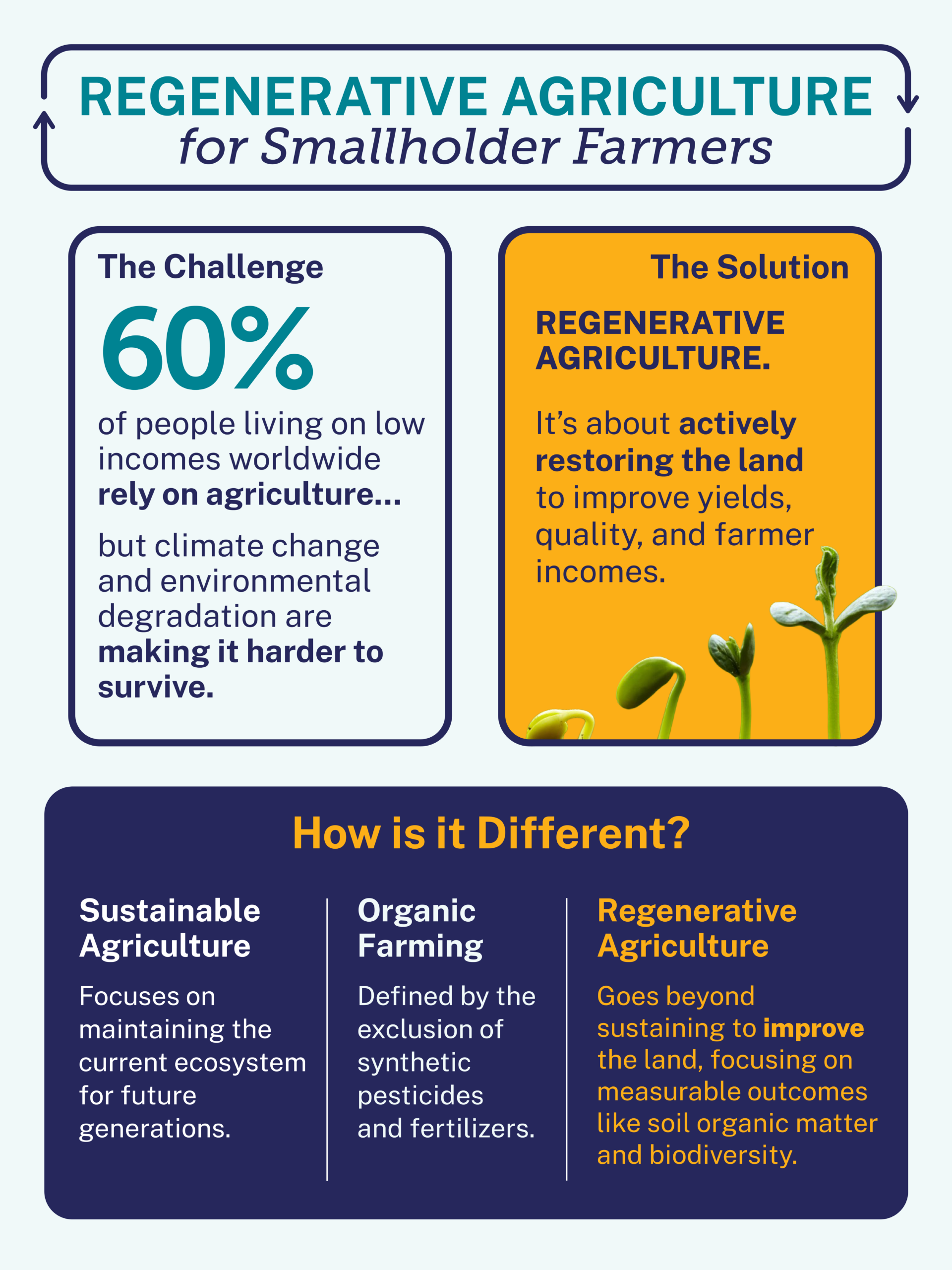
Roughly 60% of people with low incomes around the world make their living in agriculture. But increasingly, climate change, natural disasters, and environmental degradation are making it harder to earn a good living from the land.
Regenerative agriculture is an environmentally friendly farming approach that often improves farm health and reduces greenhouse gas emissions. But it can also be a good way to improve crop productivity and quality. This last point is essential for smallholder farmers, who need their farms to do well in order to support their families. Thousands of smallholder farmers around the world who have worked with TechnoServe have shown that there doesn’t have to be a tradeoff between farming that benefits the environment and farming that benefits their incomes.
What Is Regenerative Agriculture? A Working Definition
Regenerative agriculture involves using farming methods that not only avoid harming the environment but also actively regenerate the local ecosystem. It applies farming techniques that can improve soil health and the water cycle, increase biodiversity, and strengthen climate change resilience.
Regenerative vs. Sustainable vs. Organic Agriculture
While these terms are often used interchangeably, they involve different core goals:
- Sustainable Agriculture: Aims to maintain the current state of the environment and prevent further damage (the “do no harm” approach).
- Organic Farming: Defined primarily by what it excludes (synthetic pesticides and fertilizers).
- Regenerative Agriculture: Goes beyond “sustaining” to improve the land. It focuses on measurable outcomes, such as increased soil organic matter and biodiversity, often allowing for a flexible transition period for farmers moving away from industrial methods.
The Origins of Regenerative Agriculture
While the term was popularized in the 1980s by the Rodale Institute, the practices themselves are rooted in centuries of Indigenous wisdom. Concepts like “regenerative organic” were developed to signal a high standard of holistic care that treats the farm as a living organism rather than a factory.
The 5 Core Principles of Regenerative Agriculture
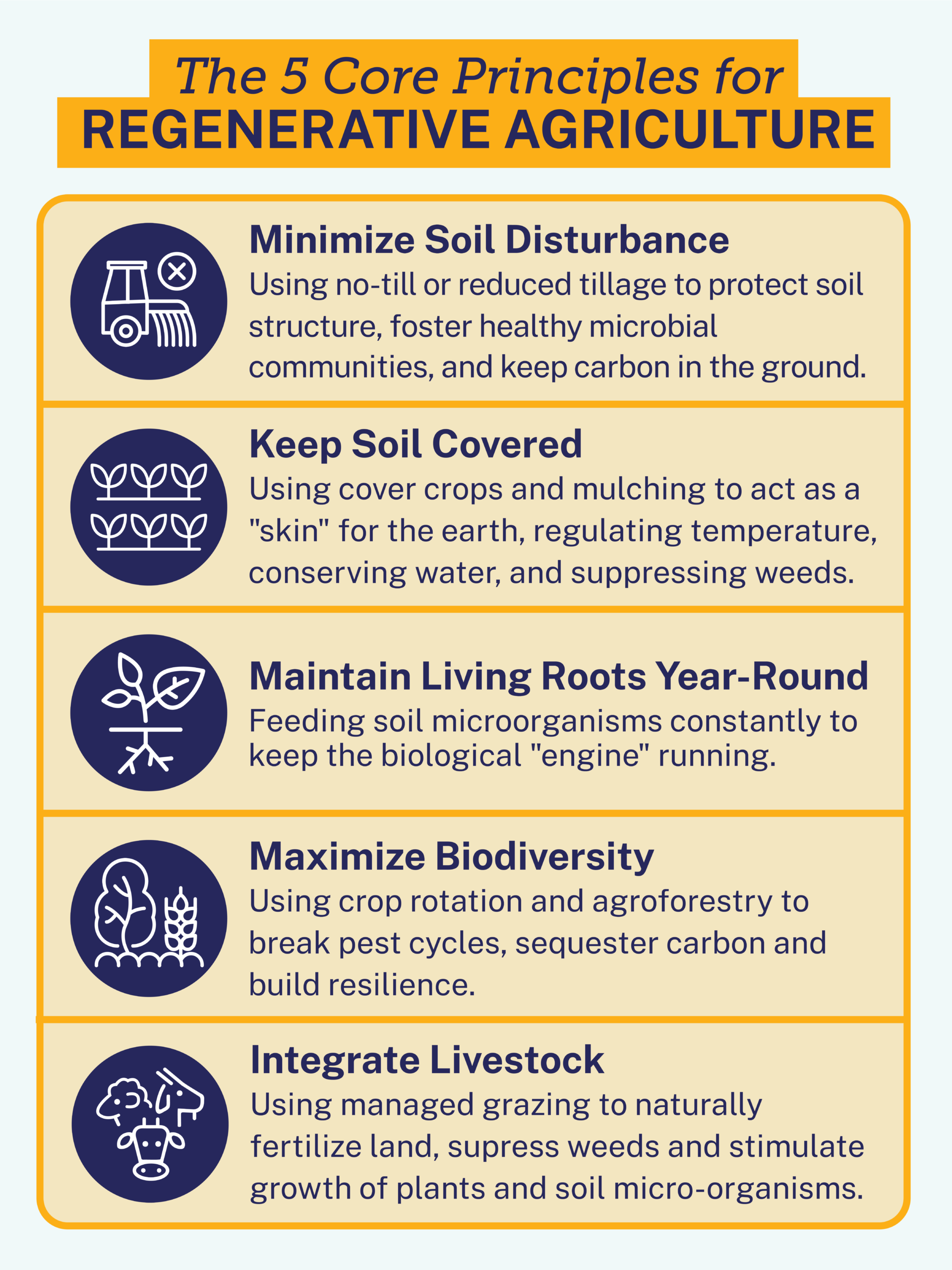
1. Minimize Soil Disturbance (No-Till and Reduced Tillage)
Traditional plowing (tillage) tends to damage the natural structure of the soil, affecting its ability to retain water, facilitate root growth, and withstand erosion. It also disrupts the balance of soil micro-organisms, leading to loss of organic matter and other problems. By adopting no-till or reduced-tillage methods, farmers prevent erosion and keep carbon trapped in the ground.
2. Keep Soil Covered (Cover Crops and Mulching)
Agriculture depends on a healthy top soil. If left bare, that soil can be stripped by wind or water erosion. Bare topsoil can also hurt soil microbes and accelerate the loss of carbon. But cover crops and mulching can provide a “skin” for the earth, protecting the topsoil, regulating temperature, and suppressing weeds naturally.
3. Maintain Living Roots Year-Round
Living roots provide a constant food source for soil microorganisms. By ensuring something is always growing, farmers maintain the biological “engine” of the soil, which helps sequester, or trap, carbon in the soil. When crops and cover crops are rotated, the soil is also exposed to different root architectures and functions, which greatly improves soil structure, water movement, and access to nutrients.
4. Maximize Biodiversity Through Crop Rotation and Agroforestry
Monocultures (growing a single crop) invite pests and deplete specific nutrients. Crop rotation and agroforestry (integrating trees into cropland) break pest cycles and create a more vibrant, resilient ecosystem.
5. Integrate Livestock and Managed Grazing
When managed correctly, livestock mimic the behavior of wild herds. Planned grazing allows animals to fertilize the land and stimulate plant growth without overgrazing, turning “pasture” into a carbon sink.
Three Types of Regenerative Agriculture in Practice
1. Regenerative Cropping Systems
Focuses on annual staples like maize or beans, using cover crops and no-till to preserve soil integrity.
2. Agroforestry and Shade-Grown Systems
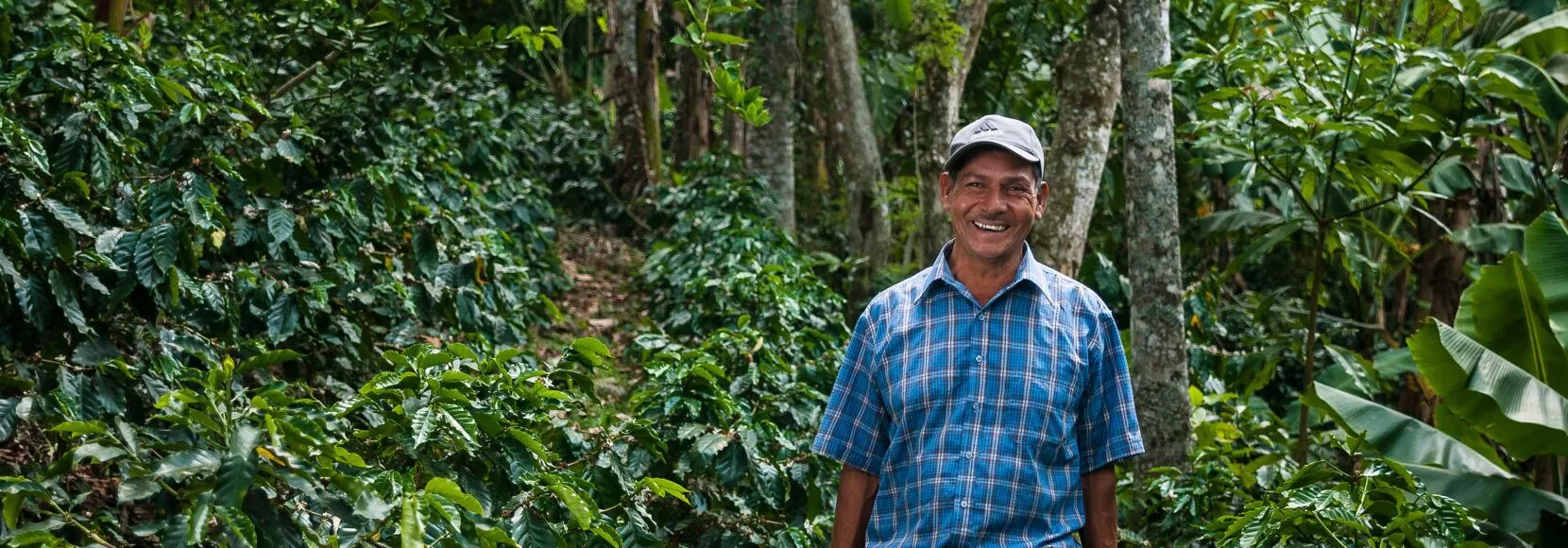
In coffee and cocoa landscapes, for instance, planting nitrogen-fixing shade trees protects crops from extreme heat while diversifying farmer income. See how this works on a coffee farm.
3. Managed Grazing and Silvopasture
The integration of trees and livestock on rangelands to improve animal welfare and soil water retention. Check out a silvopastoral system on a farm in Nicaragua.
How Are Regenerative Agriculture Outcomes Measured?
Soil Health
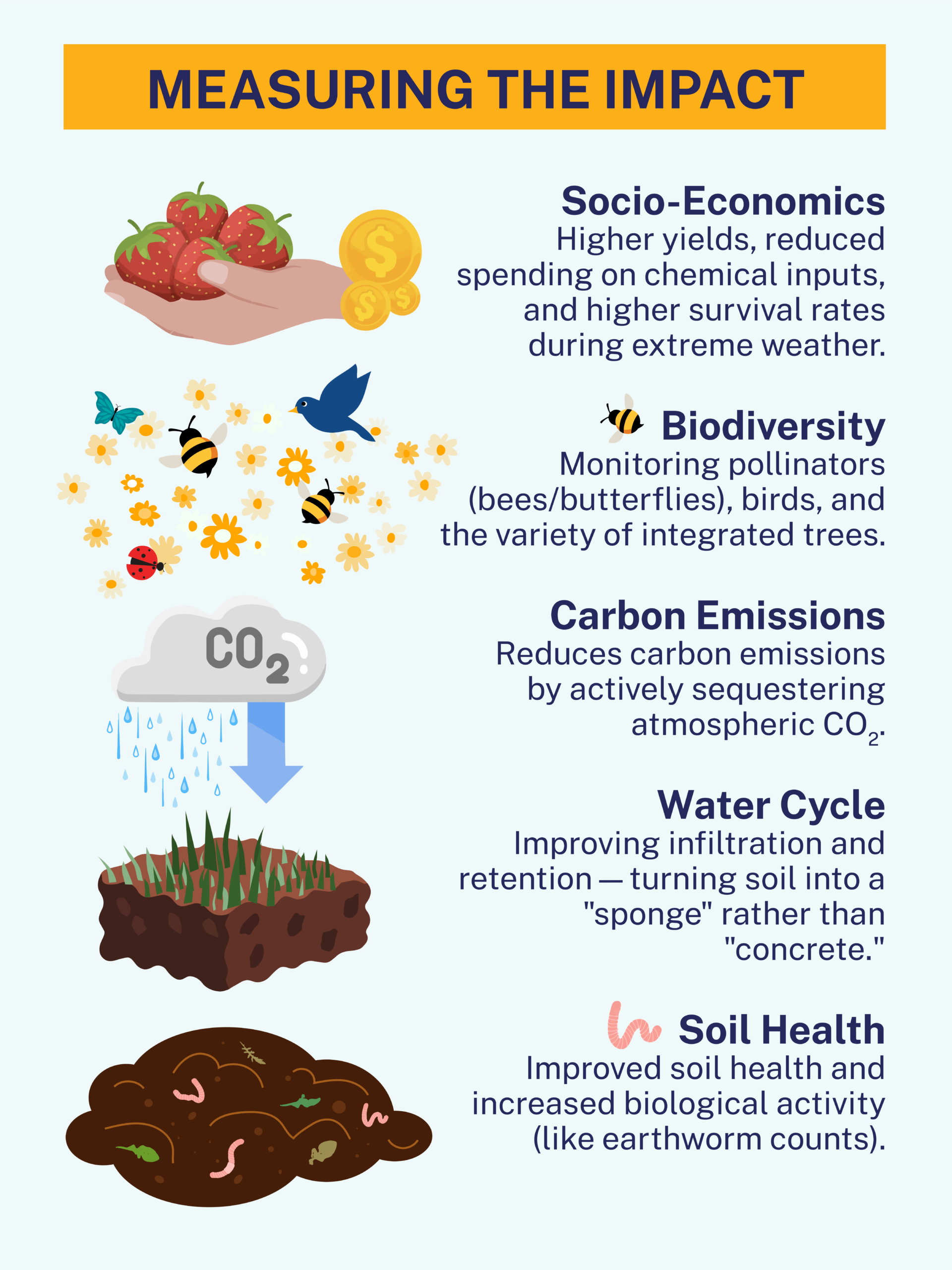
Since soil is the foundation of farming, this is a critical measurement. Indicators include the amount of organic carbon and organic matter in the soil, as well as the degree of biological activity, such as the number of earthworms or microbial diversity.
Climate Impact
Reduced greenhouse gas emissions also indicate the success of regenerative agriculture, since many of its techniques require, or result in, a lower carbon footprint. Carbon sequestration–how much more carbon is being trapped in the soil or trees–is another important indicator.
Biodiversity and Ecosystem Health
This indicator measures how well the farm supports life above and below the surface. It can involve surveys of birds, pollinators (bees/butterflies), and beneficial insects. It can also track vegetative cover (the percentage of time the ground is covered by living plants, with 100% as the goal) and agroforestry density — the number and variety of trees integrated into cropland or pastures.
Water Cycle Impacts
Regenerative land acts like a sponge, whereas degraded land can be more like concrete when it comes to absorbing water. Indicators of successful regenerative practices include water infiltration rate and holding capacity — i.e., how much water the soil can absorb and retain. It’s also helpful to test for reduced nitrogen and phosphorus runoff in nearby streams.
Socio-Economic Outcomes
The impact of regenerative agriculture on people and communities is foundational to TechnoServe’s work. Indicators of success for farmers can include:
- Yields and Incomes: If the farm maintains or increases yields after adoption of regenerative practices–and does so in a way that leads to meaningful income generation.
- Market opportunities: Farmers can often gain access to higher-value supply chains or premium markets when using regenerative agriculture techniques.
- Resilience: Evaluating how well the farm survives extreme weather events or challenging market conditions. For instance–did the crops survive a flood that ruined the neighbor’s conventional field? Did farmers maintain better incomes in hard times by having diversified through farming enterprises or used more locally sourced inputs?
Why Regenerative Agriculture Matters Now
Climate Resilience: Carbon, Water, and Soil
Soil is one of the world’s largest carbon sinks. By sequestering carbon in the ground, regenerative practices directly combat climate change. Furthermore, healthy soil acts like a sponge, absorbing water during floods and retaining it during droughts.
Food Security in a Changing Climate
As traditional growing regions become less predictable, regenerative practices ensure that smallholder farmers can continue to produce food despite weather shocks, tackling the root causes of food insecurity.
The Limits of Industrial Agriculture
Decades of monoculture and chemical-heavy farming have led to topsoil erosion and desertification. While much of the world’s arable land is losing its productivity, regenerative agriculture offers a way to reverse this trend.
The Business Case: Why Regenerative Agriculture Pays for Smallholder Farmers
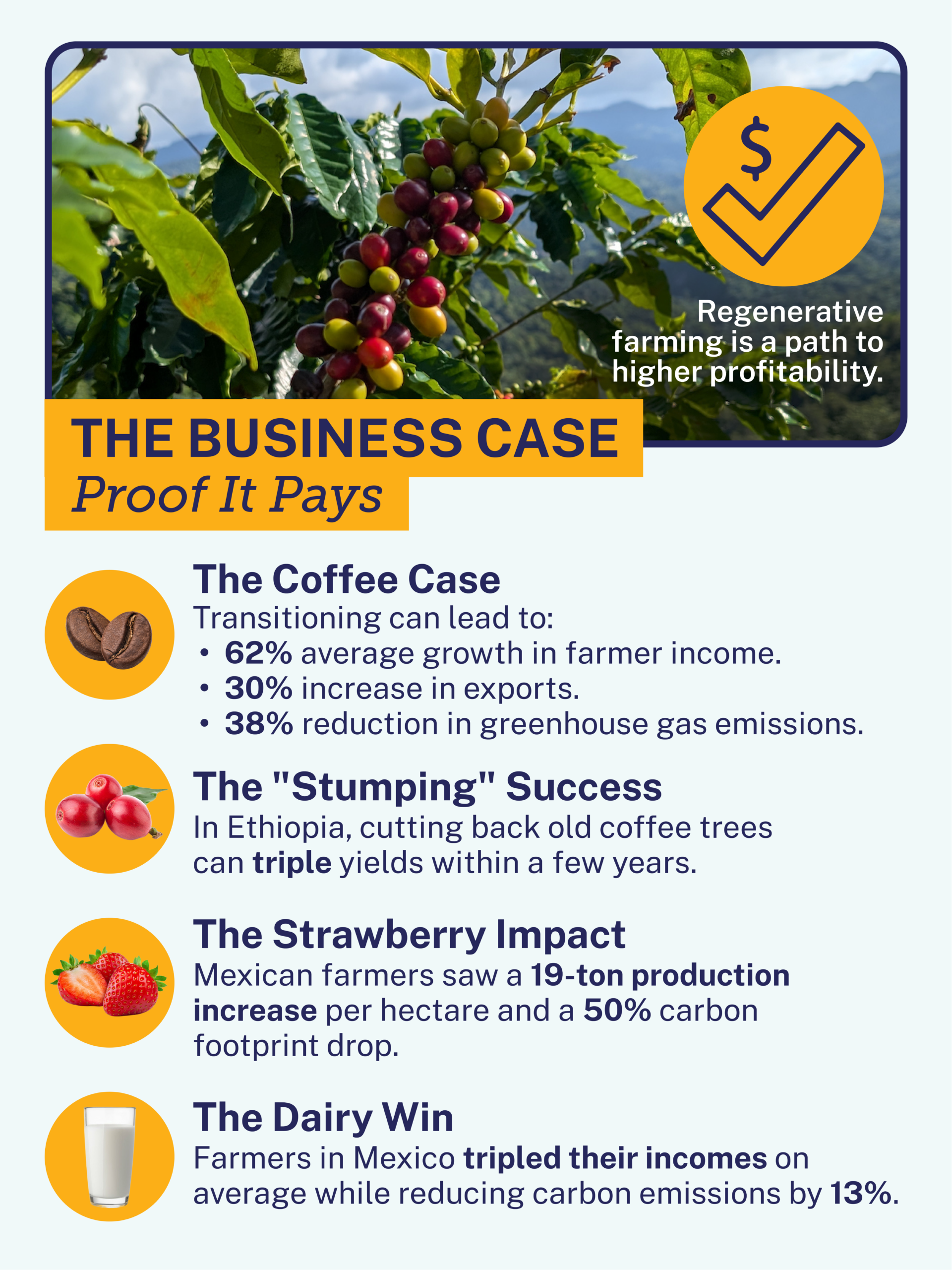
A common misconception is that “green” farming is a luxury that may cost more and yield less. But years of working with thousands of farmers worldwide has shown that regenerative agriculture can, in fact, benefit both the environment and farmer incomes.
The Regenerative Coffee Investment Case: 62% Income Growth
A recent TechnoServe study found that transitioning to regenerative agriculture could boost coffee farmer income by an average of 62%. It could also increase coffee exports by an average of 30% and reduce greenhouse gas emissions by an average of 38%.
Yields, Resilience, and Long-Term Profitability
Farmers are often hesitant to change due to the “transition gap”—the period where yields might dip before soil health fully recovers, and can fully support crop growth with minimal external inputs. However, the long-term reduction in input costs and the increased resilience against crop failure can more than make up for temporary yield reductions.
In Ethiopia, for instance, the simple practice of “stumping,” or significantly cutting back old coffee trees, temporarily reduces productivity but can triple the trees’ yields in a few years. Coffee-growing families who have adopted this practice have seen dramatic improvements in yields, incomes, and quality of life.
Partnership in Practice: Coffee, Cocoa, and Global Supply Chains
Regenerative agriculture is increasingly being scaled around the world through investments that recognize its benefits to the environment, to farmers, and to companies that buy crops from these farmers. TechnoServe is working with many of these companies on “win-win” regenerative solutions around the world:
- Nespresso: TechnoServe has worked with Nespresso since 2006 to develop sustainable coffee supply chains around the world. A large part of that effort has involved supporting farmers to adopt regenerative practices that improve the quality and quantity of the coffee they grow. This has not only led to a better coffee supply, but to documented increased incomes and resilience for farmers.
- Unilever: Unilever, one of the world’s largest food and household goods companies, is aiming to implement regenerative agriculture on 1 million hectares of land by 2030. TechnoServe is helping make this a reality, working with thousands of farmers in Chile, Spain, and Brazil to adopt these improved farming practices.
- Walmart: Walmart is one of the largest markets for farmers worldwide and has made commitments to become a “regenerative” company. For many years, TechnoServe has partnered with Walmart to improve the incomes and resilience of smallholder farmers in countries where Walmart operates, including thousands of produce farmers in Latin America.
- Danone: A leading global food and beverage company, Danone is working with TechnoServe primarily in Mexico on regenerative supply chains. For strawberry farmers, adopting these practices resulted in a 19-ton increase in production per hectare and a 50% reduction in their carbon footprint. And dairy farmers who adopted environmentally friendly practices tripled their average incomes while reducing carbon emissions by 13%.
- JDE Peets: JDE Peets is another coffee company recognizing the enormous potential of regenerative agriculture in its supply chains. For instance, it is currently partnering with TechnoServe in Peru to train over 12,500 coffee farmers in practices that will improve crop productivity, restore degraded soils, and reduce the expansion of coffee cultivation into forested areas.
Empowering Women Farmers Through Regenerative Practices
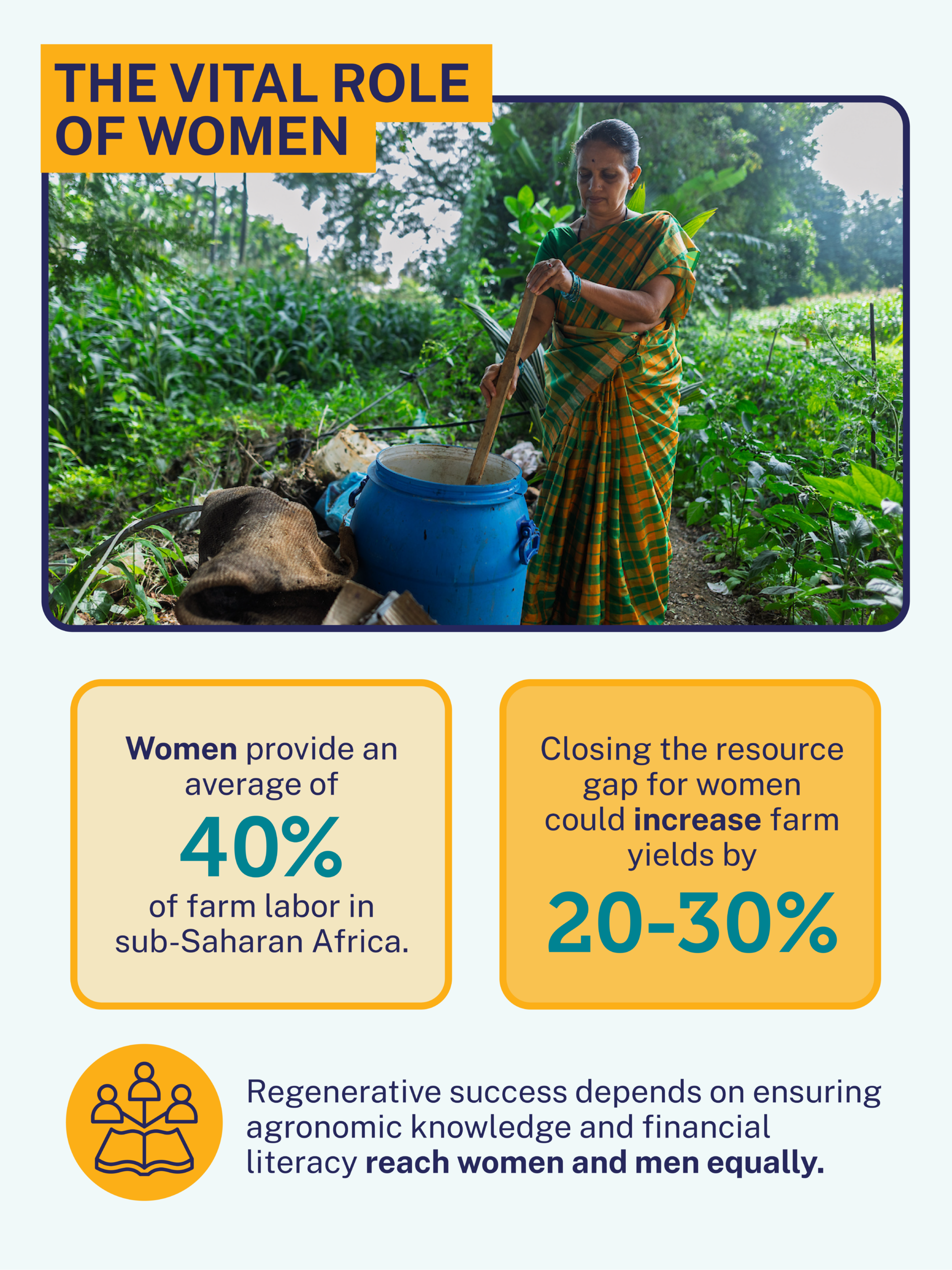
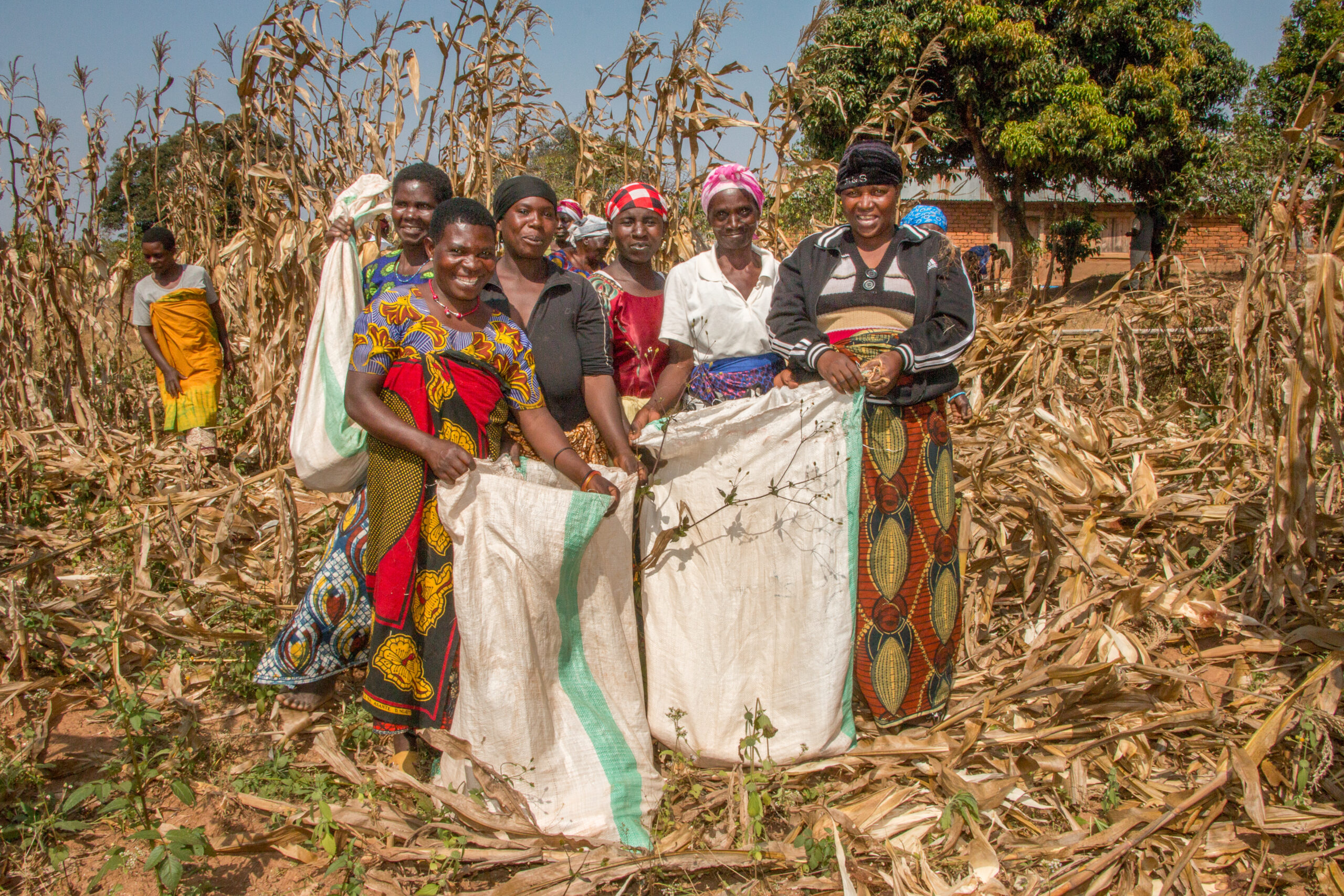
Women are essential to the success of farms around the world. Estimates across sub-Saharan Africa, for instance, have placed the proportion of farm labor done by women at an average of 40%. And if women had the same access to resources as men, they could increase yields on farms by 20-30%.
Working toward women’s equal participation in economic activity and benefits is a cornerstone of TechnoServe’s programs and critical for the adoption of regenerative practices. We hold training sessions with both men and women to ensure that agronomic knowledge is equally distributed within a household. And we work to improve women’s financial access and literacy, community leadership, and decision-making.
All of this helps ensure that regenerative training will “stick” with the farming households we engage. And it increases the likelihood that the benefits of these practices will accrue more equally to women farmers.
FAQs
Frequently Asked Questions About Regenerative Agriculture
Q: What is meant by regenerative agriculture?
Regenerative agriculture is a farming approach focused on restoring degraded soil,reducing greenhouse gas emissions, improving biodiversity, and rebuilding ecosystem health while keeping farms productive and profitable. Unlike conventional methods that deplete the land, regenerative practices aim to leave the soil and surrounding environment measurably better than they found it.
Q: What are the 5 principles of regenerative agriculture?
The five widely accepted principles are: (1) minimize soil disturbance; (2) keep the soil covered with crops or mulch; (3) maintain living roots year-round; (4) maximize plant and species diversity; and (5) integrate livestock through managed grazing. Some practitioners add a sixth principle — context — recognizing that no two farms are the same.
Q: What are three types of regenerative agriculture?
Three of the most common types are regenerative cropping (using cover crops, no-till, and rotation), agroforestry (integrating trees with crops or livestock), and managed grazing (rotating animals across pasture to rebuild soil). Each type can be adapted to the climate, crop, and farm size of a specific region.
Q: What crops are best for regenerative farming?
Many crops adapt well to regenerative methods, including coffee, cocoa, grains, legumes, vegetables, and tree fruits. Perennial crops like coffee and cocoa are especially well-suited because they pair naturally with shade trees and agroforestry. Smallholder farmers in TechnoServe’s programs also apply regenerative practices to dairy, rice, and horticulture.
Q: Why are some farmers against regenerative farming?
The most common concerns are upfront cost, short-term yield dips during transition, and uncertainty about market premiums. These concerns are real but often solvable. With the right training, financing, and buyer commitments, farmers can navigate the transition and reach higher long-term profitability — which is exactly the gap business-led programs are designed to close.
Q: How is regenerative agriculture different from sustainable or organic farming?
Sustainable agriculture aims to maintain current systems without depleting them. Organic farming restricts synthetic inputs. Regenerative agriculture goes a step further: it actively rebuilds soil, biodiversity, and ecosystem function. A farm can be regenerative without being certified organic, and not every organic farm is regenerative.
Learn more about how TechnoServe is helping smallholder farmers to improve their incomes and opportunities through regenerative farming and other market-based solutions.

