


From Coffee Farmer to Agricultural Entrepreneur: Building a Thriving Business in Peru
Table of Contents
- Introduction
- What Is Agricultural Entrepreneurship?
- How Simple Tools Make Coffee Farming Easier and More Profitable in Peru
- The Alianza CAFE Legacy
- From Coffee Grower to Agribusiness Manufacturer
- ‘It Depends on a Whole Team’: Creating Employment in the Coffee Sector
- A Vision for Growth in Coffee Tool Production
- Agricultural Entrepreneurship
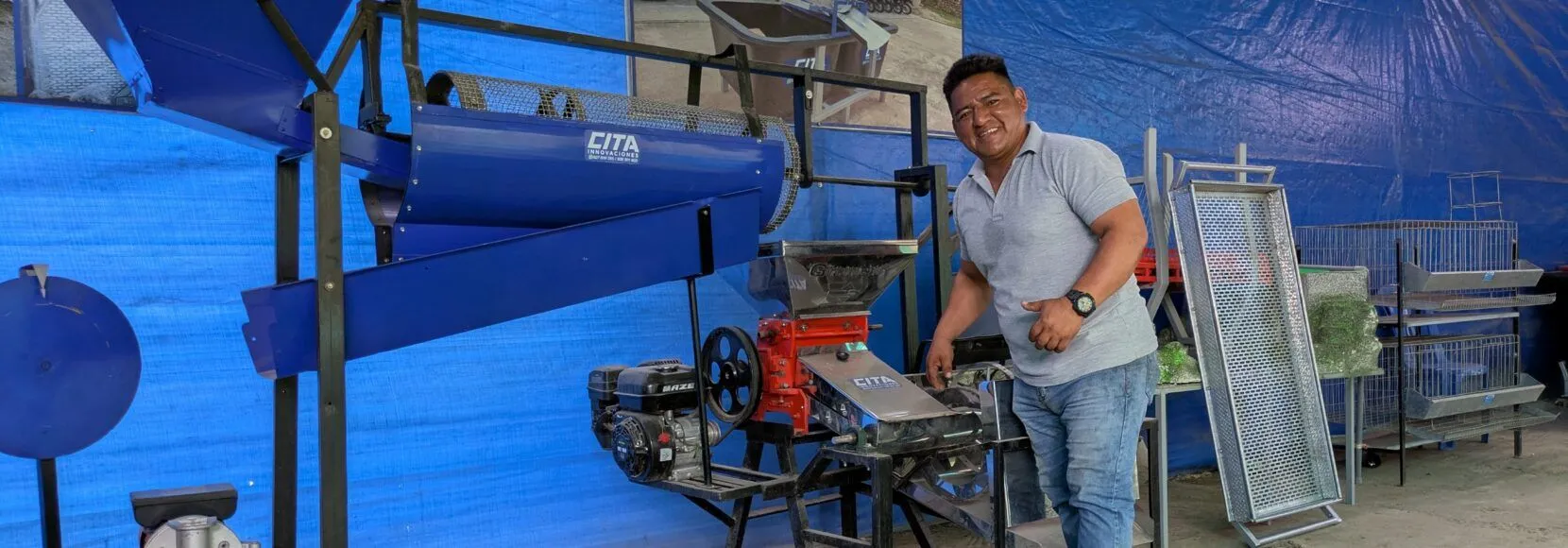
When an agricultural sector grows, farmers aren’t the only ones who benefit. In Peru, Iván Ramos built a successful company manufacturing products to make coffee farmers’ work easier and more profitable.
“Iván, I need a prototype. I want to make a sorting sieve.”
Those words, spoken by TechnoServe staff member Marco Aurelio Saavedra one afternoon in 2018, helped to set Iván Ramos on an entrepreneurial journey that continues to this day. Back then, Iván was a coffee farmer, but he had always considered himself curious and had long been interested in inventing, even designing a new coffee drying bed.
“Give me tonight, engineer,” he replied. “I’ll design it for you.”
What Is Agricultural Entrepreneurship?
Iván was launching his career as an agricultural entrepreneur. Agricultural entrepreneurship refers to running a business anywhere along a farming supply chain–from before the first seed enters the ground to food arriving on a family’s plate.
When we think of agriculture, we often think of the farmer. But agriculture supports and depends on an entire universe of agribusinesses that extend far beyond the farm. Nurseries that provide seedlings. Input vendors that sell fertilizers and irrigation equipment. Veterinarians that conduct check-ups and administer medicines. Traders who purchase crops and millers who process them.
One often-overlooked area of agricultural entrepreneurship, however, is manufacturing and selling farming tools.
How Simple Tools Make Coffee Farming Easier and More Profitable in Peru
The right tools are critical for making farming safer, easier, and more profitable. Coffee farming can be labor-intensive, particularly during the harvest season. The right tools can help farmers save significant time. In Peru, for example, the average coffee-farming household spends nearly five times as much on labor as it does on fertilizer.
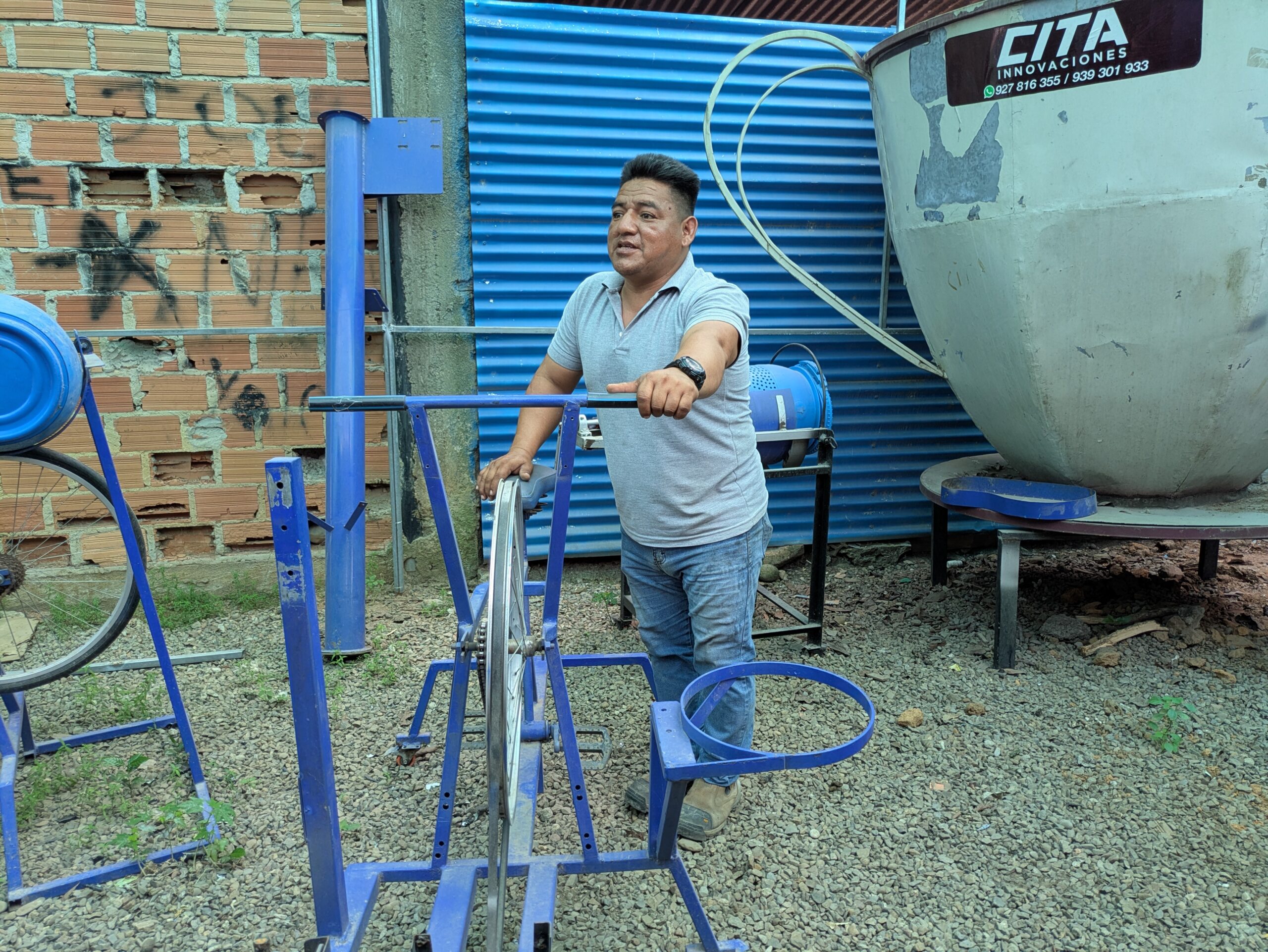
Tools can also help to reduce production costs. TechnoServe helped develop a bicycle-powered coffee pulping machine, enabling farmers to process their recently harvested coffee without the need for a motor or costly gasoline to power it.
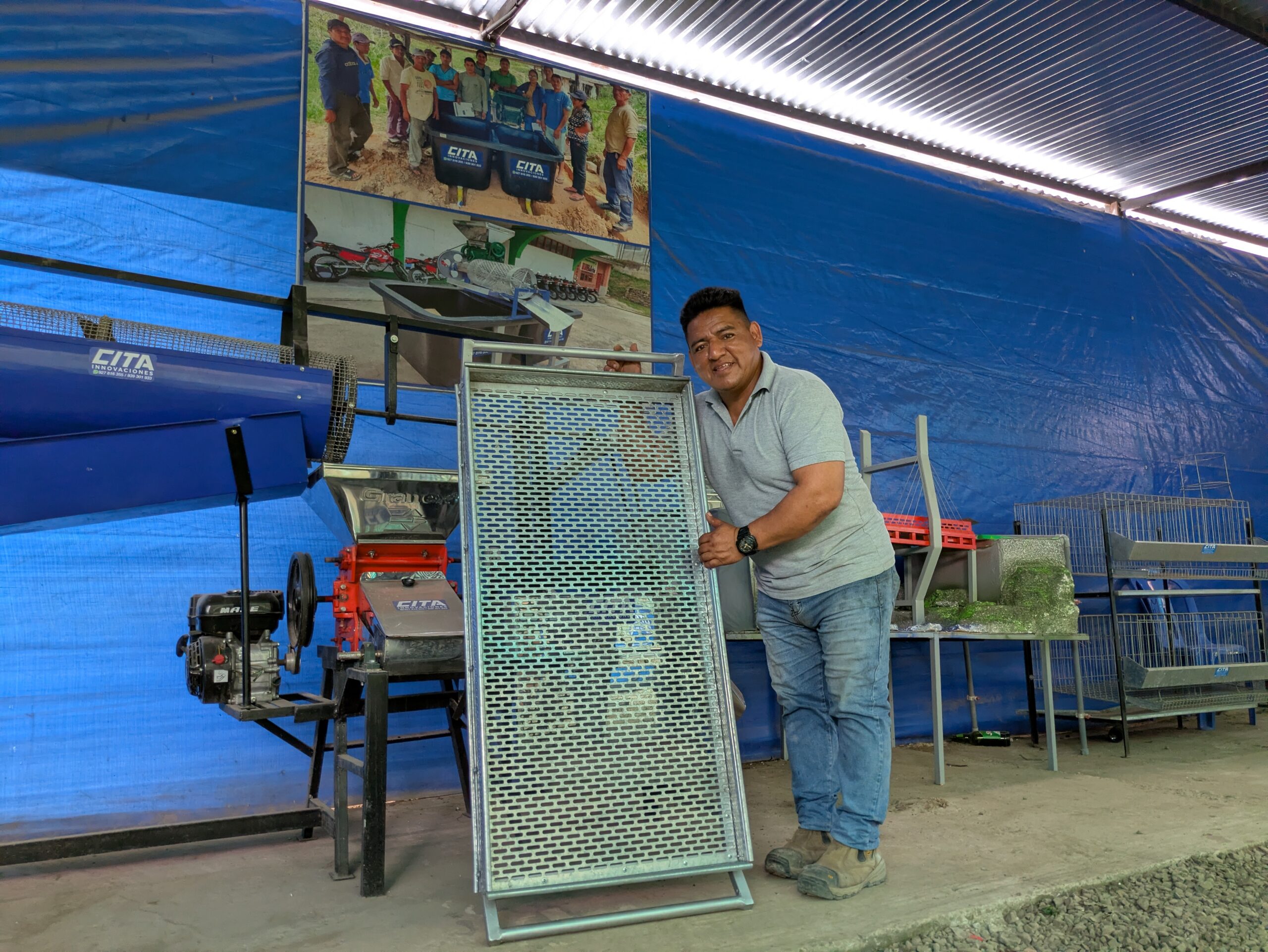
In addition to reducing costs, tools can also help farmers earn more. That was the idea of the sorting sieve that Marco Aurelio envisioned with Iván. Because larger coffee cherries are typically higher quality, sorting coffee cherries by size is common practice at large commercial farms or processing facilities that aggregate the supply for many farmers. Selecting by size lets them segment coffee by quality and process uniform-size cherries, reducing processing defects.
Smallholders who process their own coffee on the farm, however, have typically lacked the tools to do this selection processing. A sieve–or zaranda–would enable smallholders like those in Ivan’s community to enjoy these benefits, as well.
The Alianza CAFE Legacy
Through the Alianza CAFE program, launched in 2017, TechnoServe worked to make these tools available to the farmers who would benefit from them. Within Peru, it popularized the bicycle pulper and sorting sieve, as well as other innovations like vetiver grasslands and solar driers. The project’s overarching aim, which also included agronomy training and support for agribusinesses, was to boost the livelihoods of coffee farmers and others in the coffee supply chain. Over seven years, it benefited 14,000 people, raised farmers’ incomes by 206%, and facilitated $140 million in coffee sales. Today, JDE Peet’s and TechnoServe continue to support farmers in the region through the CAFE Amazonía Resiliente program.
From Coffee Grower to Agribusiness Manufacturer
For Iván and his family, the program helped mark a shift in their lives. Iván farmed coffee in the small community of Playa Hermosa, but it was difficult to support his four children on his earnings. “In 2000 there was still virgin jungle, so production was good,” he recalled. “But time passes quickly, and by 2008 or 2010, we could feel the hit—that production had already dropped significantly due to climate factors, due to habits of not fertilizing the land. We thought everything was going to stay the same, and that significantly reduced production and quality.”
Shortly after enrolling in Alianza CAFE, he found himself raising his four children alone. So when Marco Aurelio asked about building a prototype for the sieve, he was quick to leap at the opportunity.
“It turned out really well because it was basically a sieve where we loaded the coffee at the top and it went straight into the pulper. You’re not sifting on the floor. The top-quality coffee went to one level, the top one, and the bottom one went into a sack,” he said. Field testing showed it worked, and the program soon started submitting orders to Iván.
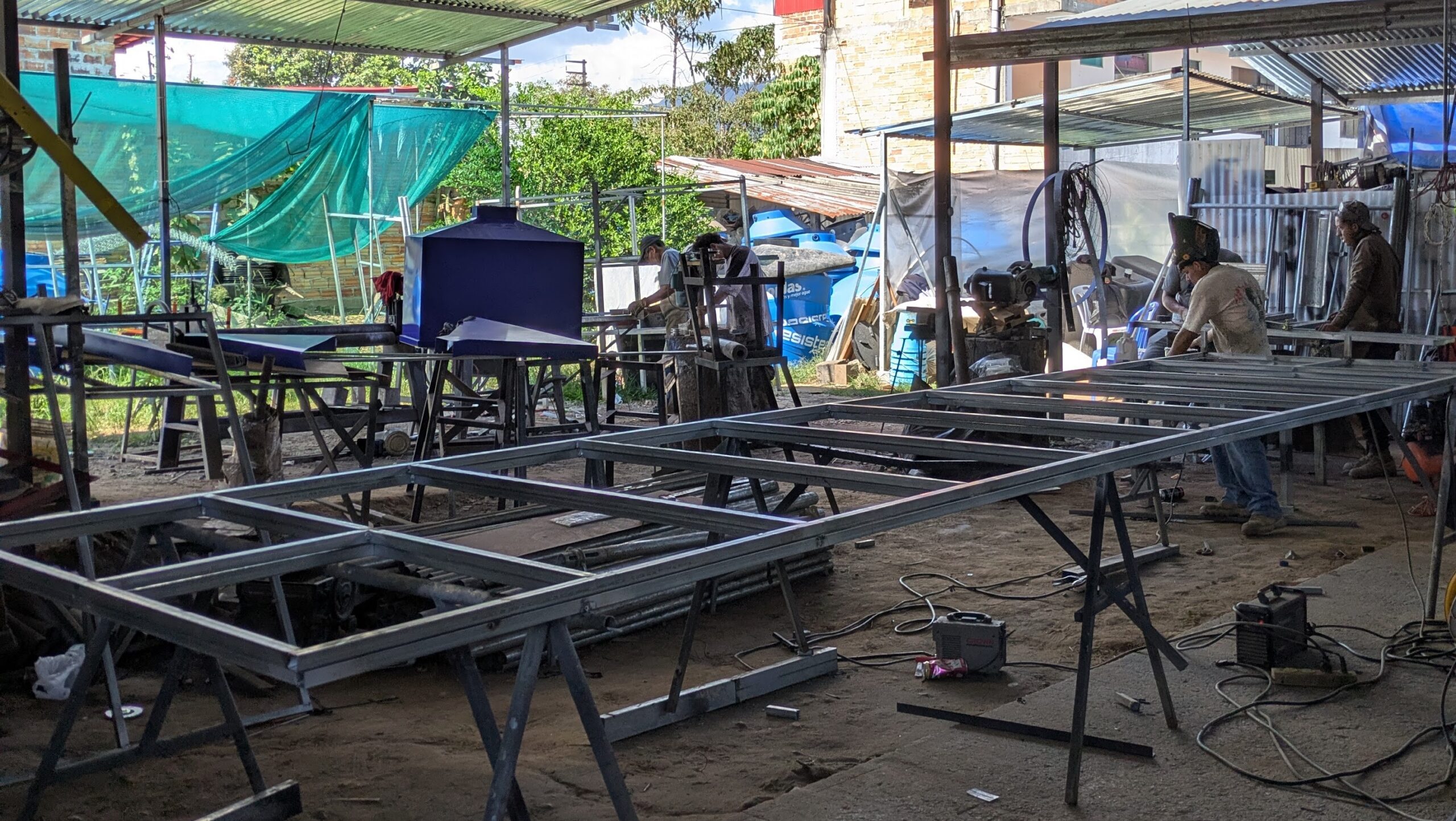
The next year, he moved to the nearby city of Moyobamba and used the courtyard of a restaurant as his manufacturing center. Not only was he building sieves and bicycle pulpers based on the ideas TechnoServe submitted–he was starting to innovate.
“Regarding sieves, the initiative started with the TechnoServe engineer. Now we have about five or six sieve designs,” Iván said. “From the bicycle that TechnoServe had the initiative to make to de-pulp coffee, now we have it adapted for about five different activities using the same bicycle frame.” His modular add-ons can be used to wash clothes and even blend fruit into juice.
‘It Depends on a Whole Team’: Creating Employment in the Coffee Sector
Iván’s business, CITA Inovaciones, moved into a larger workshop in 2023. The client base has grown, and today he sells a range of tools for coffee and cocoa production to cooperatives, government agencies, and nonprofit organizations, helping farmers across the country to earn higher incomes. What started as just an idea in 2018 has become a thriving business: in 2025, his sales topped $550,000, and he employs up to 20 people during busy periods.
“I always had a national vision, but I didn’t see it quite like this…There are challenges, there are responsibilities to take on, like having a whole organizational chart, because now the company doesn’t depend on me—it depends on a whole team,” he said.
A Vision for Growth in Coffee Tool Production
Iván plans to continue growing his business. Right now, that means devoting a lot of time to a surprising task: content creation. “Right now, it’s pure TikTok sales,” he said.
But he also has another vision.
“I want to build a coffee museum here in Moyobamba, since we consider coffee and cocoa to be so important in our society for livelihood reasons,” Iván said.
Iván’s family is a testament to that importance. Iván is most proud of being able to educate his children: his oldest son is already set to graduate as a civil engineer, a daughter is studying psychology, and his second daughter is set to enter university soon.
Iván’s journey as an agricultural entrepreneur has been transformative.
“I was able to target a need, and I threw myself into it,” he said. Now Iván, his family, his employees, and coffee growers across Peru are benefiting.

A Different Way to Make A Difference.
Discover how TechnoServe bridges the gap between “thinking big” and practical business solutions that help hardworking people move from poverty to prosperity around the world.
FAQs
Agricultural Entrepreneurship
What is agricultural entrepreneurship?
Agricultural entrepreneurship is the practice of building a business around farming knowledge, resources, or innovation rather than only producing a crop. It covers processing, equipment, services, and market access. It treats the farmer as a businessperson who identifies a need and builds an enterprise around it.
What are examples of agricultural entrepreneurship?
Examples of agricultural entrepreneurship include farmers who move into processing, equipment manufacturing, or services for other producers. In Peru, coffee farmer Iván Ramos designed a multi-level solar dryer and now manufactures dryers, sorting sieves, and pedal-powered machines for coffee growers across the region.
How do farmers start an agricultural business?
Farmers start an agricultural business by identifying a problem other producers share, building a workable solution, and finding a first customer. Training and technical support matter, but so does the market connection. Most agricultural entrepreneurs begin by solving a problem they experienced on their own farm.

