



How Radio Boosts Women’s Economic Empowerment in Northern Benin
In northern Benin, a community radio broadcast is changing attitudes and lives. TechnoServe partnered with Radio SOTA FM to co-produce programs on entrepreneurship and women's economic empowerment. These shows reach thousands of listeners across West Africa and beyond.
Why Radio is a Powerful Tool Supporting Women Entrepreneurs in Benin
Radio is the most widely consumed medium globally. It is a relatively low-cost and accessible way to inform, educate, and entertain. In Benin, radio is a critical mass communication tool, particularly in rural and low-literacy communities where television and online media are less accessible.
In 2025, TechnoServe’s BeniBiz program partnered with Radio SOTA FM to co-create and broadcast a show to shift attitudes toward women’s entrepreneurship and economic empowerment in northern Benin. The show ran from July through December.
BeniBiz is a business accelerator that provides entrepreneurs—particularly women and youth—with the skills they need to build prosperous businesses, communities, and economies. It is a collaboration with the Netherlands Ministry of Foreign Trade and Development, the Swiss Development Cooperation, and the European Union.
Radio SOTA FM is based in Malanville, Benin, but covers both the Malanville and Karimama communes. The signal crosses borders into neighboring Niger and Nigeria, and anyone with the Radio Garden app or an internet connection can tune in globally.
To reach local communities, Radio SOTA FM aired the shows in Yoruba and Dendi, the two most commonly spoken languages in the area. The show reached an average of 30,000 people during its run, with a format that relied on radio games, public debates, and live phone calls. Listeners regularly jammed the phone lines to ask questions and share personal stories.
The programs addressed the following topics:
- Building a successful business and transforming your life
- Achieving economic independence through self-confidence and leadership
- Women’s economic empowerment: What do religious teachings (indigenous, Islamic, and Christian) say?
The strongest moments are when listeners call in to contribute to the show,” Ousmane Tinouola, a host of the show, said. “That gives even more meaning to the discussions.”
Those phone calls reflect real shifts at home. One listener wanted to launch a small business for years, but her husband refused. That changed when the couple listened to an episode on women’s entrepreneurship together. Guests explained how a woman’s income strengthens both her family and her community. By the end of the broadcast, the husband changed his mind. He agreed to let her launch the business and offered to support her project.
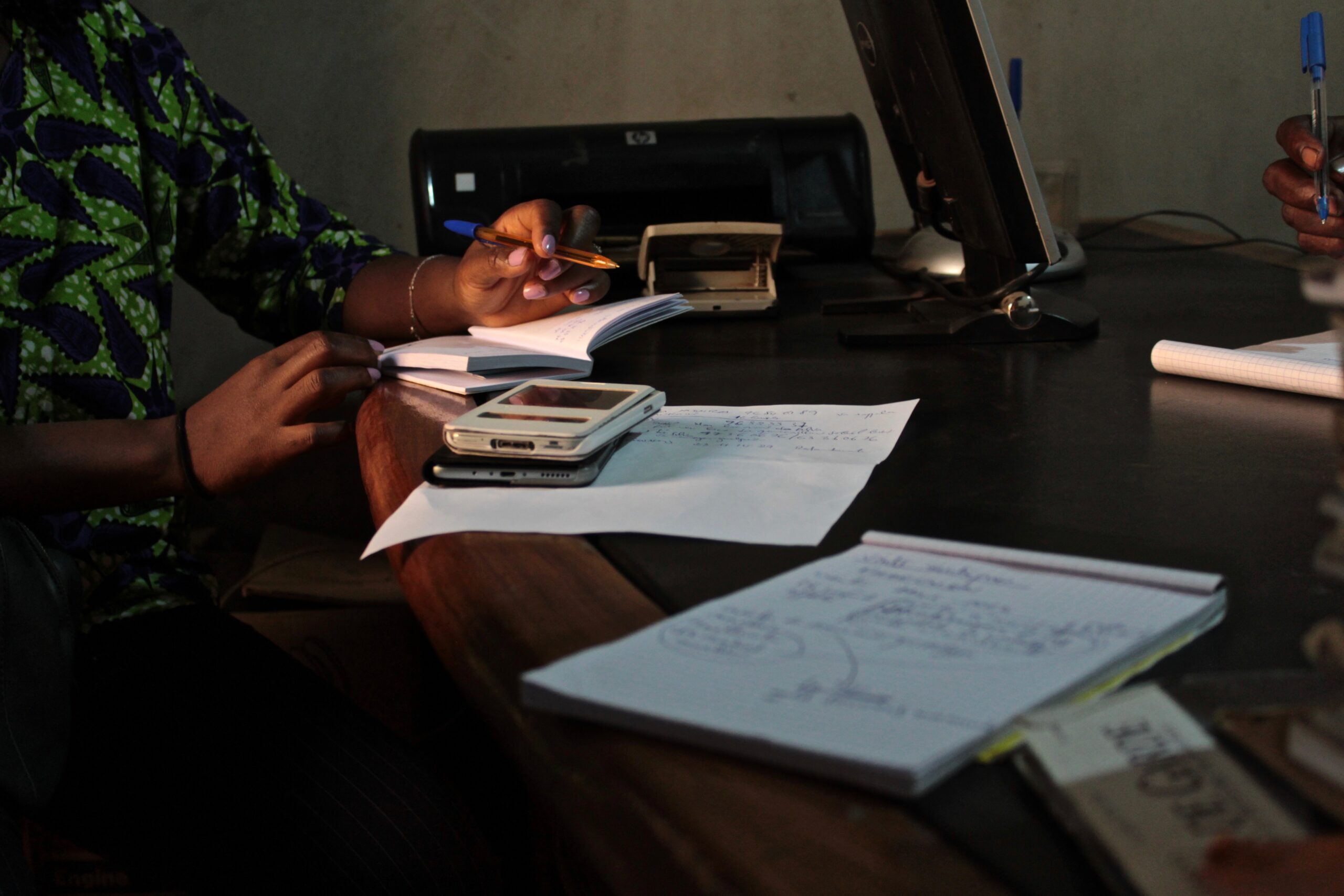
From Airwaves to Action: Inspiring Real Change in Northern Benin
The radio programs do more than give communities a voice: they were designed and developed together with them,” said Florence Bio Idrissou, senior specialist for women and youth at TechnoServe. “This participatory approach ensures that the programs are rooted in people’s lived experiences, bring local concerns to the forefront, and foster discussions that resonate with women’s everyday lives.”
Community members identified the show’s topics during community dialogues, and listeners also helped define the discussion angles and co-develop the program scripts.
The radio programs were part of a broader BeniBiz effort to address the social and religious norms that can limit women’s economic participation. In northern Benin, many women report a lack of support from their husbands, which limits their ability to succeed as entrepreneurs. Men in the region often justify their opposition using religion to argue that women should not pursue economic activities. Radio SOTA FM addressed this directly by inviting a local imam to a broadcast.
Citing Quranic verses and Hadiths, the imam explained that Islam permits women to work. He reminded listeners that Prophet Muhammad encouraged his wife’s commercial activities. The discussion addressed a long-standing taboo and cleared up common misunderstandings. Over time, views across the region are beginning to shift. Men who initially called in with doubts later admitted that supporting their wife’s business benefited the whole household.
Beyond Radio: Shifting Cultural Beliefs and Mobilizing Family Support
This work was part of a broader initiative to address the lack of support for women’s entrepreneurship in the region. BeniBiz partnered with religious scholars and theologians in Benin’s three main religious groups—Islam, Christianity, and endogenous beliefs—to review texts and identify passages, tenets, and scriptures highlighting the importance of women’s economic roles. The team then hosted three workshops to share this information with women and men in the community.
These religious leaders also served as resource persons on the radio, bringing these perspectives into public discussions about women’s economic roles and helping extend the conversation beyond the airwaves and into homes and communities.
A Model for Community Conversation and Change
Although the full evaluation of the 2025 radio program on women’s economic empowerment has not yet been conducted, the initial data from the broadcasts already offer interesting insights.
- Public radio programs, in particular, generated strong participation from both women and men. Overall, women accounted for 67% of direct participants, challenging the assumption that men are consistently the primary listeners of radio programs.
- The topics discussed also appear to have played an important role in driving engagement. Programs focusing on leadership and self-confidence and on women’s economic roles according to different religious teachings recorded the highest levels of direct participation, accounting for 30% and 34% of total participation, respectively.
- Religious teachings also appeared to engage men in particular. Programs exploring the role of religious teachings in women’s economic empowerment accounted for 38% of all recorded male participation.
Beyond these figures, feedback collected from radio stations and listeners points to positive shifts in perceptions of women’s economic roles within households. These early findings suggest that when discussions are grounded in communities’ lived realities and address issues that matter directly to them, radio can provide a valuable space for dialogue and changing perceptions. The upcoming evaluation will allow us to further explore these changes and better document the program’s contribution to them.

A Different Way to Make A Difference.
Discover how TechnoServe bridges the gap between “thinking big” and practical business solutions that help hardworking people move from poverty to prosperity around the world.
Related Articles
Youth Entrepreneurship in Kenya: From Shop Attendant to Local Economic Driver in Nairobi

From Coffee Farmer to Agricultural Entrepreneur: Building a Thriving Business in Peru
Scaling Impact: How One Entrepreneurship Development Program Helped an Inclusive School Grow
