Youth Entrepreneurship in Kenya: From Shop Attendant to Local Economic Driver in Nairobi
Table of Contents
- Introduction
- Overcoming Barriers to Youth Entrepreneurship in Kenya’s Informal Sector
- Inside PAYED: Business Training for Young Micro-Retailers
- From Shop Attendant to Successful Retailer and Distributor
- What Youth Entrepreneurship in Kenya Looks Like at Scale
- Expansion and Diversification: Growing a Micro-Retail Business in Nairobi
- Creating Jobs: How One Shop Became Four Livelihoods
- Joining the Dandora Smart Duka Business Group
- A Family and Community Transformed
When young entrepreneurs have the tools they need to thrive, the benefits ripple out into the community. In Nairobi, Alex Amwai turned his experience as a shop attendant into a growing retail enterprise that supports his family, creates jobs, and helps meet his community’s everyday needs.
Youth make up 35% of Kenya’s population and face the highest unemployment rate in the country at 67%, five times Kenya’s national average. Retail and trade is the most desired field for entrepreneurs in Kenya.
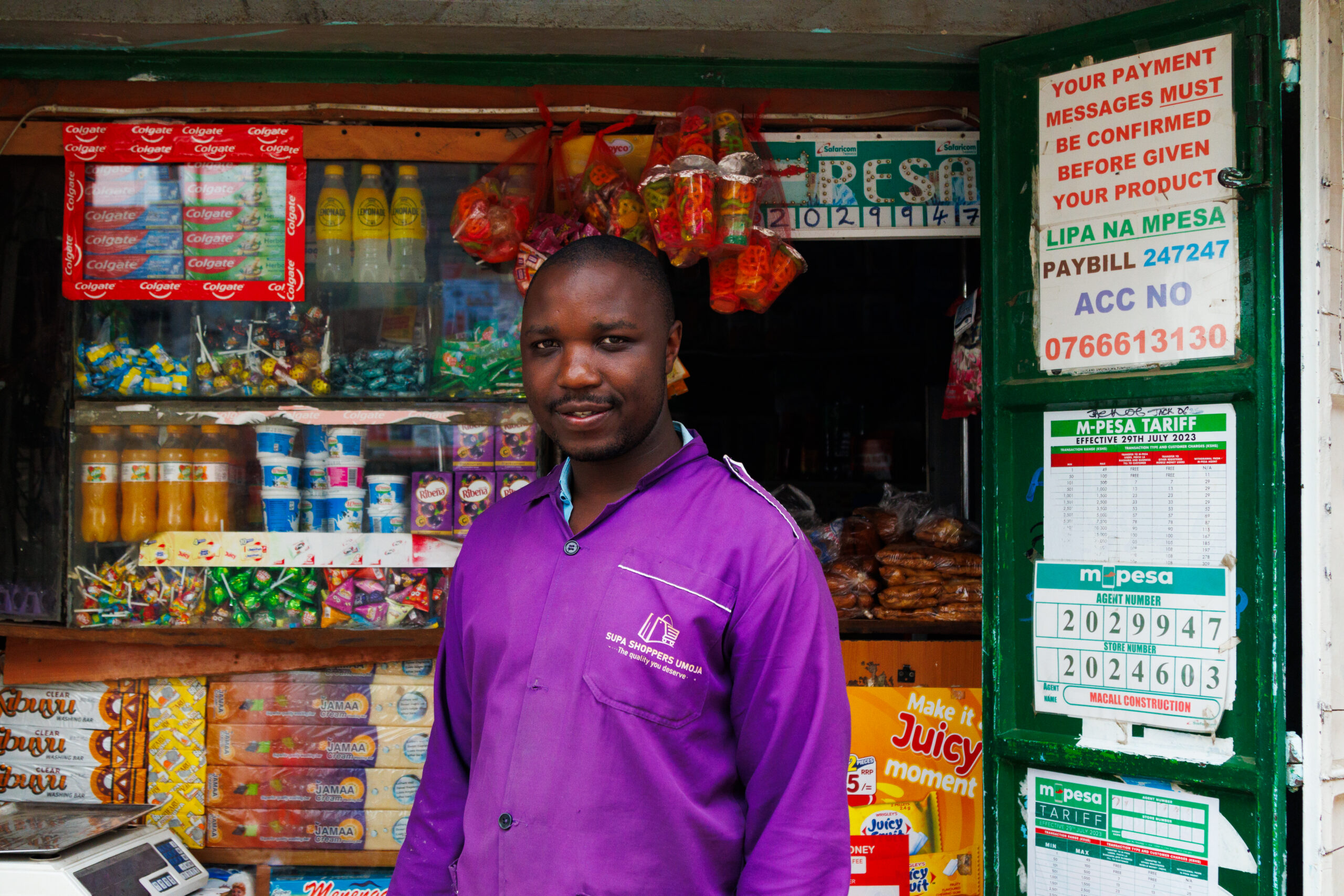
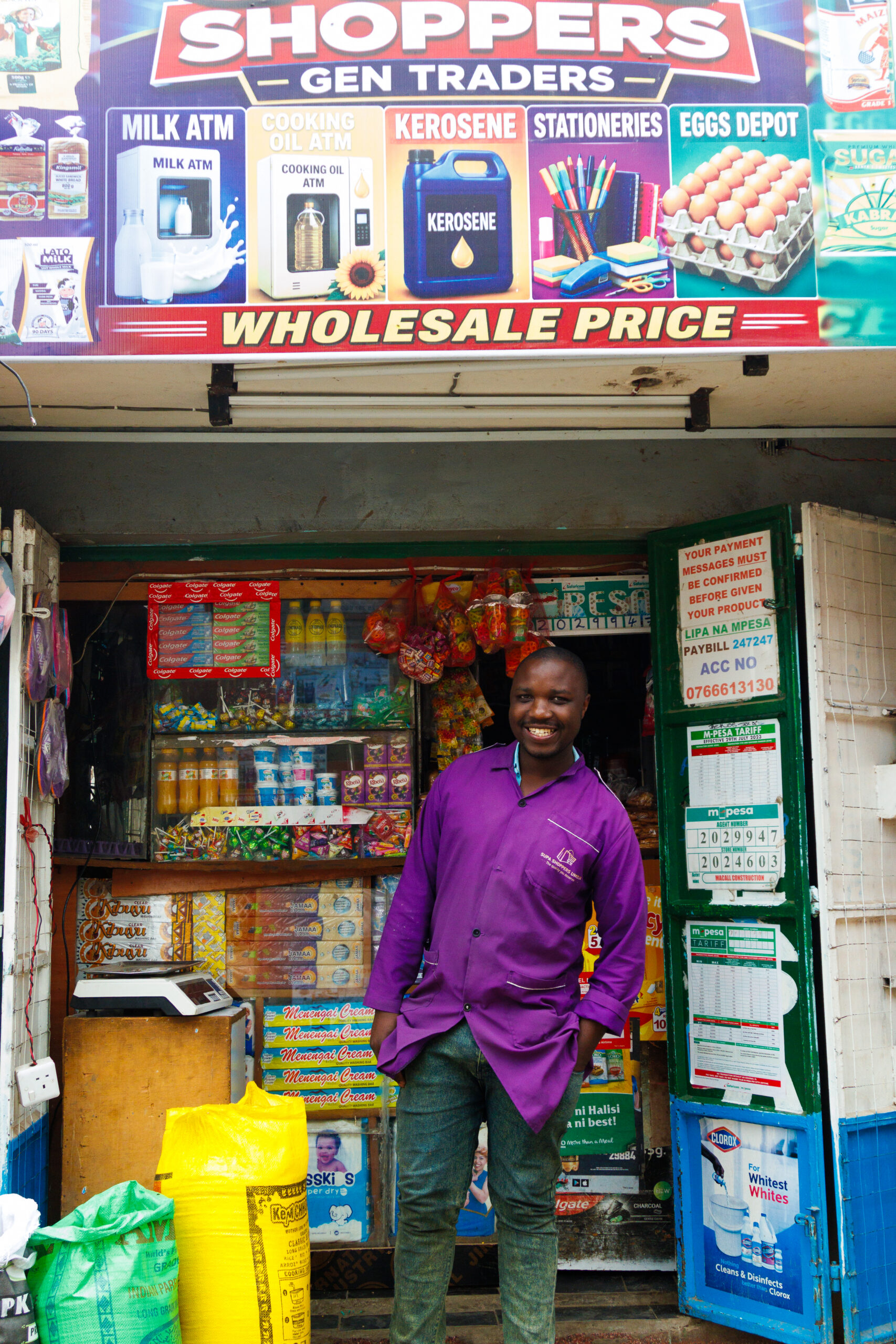
Alex Amwai is a 26-year-old entrepreneur based in Nairobi County, Kenya. He has built a successful micro-retail business, Supa Shoppers, which he launched in 2020. Alex is a father of twin boys, and the business is his family’s primary source of income. His wife and younger brother also work there. Alex’s journey to success has been hard-earned. After finishing his education, he started his career in retail about 100 meters down the road from his current shop, earning about $3- $5 per day. In this role as a shop attendant at a fast-moving consumer goods store, Alex developed the technical skills and ambition to start his own business.
Overcoming Barriers to Youth Entrepreneurship in Kenya’s Informal Sector
Alex worked hard to save $700 in his first year working as a shop attendant, which he used to launch Supa Shoppers. However, the business quickly stagnated in a social environment that presents significant barriers for youth. In Kenya, entrepreneurship is rarely associated with young people in their early 20s, who are often expected to be pursuing higher education. This lack of precedent made it hard to find support structures in his community, and Alex didn’t have the formal financial management and inventory sourcing skills needed to scale.
Inside PAYED: Business Training for Young Micro-Retailers
In 2023, Alex joined TechnoServe’s Pan-African Youth Entrepreneur Development (PAYED) Program, an initiative designed to address systemic barriers youth face in business, such as limited business management skills and access to finance. Alex participated in a comprehensive capacity-building package, including one-on-one advisory services, group training, and digital training modules, which he applied to his business.
From Shop Attendant to Successful Retailer and Distributor
Alex worked with TechnoServe business counselors and transitioned from isolated, trial-and-error operations to a structured business model.
“TechnoServe’s training honed my entrepreneurial skills in areas such as record-keeping and merchandising techniques, which helped grow my business.”
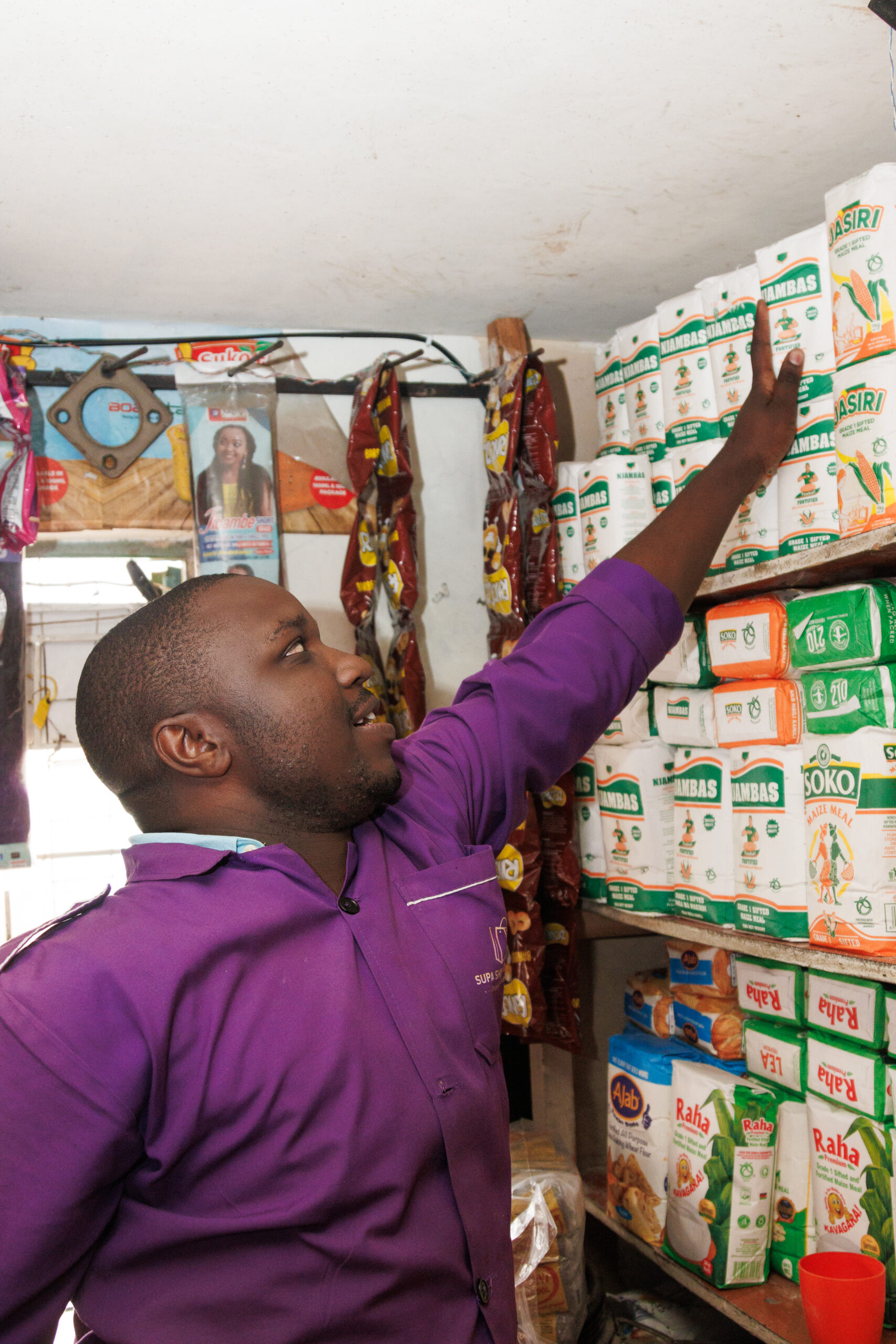
By adopting disciplined bookkeeping practices, such as implementing a daily sales and expenses tracking system, he successfully separated his personal finances from his business capital.
What Youth Entrepreneurship in Kenya Looks Like at Scale
The PAYED program ran from 2017 until 2023 and was a partnership with Citi Foundation. Over seven years, PAYED reached over 2,500 micro-retailers in Kenya: 59% women and 94% youth. Participants saw an average revenue increase of 42%. Collectively, the program reached over 10,000 young entrepreneurs and strengthened 21,000 jobs across Kenya, Tanzania, Nigeria, and Côte d’Ivoire.
Expansion and Diversification: Growing a Micro-Retail Business in Nairobi
Through the program’s training support, especially business investment and diversification, Alex introduced income-generating activities to stabilize his revenue. He introduced milk and cooking oil dispensers, allowing him to serve low-income customers through the “kadogo” economy: micro-quantities as low as $0.10. Alex also ventured into micro-distribution, supplying essential goods to neighboring shops.
Creating Jobs: How One Shop Became Four Livelihoods
Alex’s business diversification created a ripple effect:
- Business Growth: He used these economic gains to open a second retail outlet managed by his wife, Kakwasi Ngondi. They co-own this business as a family. The business has diversified to provide a kerosene dispensing service, addressing the needs of customers in the informal settlement where kerosene is a common household fuel.
- Employment: The two outlets have created employment opportunities for three additional young people, including Alex’s younger brother, whom Alex hired to manage the distribution side of the business.
- Financial Performance: The business’ average monthly increased by 126% between 2023 and 2026.
Joining the Dandora Smart Duka Business Group
After completing the program in August of 2023, Alex joined the Dandora Smart Duka Business Group, formed by past Smart Duka program clients. In Kenya, small retail or “mom and pop” shops are called dukas. These small retail shops supply roughly 80 percent of consumer goods and are often run by women or families. In partnership with the elea Foundation and Citi Foundation, TechnoServe is working to increase the profitability of 840 high-potential shops in Nairobi, the majority of which are women-operated or women-owned.
Through this collective, Alex gained access to a vital peer support structure and transitioned from an individual entrepreneur to a member of a group of visionary micro-retailers seeking to improve and grow their businesses post-program. All members of the Dandora Smart Duka Business group are former TechnoServe clients, who have been trained in different programs across TechnoServe’s partnerships with the Elea Foundation for Ethics and Globalization, Citi Foundation, and Moody’s Foundation.
The group provides access to credit from formal financial institutions, co-guaranteed by members, and pooled savings that serve as immediate working capital. The group also enables collective bargaining; by aggregating orders, members can bypass intermediaries and purchase inventory at discounted rates directly from manufacturers.
This peer support structure gives Alex mentorship from seasoned entrepreneurs with over 15 years of experience, bridging the gap between his youth and the maturity of the retail sector.
“I strongly encourage young entrepreneurs to join business groups,” Alex shared. “They provide invaluable access to information, peers, finance, and products, which have also been instrumental in my growth.”

A Different Way to Make A Difference.
Discover how TechnoServe bridges the gap between “thinking big” and practical business solutions that help hardworking people move from poverty to prosperity around the world.
A Family and Community Transformed
Alex’s success shows that while determination and hard work are necessary, entrepreneurs also need support and the right environment to succeed. Support infrastructure like capacity-building initiatives and business groups can help youth navigate barriers to growth and experience exponential progress.
With the profits from his business, Alex purchased a sedan in 2025. The vehicle now serves a dual purpose: supporting product sourcing for his shops and generating extra income by offering transport services, especially over the weekends.
Micro-retail programs, including PAYED and the Smart Duka Program, mitigate the risks associated with youth entrepreneurship. Young Kenyans can thrive as drivers of local economic stability when they have concrete financial and operational tools to support their growing success.