Fortifying Africa for Future Generations
Industry, government, and civil leaders gathered in Nairobi, Kenya to launch a joint initiative to build healthier economies and communities through food fortification
This post by Business Fights Poverty explores key insights from the Harvard Kennedy School's report on TechnoServe’s East Africa Coffee Initiative.
Peter Rotich, a maize farmer in Kenya, demonstrates a sustainable model for increasing rural smallholders’ access to mechanized services and best agricultural practices.
Food processing businesses are working to end hunger by increasing their capacity to provide quality, nutritious fortified foods for local communities.
TechnoServe seed projects offer simple solutions to the barriers women face when adopting best practices and offer inclusive growth for farming communities.
“Hidden hunger” is a form of undernutrition affecting millions of people in sub-Saharan Africa. Food fortification is a cost-effective strategy for addressing hidden hunger, helping people to access the nutrition they need.
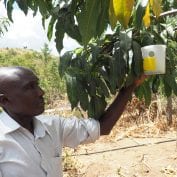
As farmers from South Asia to East Africa to Latin America can attest, there is a lot of know-how and hard work behind those sweet and juicy fruits.
As a single mother of two with little formal education, Prisca Cherono couldn’t find any viable employment opportunities in Eldoret, Kenya. So she pursued the only path she thought was open to her: domestic help. “I had resigned myself to do this until I die because I saw no…
Simple changes learned from TechnoServe's Smart Duka program help shop owners in informal settlements of Nairobi to improve their businesses and their livelihoods.
Kenyan farmers and businesses are improving the mango value chain through sustainable post-harvest handling practices and technologies.