


Lasting Impact Spotlight: 10 Years of Entrepreneurship Training in Action
Learn how entrepreneurs like Jennifer Waruinu continue to apply the lessons they’ve learned from TechnoServe programs.
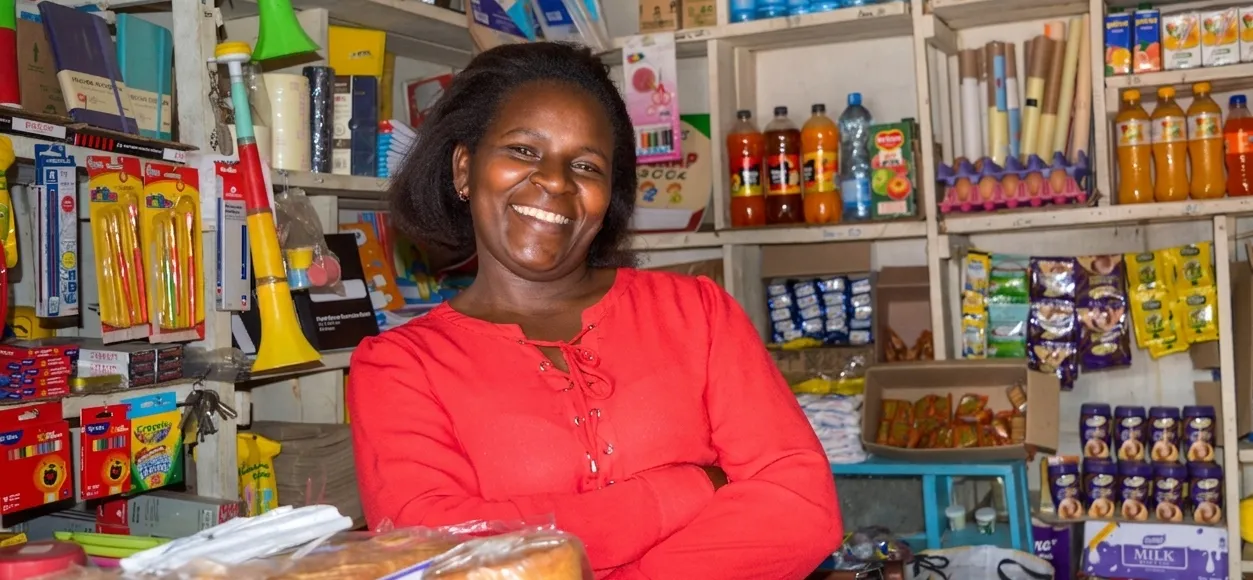
Jennifer Waruinu stands behind the counter of her shop, her eyes moving between the rows of neatly arranged merchandise and the customers filtering in. On the surface, she is a shopkeeper in a busy section of Nairobi, Kenya. In reality, she is an entrepreneur and strategist who has spent the last decade applying a specific set of business tools to keep her business and family afloat.
Entrepreneurship Training in Kenya
Ten years ago, TechnoServe CEO Will Warshauer met Jennifer and her husband, George Ndirangu, in their small shop in the Dandora area of Nairobi. In a 2016 blog post, he shared how entrepreneurs like Jennifer and George were learning to treat their small shops, known as dukas, as professional enterprises through TechnoServe’s Smart Duka program, a partnership with the elea Foundation and Citi Foundation.

Over the last 10 years, the Smart Duka program has reached over 50,000 micro retailers, 63% of whom are women. It has also helped entrepreneurs access $5.5 million in financing through working capital loans. Revenue growth has been between 30% and 40% for most participating businesses.
Applying practices they learned through the program, Jennifer and George improved their store’s layout, organized product display, and posted prices. After joining the program and making changes to their shop, their monthly sales jumped by 30%.
Today, Jennifer is proof that the lessons stuck.
How Entrepreneurship Training Built a Decade of Stability
Business ownership is rarely a straight upward line. Jennifer describes her current situation as stable, but she doesn’t gloss over the difficulty of the last few years, both personally and professionally. The economic environment has shifted significantly since the program began. She now faces a surge in online competition and rising costs.
Despite these external pressures, the shop, Turning Point, remains open. Many small businesses fail within their first few years, yet Jennifer’s shop has been around since 2009.
She uses the surplus from her sales to restock her shop and invest in more stationery supplies. “I also use my income for personal needs, such as my children’s school fees and managing my own health expenses,” she explained.
Skills Jennifer Still Uses Today
A decade after participating in the program, Jennifer still uses the merchandising and display techniques she learned to attract customers. She understands that how a shop looks determines who walks through the door and purchases something.
But her most effective tool is her ledger. Jennifer maintains strict record-keeping, which she says helps her understand her stock flow and budget effectively without needing large loans. Because she understands her budget so clearly, she has avoided the trap of high-interest debt. She grows her business through her own cash flow.
“[The training] taught me personal effectiveness and financial management, including how to handle debt and investment,” she explained. These skills became her safety net during her most difficult personal trial.
How Entrepreneurship Training Builds Resilience
The true test of Jennifer’s business training came when her husband, George, passed away a few years ago. Suddenly, she was the sole provider, facing the challenge of running the shop and the household entirely on her own.
The technical skills she acquired helped her remain resilient in the face of personal loss. “These skills helped me adjust to the ‘new norm’ of running the shop alone and providing for my family after the passing of my husband,” Jennifer explained. She didn’t have to learn how to manage the books while grieving because she already knew how. And she didn’t have to figure out how to keep the business profitable during a crisis because the systems were already in place.
Creating Ripple Effects for Women Entrepreneurs
Jennifer’s success has not stayed within the four walls of her shop. She has become a local leader. “I have become a role model for other women in my area who come to me for business advice and shop layout ideas,” she shared.
Within her “chama,” an informal women’s group, she shares her knowledge on managing finances and running a professional operation. She is also ensuring the longevity of her own enterprise by training her children to run the family business.

As TechnoServe celebrates 10 years of its entrepreneurship practice, Jennifer’s story reminds us why this work matters. It has always been about more than a single training session or a short-term increase in revenue. It’s about equipping people with a set of skills that they can carry for a lifetime.


