


Kenya Leather Industry: Unlocking Value Behind the Hide
Table of Contents
- Introduction
- Why the Kenya Leather Industry Holds Untapped Economic Potential
- Where Kenya’s Leather Value Chain Loses Opportunity
- Farm-Level Challenges: Hides, Skins, and Livestock Quality
- Improving Hide Quality Through Better Flaying and Preservation
- Tanneries, Technology, and Leather Production Standards
- How MSMEs Can Grow Kenya’s Leather Goods and Footwear Sector
- The Future of Kenya’s Leather Industry Growth
Kenya’s massive livestock population should make it a global leather leader, yet millions of hides and skins are exported as low-value materials. Through the LEAP program, we shift the focus to the systemic issues that are holding back a massive economic opportunity.
Kenya is home to one of Africa’s largest livestock populations, making it an excellent candidate for a thriving leather sector. Yet despite this potential, millions of hides and skins fail to reach their full market value each year, resulting in missed economic opportunities.
Why the Kenya Leather Industry Holds Untapped Economic Potential
Public interest typically centers on the final products: luxury handbags, dress shoes, accessories, and more. But the real story starts long before a hide is transformed into a consumer product. Most hides currently leave the country as “wet blue.” This is a semi-processed state, and because the material is exported so early, the profits and jobs move to foreign markets while Kenya retains only a small fraction of the value.
Where Kenya’s Leather Value Chain Loses Opportunity
The leather value chain is a multi-layered ecosystem that begins at the farm level, progresses through slaughterhouses and aggregation centers, moves into tanneries for processing, and ultimately reaches artisans and manufacturers who convert leather into finished products for local and international markets. Each level of the chain plays a critical role in determining the quality, value, and competitiveness of the final product.
However, despite the interdependence among these actors, the sector continues to operate within fragmented, poorly coordinated systems. Interventions are often implemented in isolation, with limited alignment between institutions, industry players, technical support programs, and market actors across the chain. As a result, challenges at one level frequently carry over to the next, creating inefficiencies that accumulate throughout the production process.
For example, issues originating at the farm and slaughterhouse level directly affect tannery output quality, while limitations in tanning and finishing processes impact the competitiveness of manufacturers and artisans downstream. Yet support mechanisms, policies, technical assistance programs, financing initiatives, and capacity-building efforts are rarely designed and delivered through an integrated value chain approach.
This fragmented institutional structure limits the effectiveness and sustainability of interventions, often resulting in duplicated efforts, inconsistent standards, weak traceability, and slow sector-wide transformation. To achieve meaningful impact, there is a growing need for coordinated, system-driven interventions that strengthen linkages across the entire leather value chain rather than addressing challenges at isolated points.
Farm-Level Challenges: Hides, Skins, and Livestock Quality
The quality of hides and skins is largely determined by animal husbandry practices. Poor livestock management, disease, parasite infestation, branding marks, and skin damage significantly reduce the value and usability of raw materials before they even enter the market system. Despite this, farmers often have little incentive to adopt better practices, as existing market structures rarely reward higher-quality hides and skins with premium pricing.
Improving Hide Quality Through Better Flaying and Preservation
Additional value losses occur through poor flaying, handling, and preservation practices. In many cases, undertrained or underpaid workers rush the flaying process, leading to knife cuts and physical damage that reduce the suitability of hides for high-value leather production. Inadequate preservation methods, poor storage and transport conditions, and weak grading systems further compromise quality before hides reach the tannery stage. These inefficiencies create downstream quality challenges that affect the entire production chain.
Tanneries, Technology, and Leather Production Standards
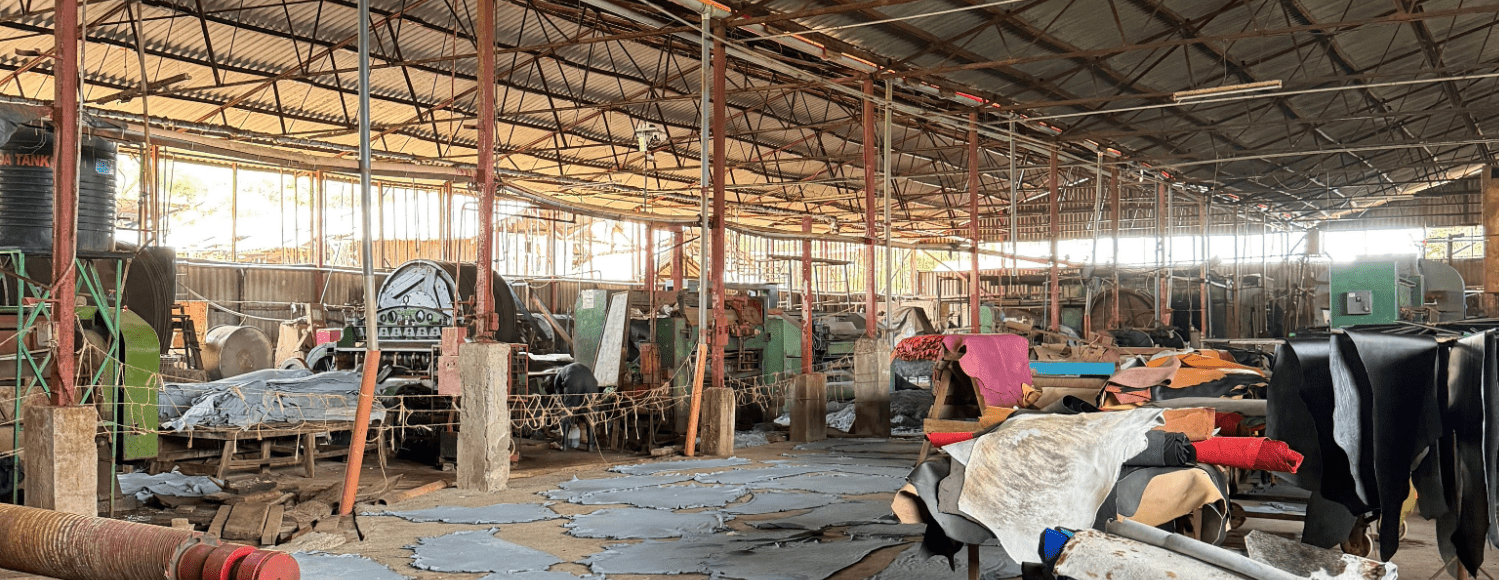
At the tannery level, limited access to modern technology, high operational costs, and aging infrastructure continue to constrain productivity, efficiency, and consistency in leather processing. Many tanneries struggle with outdated machinery, limited automation, inconsistent process controls, and inadequate environmental management systems. Compliance with international standards and certifications, including the Leather Working Group (LWG) standards and National Environmental Management Authorities (NEMA) requirements, remains a challenge for many operators, limiting competitiveness in export and premium markets. These gaps reduce the sector’s ability to produce high-quality finished leather that meets global market expectations.

How MSMEs Can Grow Kenya’s Leather Goods and Footwear Sector
At the enterprise level, micro, small, and medium enterprises (MSMEs) play a critical role in transforming leather into footwear, bags, belts, and other finished products. However, many enterprises operate with limited technical capacity, weak production systems, low product standardization, and inadequate market access. Competition from imported and second-hand products further constrains growth and profitability. Additionally, weak financial management systems, poor record-keeping practices, and limited business formalization reduce MSMEs’ ability to attract investment, access financing, and scale into competitive manufacturing businesses.
The Future of Kenya’s Leather Industry Growth
TechnoServe is working to address these challenges in Kenya through the Leather and Essential Oils Advancement (LEAP) program, a partnership with the German Agency for International Cooperation (GIZ).
The program is moving away from individual business plans to build an industry-wide cluster platform. This model creates a collaborative network of leather artisans that will be part of a common manufacturing facility where they can share expensive machinery and purchase materials in bulk. By pooling resources, these artisans can reach export markets that were once out of reach.
Changing Kenya’s leather sector means changing what happens long before the leather reaches the market by focusing on the systems, people, and processes that define this high-potential market. TechnoServe is excited to be a part of that change with this LEAP into the future.

