


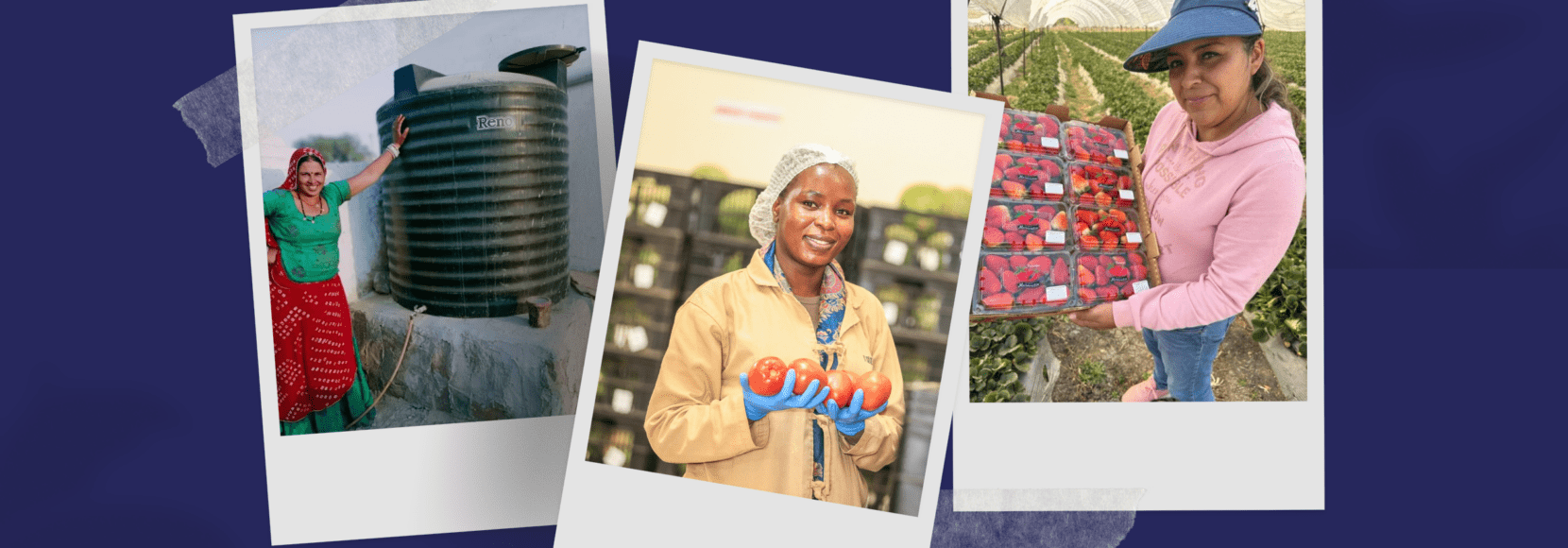
November 2026 Photo of the Month: At COP31, the Future of Food Is on the Table
Our monthly photo series highlights the beauty and emotion in the lives of our clients around the world. This November, as world leaders gather for COP31 in Antalya, Türkiye, we look back at the people working to make food systems more resilient in the face of a changing climate.
Earlier this year, headlines raised concerns about a possible super El Niño, a powerful climate event that could severely disrupt agricultural production in parts of Africa, India, and Central America.
For millions of farmers, the effects of a changing climate are already part of everyday life. Unpredictable rainfall, extreme temperatures, and droughts make it harder to grow food and earn a reliable income. The consequences also affect the businesses that buy, process, and distribute agricultural products.
This November, the United Nations Climate Change Conference (COP31) brings governments, implementing organizations, activists, and civil society together to negotiate how countries will respond to climate change. Agriculture and food systems are an important part of that conversation.
Here are some topics top of mind for TechnoServe:
- More climate finance needs to reach food systems: Farmers and food businesses need greater access to financing to invest in regenerative practices and manage climate risks.
- Farmers need support to adapt to a changing climate: Better water management, healthier soils, and more resilient farming practices can help protect agricultural livelihoods.
- Climate action needs to extend beyond the farm: Reducing food loss, improving processing, and strengthening supply chains are also important for building sustainable food systems.
- Women farmers need better access to climate finance: Addressing the barriers women face in accessing finance and other resources can help them invest in more resilient farms and businesses.
As the future of food takes center stage at COP31, we’re taking a closer look at what’s already happening on the ground. This month’s photos feature farmers and entrepreneurs finding ways to adapt to a changing climate and make their businesses more sustainable.
PHOTO 1: Every Drop Counts

In Rajasthan, India, where some areas receive less than five inches of rain each year, every drop of water counts.
For Manhori Devi, a guar farmer and small shop owner, getting enough water for her family’s needs and vegetable garden was a daily challenge. With support from TechnoServe, she installed a rooftop rainwater harvesting system that collects rainwater from her roof and stores it in a tank.
The system has helped her grow more vegetables for her family, provide water for her livestock, and spend less time collecting water.
“Now, I don’t need to walk a long distance for water collection,” she said. “I can grow more vegetables and spend more time in my shop.”
Manhori is now encouraging other farmers in her community to adopt the same water-saving solution, showing how a relatively simple investment can help families adapt to increasingly difficult growing conditions.
PHOTO 2: Making Better Use of What We Grow

Have you ever passed over a bruised tomato or an oddly shaped carrot at the grocery store? You’re not alone. But what happens to all the perfectly good produce that doesn’t make the cut?
In Nairobi, Kenya, TechnoServe’s NutriSave program is working with local businesses to give surplus and imperfect fruits and vegetables another chance.
Through a pilot with Six Square Limited, produce that might otherwise go unsold is washed, peeled, chopped, and packaged into ready-to-cook products. These are then sold to local food vendors through the Baba Mboga app, making it easier for small businesses to access fresh ingredients while saving time on food preparation.
More than 200 informal food vendors participated in the pilot, with over 70% being women.
By finding new markets for overlooked produce, the initiative is testing ways to reduce food loss while helping local food businesses serve their customers.
Photo 3: Healthier Soil, Stronger Harvests
Who says growing strawberries more sustainably can’t also be good for business?
In Michoacán, Mexico, strawberry farmers are showing how healthier soils and better farming practices can lead to bigger harvests and higher incomes.
Through the Madre Tierra program, TechnoServe and Danone are helping farmers adopt regenerative practices that improve soil health, reduce the use of chemical inputs, and conserve water. The program also connects farmers directly with reliable buyers, giving them a stronger market for their strawberries.
The results are promising: farmers have increased their incomes by 30%, while the program has helped reduce the carbon footprint of strawberry production by 50%.
“Before, I felt that the land was exhausted,” said strawberry farmer Claudia Cuenca. “Now my crops are stronger, and I know I am taking care of the soil that will sustain my family for many years, even generations.”
What Comes After COP31?
COP31 puts important questions on the table about how countries will finance climate adaptation and reduce emissions from food systems.
For smallholder farmers and food businesses, access to that financing remains a major challenge. Adopting more sustainable practices often requires upfront investment, and the economic benefits can take time to materialize.
Making progress will require policies and investments that reflect these realities, so that farmers and businesses can afford to adopt practices that benefit both their livelihoods and the environment.
Read more about resilient food systems.
Photo of the Month

