


From Surplus to Supper: What Food Loss in Kenya Taught Me About Food Systems
TechnoServe’s NutriSave program is developing innovative solutions to turn surplus produce into nutritious, affordable meals while supporting local vendors and farmers in Kenya.
Every day after work, I pass by my favorite grocery store to pick up vegetables for dinner. I know exactly what I’m looking for: red tomatoes, straight carrots, bananas without too many spots. A couple of months ago, I didn’t think much about the bruised tomatoes, oddly shaped carrots, or the least green vegetables that buyers like me overlooked.
Like many shoppers, I did what most of us probably do without thinking twice: picking what looks fresh and appealing. I didn’t stop to think what those choices meant for the produce left behind.
What Food Loss Looks Like in Kenya
But working on TechnoServe’s NutriSave program changed how I see that small display of vegetables. I now see “imperfect” fruits and vegetables not as less valuable food, but as food that still has value if we look beyond appearances.
The more I learned about food loss, the more I realized what I saw at my mama mboga, a small-scale vegetable vendor, was only a small part of a much bigger story. A farmer may have produce that does not meet conventional market specifications. A wholesaler may have more stock than expected. A food vendor may need affordable produce but have limited visibility into what is available and where to find it. Somewhere between these points, perfectly usable produce is falling through the cracks.

Looking at Food Loss Differently
This is the challenge NutriSave, supported by the Gates Foundation and the Foreign, Commonwealth & Development Office, has spent the past three years exploring in Kenya. How do we reduce food loss and waste while making nutritious food more accessible to low-income consumers?
A lesson that has stayed with me is that there isn’t one big solution to a problem this complex. Sometimes, finding what works means trying different ideas, testing them, learning from what happens, and then asking what has the potential to improve the food system.
That is what NutriSave set out to do three years ago. The program began by exploring 27 potential interventions across Kenya, testing different ideas to understand what could work in practice. Through research, prototyping, and iteration, the program identified two approaches with potential to address different points in the food system.
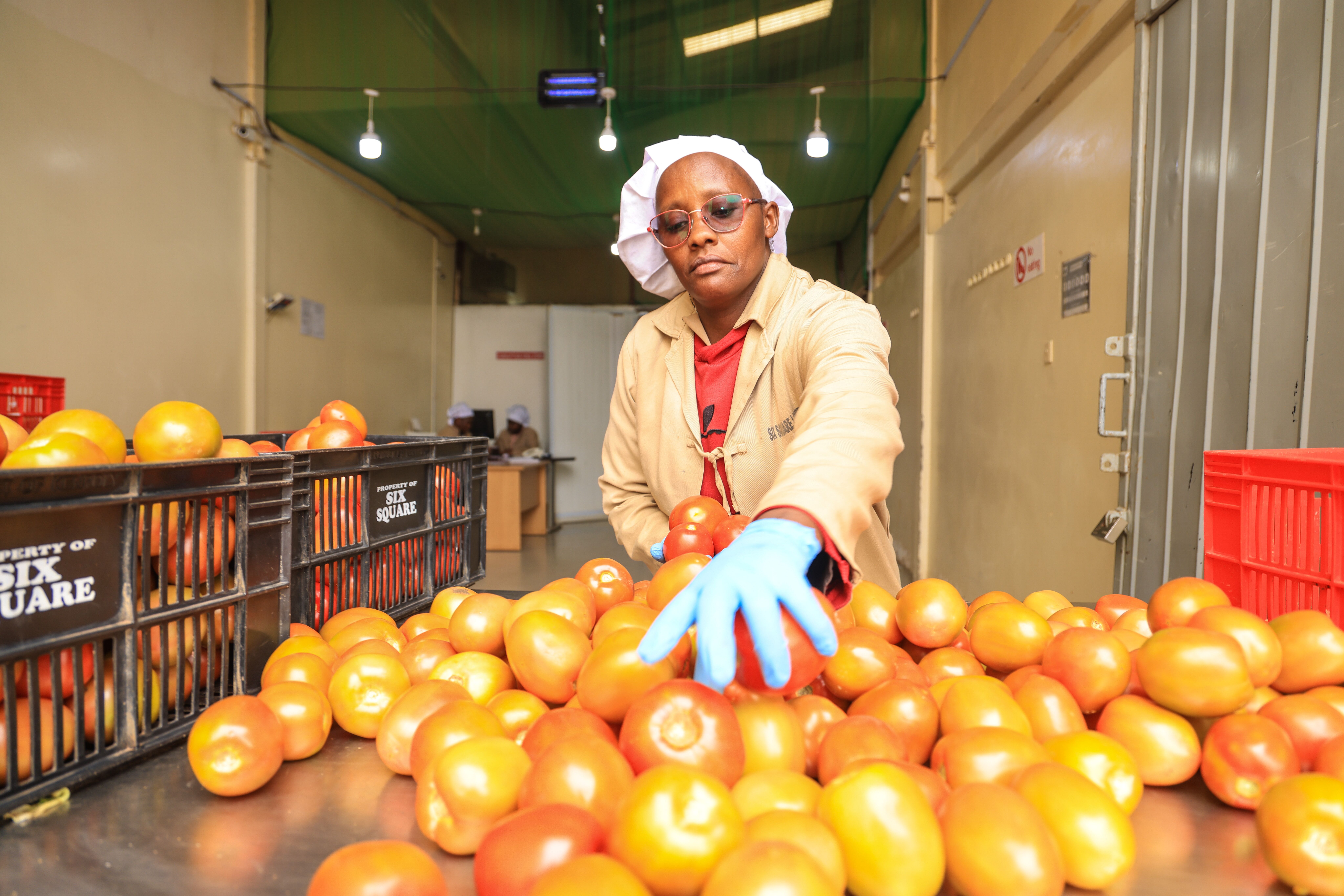
For this story, I want to focus on one of them: the Washing, Cutting, Peeling and Packaging (WCPP) model. WCPP transforms surplus and cosmetically imperfect fruits and vegetables into minimally processed, ready-to-cook products and connects them to informal food vendors through the Baba Mboga app.
Giving Overlooked Produce Another Chance
At first glance, washing, cutting, peeling, and packaging vegetables might not sound like a radical intervention. But think about the produce you leave behind when choosing what to take home. What if some of that produce could be given another chance to find a market?
Instead of asking, “Does this produce look perfect enough for the conventional market?” we ask: “What value can we still create from excess or overlooked produce?”
Washing, cutting, peeling, and packaging produce creates another opportunity to turn food that might otherwise be overlooked into something more convenient for the people who need it.
For informal food vendors in Nairobi, that convenience matters. Preparing vegetables takes time, water, and labor. Small businesses can’t always afford these resources. A ready-to-cook product can then create value in two ways: by giving overlooked produce another route to market and by making food preparation easier for vendors.
I saw this come to life when a vendor used peeled and chopped potatoes supplied through the pilot to prepare roasted potatoes (bhajias) to sell to Strathmore University students. And as any student will tell you, nothing matters more than saving money. Seeing this made me see the connection between the produce, the vendor, and the students who ultimately enjoyed an affordable meal.
How Technology Connects Surplus Produce to Vendors
A great product is only useful if it can reach someone who needs it. Through the pilot, TechnoServe and Six Square identified a missing link: informal food vendors needed a simpler way to connect with available produce and manage the journey from order to delivery. With TechnoServe’s catalytic funding, the teams built on what they learned through market testing and co-created the Baba Mboga app. It was designed to make it easier for vendors to find, order, and receive fresh produce.
Food loss can sometimes be a problem of information and coordination. If surplus produce exists but the right buyer does not know about it, there is a gap. If a vendor needs a particular product but cannot easily find a supplier, that’s another gap. While technology cannot solve every challenge in a food system, it can help close some of those gaps.
When I first interacted with the Baba Mboga app, it reminded me of the food delivery services on my phone. The difference is what is being delivered—fresh produce that’s already prepared and ready to cook, almost like ordering from your favorite mama mboga but delivered to your doorstep.
And that’s one of the most interesting things about NutriSave. Innovation is about finding better ways to connect people, products, and markets.
Who Benefits from Better Connections
Technology may help connect people, products, and markets, but those connections only matter if they work for the people at the heart of the food system. Farmers, aggregators, processors, and informal food vendors all play a role in moving food from farms to consumers. Women are central to these roles, from producing and selling food to running businesses that bring it to consumers.
Over 70% of the 200+ informal food vendors who participated in the pilot program are women. This made me think differently about agricultural innovation. The question can’t only be, “What technology can we introduce?” It also has to be, “Who is this technology designed for, and does it make their work easier?”
For me, this is one of the significant lessons from NutriSave. Innovation works best when it starts with the realities of the people within the system. The goal is not to replace the people who move food through our communities. It is to give them better tools, better information, and better connections so the system works for them.

What I am Taking Away from NutriSave
After working on NutriSave, I have come to see food loss and waste as much more than food that is thrown away. It presents opportunities to help a farmer expand their market, a food business find a reliable supply source, and a customer access affordable, quality food.
The WCPP pilot and Baba Mboga app offer two different solutions to a complex puzzle. The former creates value from produce that might otherwise be overlooked, and the latter strengthens the connection between suppliers and the vendors serving consumers.
Perhaps the biggest lesson I am taking away from NutriSave is that better food systems are built not only through technology, but through better connections and a better understanding of the people who make those systems work.
As we mark the International Day of Awareness on Food Loss and Waste, that feels like an important lesson to carry forward. Wasting less starts with seeing value where others might not, and then finding a way to move that value from surplus to supper.

A Different Way to Make A Difference.
Discover how TechnoServe bridges the gap between “thinking big” and practical business solutions that help hardworking people move from poverty to prosperity around the world.

