
National Coffee Day 2026: Choose Impact Over Discounts
Table of Contents
- Introduction
- Why Do We Celebrate National Coffee Day?
- The History of National Coffee Day
- Who Invented Coffee? The Ethiopian Origin Story
- Where Does Coffee Come From? From Ethiopian Hillsides to Your Cup
- Where Is Coffee Grown Today?
- What Makes TechnoServe’s Work with Coffee Farmers Different?
- How Coffee Farming Changes Lives
- Is Fair Trade Coffee Worth It?
- The Real Story Behind Your Cup
- How to Celebrate National Coffee Day 2026 on September 29
- National Coffee Day vs. International Coffee Day: What’s the Difference?
- What About the Free Coffee Deals?
- National Coffee Day FAQs
National Coffee Day 2026 falls on Tuesday, September 29. It is celebrated in the United States on the same date every year. This year, coffee lovers can learn where coffee beans come from and how your daily cup of brew can transform the lives and livelihoods of smallholder coffee farmers around the world.
Editor’s note: This article was originally published on September 12, 2025, and has been updated.
Coffee is one of the world’s most widely consumed beverages — the International Coffee Organization estimates that as many as 3 billion cups are drunk every day. More than just a morning brew or a caffeine fix, it is a way for people to connect at a local cafe or coffeehouse. Each year on September 29, people across the country celebrate National Coffee Day with their favorite coffee drink. But beyond the lattes, espresso shots, and cold brews lies a deeper story, one of hard work, resilience, and impact. This year, celebrate National Coffee Day by learning how your daily cup can transform lives and livelihoods.
Why Do We Celebrate National Coffee Day?
National Coffee Day is a time to honor the beverage that fuels our mornings and brings people together. This food holiday also provides an opportunity to recognize the people who make every drink possible: smallholder farmers across Latin America, Africa, and Asia. While many use this observance to get free coffee deals, TechnoServe believes it’s also a day to reflect on how coffee connects us across the globe, from small farms to the local coffee shop.
The History of National Coffee Day
Coffee has long held cultural and economic significance in the United States and around the world. National Coffee Day first emerged as a way for retailers and coffee lovers to celebrate the beverage and its global roots. It is now marked each September 29, while International Coffee Day, organized by the International Coffee Organization, follows on October 1. Since then, it’s become a holiday tradition marked by discounts, giveaways, and special events. But it also serves as a powerful opportunity to spotlight the millions of smallholder farmers who grow coffee beans despite challenging conditions.
Who Invented Coffee? The Ethiopian Origin Story
Nobody invented coffee — it was discovered. Coffee originated in the forests of Ethiopia, where Coffea arabica still grows wild today. From there, it spread through Yemen and the Arabian Peninsula, reaching Europe’s coffee houses in the 1600s. Whether you prefer a dark roast or a lighter flavor with bright acidity, Ethiopia is still where TechnoServe’s coffee work runs deepest.
Where Does Coffee Come From? From Ethiopian Hillsides to Your Cup
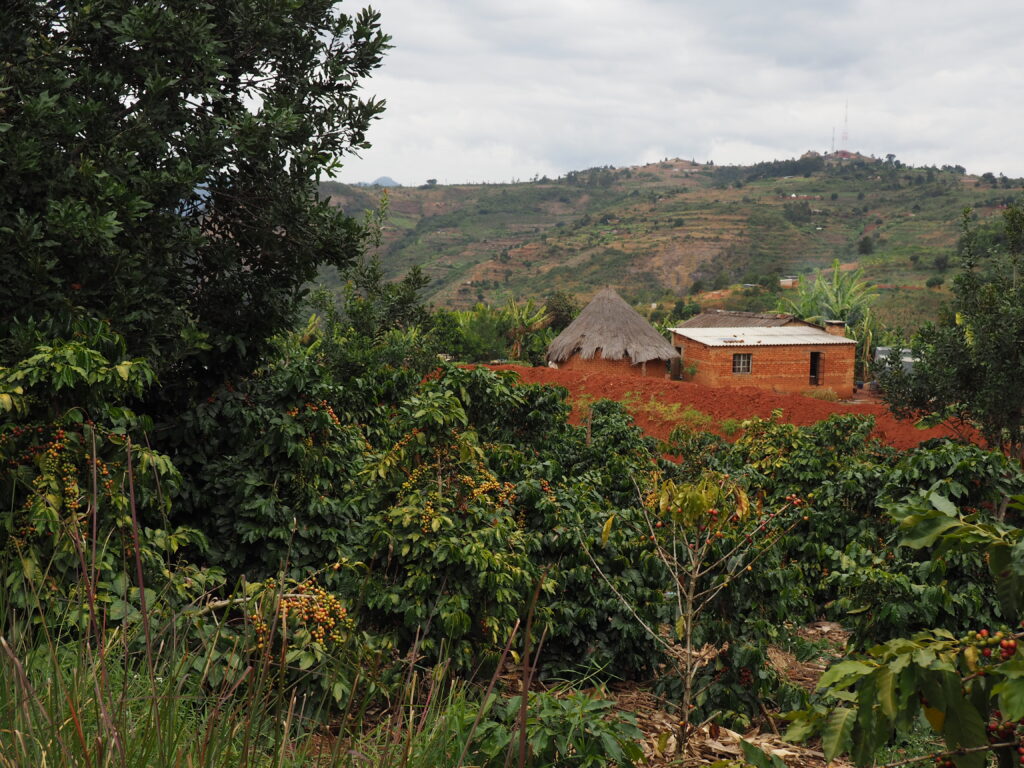
The FAO estimates that smallholder farms produce the majority of the world’s coffee, most of them family-run and under five hectares (FAO, 2026). So where does coffee come from? Mostly from small family farms, not large plantations. These farmers face challenges from rising temperatures, unpredictable rainfall, and limited market access — pressures that are pushing up the price of coffee worldwide (World Coffee Research, 2026). TechnoServe has spent decades working with coffee farmers to improve quality, increase incomes, and access markets.
Where Is Coffee Grown Today?
Coffee grows in the tropics, along the belt between the Tropics of Cancer and Capricorn. According to the International Coffee Organization, Brazil alone accounts for roughly a third of global coffee production, followed by Vietnam and Colombia. The industry is also reviving in Zimbabwe. But Ethiopia — coffee’s birthplace — remains one of the highest-quality single-origin producers, and East African coffee is where TechnoServe concentrates its work
What Makes TechnoServe’s Work with Coffee Farmers Different?
TechnoServe’s approach focuses on four key areas:
- Better farming – Increasing the use of best farming practices through field-based agronomy training and farmer field schools using local trainers
- Better processing – Supporting the establishment and management of wet mills to improve the quality of farmers’ coffee at the processing level.
- Better supply chains – Developing lasting market linkages and advancing sector growth by engaging with industry players to share learnings and align priorities
- Better environmental and social standards – Pioneering simple, cost-effective solutions for an environmentally sustainable and financially transparent coffee sector.
Eight years ago, Fedila Hussein struggled to earn a living from coffee in Ethiopia. Her coffee trees were old and were not producing enough to cover the living expenses of her family of six. After participating in a TechnoServe program, Fedila learned essential techniques like stumping old, unproductive trees to improve her coffee yields. She took on that advice and has seen a 23-fold increase in her coffee production. Now others are coming to her for advice.ee yields. She took on that advice and has seen a 23-fold increase in her coffee production. Now others are coming to her for advice.
“Nuredin, one of my husband’s friends who lives in a neighboring district, came to our house and was very much impressed by our changes,” Fedila said. “He asked us the secret behind our success. We told him it was the training we received from TechnoServe that changed our lives. Now prosperity is flowing into our life like a river, and he decided to stump his old coffee trees like ours.”
In Brazil, TechnoServe provided agronomy training to help producers like Edilaine Alves raise the quality of their coffee, allowing her to fetch a higher price for her beans. Her higher revenue has allowed her to purchase machinery to make farming more efficient, and she hopes to turn her farm into a family business.
“I want to equip my farm, make it grow, and consequently be more productive, and for the children to continue this work,” Edilaine said. “I want my daughter to do what she enjoys. She is still too young to [have this conversation], but whenever I can, I take her to the farm with me […] to encourage her along this path.”
TechnoServe’s work among coffee farmers also focuses on empowering women to become equal decision-makers for their farms. After joining a TechnoServe program, Damaris San Martín said she is growing more comfortable speaking up about running the farm. She said,
“The situation has been changing over the last few months, and they are inviting the women more and more now. There are farming practices that I have changed; you feel important, and you have more grounds to offer your opinion.”
How Coffee Farming Changes Lives
TechnoServe’s 2025 annual report records that 3.1 million people improved their lives as a result of TechnoServe’s work, which generated $489 million in financial benefits for the farmers and businesses we serve — 44% of whom are women.
When you support specialty coffee, you’re helping families send their children to school, invest in healthcare, improve their living conditions, and weather economic shocks. Coffee income can transform families and communities.
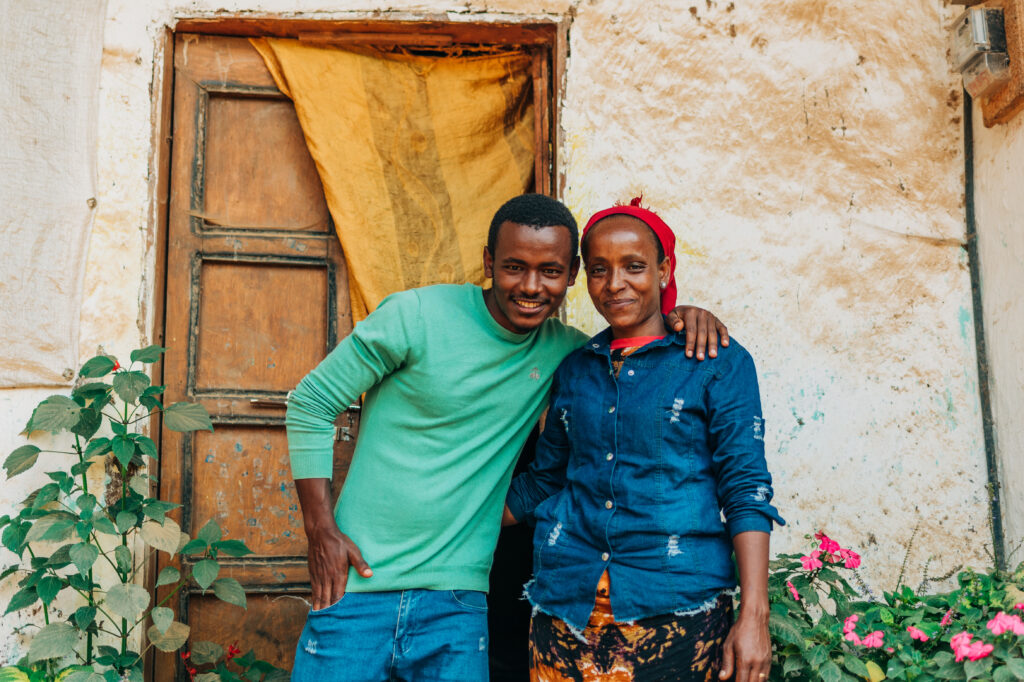
Meet Lubaba Mekonen, one of over 500,000 smallholder coffee farmers in East Africa who improved their coffee, incomes, and lives after working with TechnoServe—with impact lasting more than 10 years later. Since learning better coffee farming and business skills, Lubaba is one of the many TechnoServe program participants who have increased their income, scaled their business, and forged a pathway out of poverty, attracting the attention of leading brands like Nespresso, JDE Peet’s, and Stumptown along the way.
“The day I started training in coffee agronomy practices, I felt the weight of my life’s concerns instantly lift off my shoulders,” Lubaba explained.
Is Fair Trade Coffee Worth It?
Fair trade coffee guarantees farmers a minimum price for their beans, which protects them when global prices fall. It helps — but a price floor alone does not build a business. TechnoServe’s approach goes further: training in agronomy, better processing, and direct links to buyers, so farmers earn more because their coffee is better, not only because it is certified. Many farmers in TechnoServe programs sell ethically sourced coffee into both fair trade and specialty markets.
The Real Story Behind Your Cup
Your morning latte or espresso is the result of years of labor, planning, and hope. From preparing the land to processing cherries, to the final brewing method and roast, coffee farmers invest enormous effort into every harvest. Yet too often, they remain invisible in the global supply chain.
TechnoServe has worked with more than 500,000 smallholder coffee farmers in East Africa, with measured income gains still holding more than 10 years later. Our work helps bring these farmers into the spotlight, ensuring they benefit from the coffee economy they help sustain.
How to Celebrate National Coffee Day 2026 on September 29
This year, commit to brewing a better future.
Here’s how you can celebrate National Coffee Day with purpose and increase awareness for smallholder farmers:
- Choose high-quality, ethically sourced coffee beans that compensate farmers fairly— look for fair trade, direct trade, or single-origin labels from your favorite roaster.
- Donate to organizations that help coffee farmers thrive, ensuring the longevity of your favorite morning drink.
- Share stories of impact to raise awareness of the effort that goes into your morning brew
National Coffee Day vs. International Coffee Day: What’s the Difference?
National Coffee Day is September 29 in the United States. International Coffee Day is October 1, established by the International Coffee Organization in 2015 and marked in more than 70 countries. National Coffee Month is celebrated in August.
What About the Free Coffee Deals?
Yes — every major chain including Dunkin’, Starbucks, and Krispy Kreme typically offer free coffee or discount promotions on September 29. Enjoy your iced coffee or latte. Then consider what the farmer who grew that cup earned for it.
FAQs
National Coffee Day FAQs
Is National Coffee Day the same every year?
National Coffee Day is the same every year: September 29 in the United States. In 2026, it falls on a Tuesday. The date has not changed since the observance became widespread in 2009. International Coffee Day is separate and is marked on October 1.
Is today National Coffee Day?
National Coffee Day is September 29 each year, so today is National Coffee Day only if today is September 29. National Coffee Month runs through August, and International Coffee Day follows on October 1 — three chances to think about the farmers behind your cup.
Does Starbucks do National Coffee Day?
Starbucks has historically marked National Coffee Day with promotions, though offers change yearly. More significant is where that coffee originates: in Mbinga, Tanzania, TechnoServe’s Coffee Initiative helped farmers build roughly 50 wet mills, lifting quality so far that Starbucks began buying their coffee at premium prices.
Who gives out free coffee on National Coffee Day?
Chains including Dunkin’, Krispy Kreme, Peet’s, and Starbucks typically offer free coffee or discounts on National Coffee Day, though promotions vary each year. Smallholder farmers grow roughly 60% of the world’s coffee — and rarely share in those promotions
Why is International Coffee Day celebrated?
International Coffee Day is celebrated on October 1 to recognize coffee’s economic, social, and cultural importance — and the millions of smallholder farmers who grow it. The International Coffee Organization launched it in 2015, and it is now marked in more than 70 countries.
Where does coffee come from?
Coffee comes mostly from small family farms in the tropics, not large plantations: roughly 60% is grown by smallholder farmers working under five hectares. Coffee originated in Ethiopia, where it still grows wild. Brazil, Vietnam, and Colombia lead production by volume today.
Here are more fun facts about National Coffee Day.
Learn more about TechnoServe’s coffee work.
Verify our impact on Charity Navigator and Candid.