How Digital Financial Inclusion Powers Women Entrepreneurs in Mozambique
Learn how a digital payment service is helping women entrepreneurs in Mozambique take control of their finances and their futures.
Elsa Valoi used to watch paying customers walk away simply because they had money on their phones instead of cash in their hands. When selling food at her stall in Albazine market, she found that mobile wallet payments like M-Pesa came with a catch: extra withdrawal fees. Sometimes buyers refused to pay those fees, and Elsa would miss out on the sale.
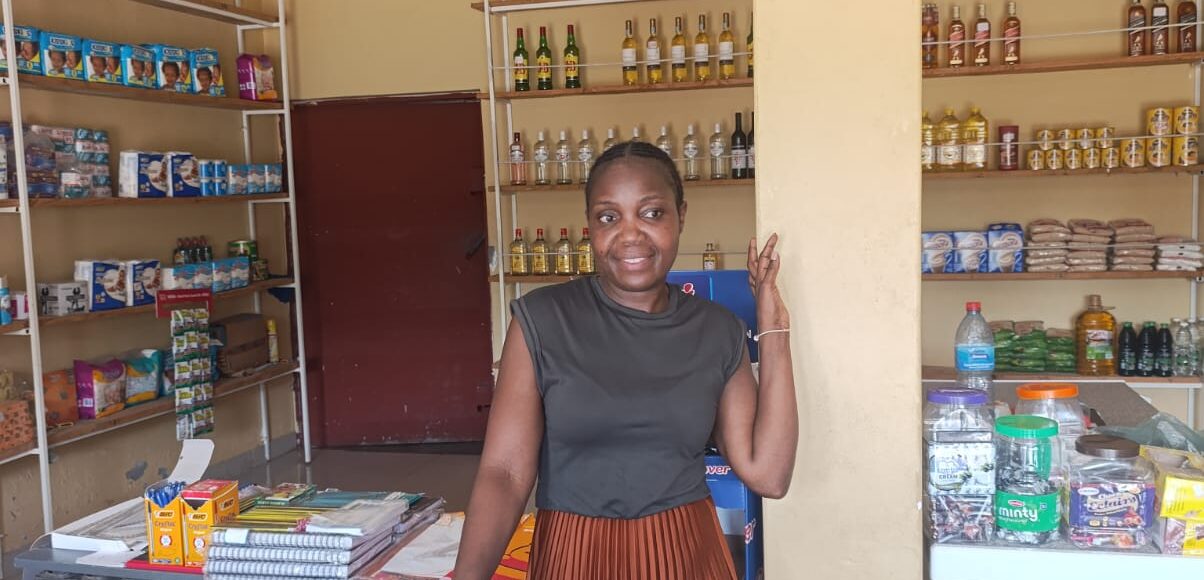
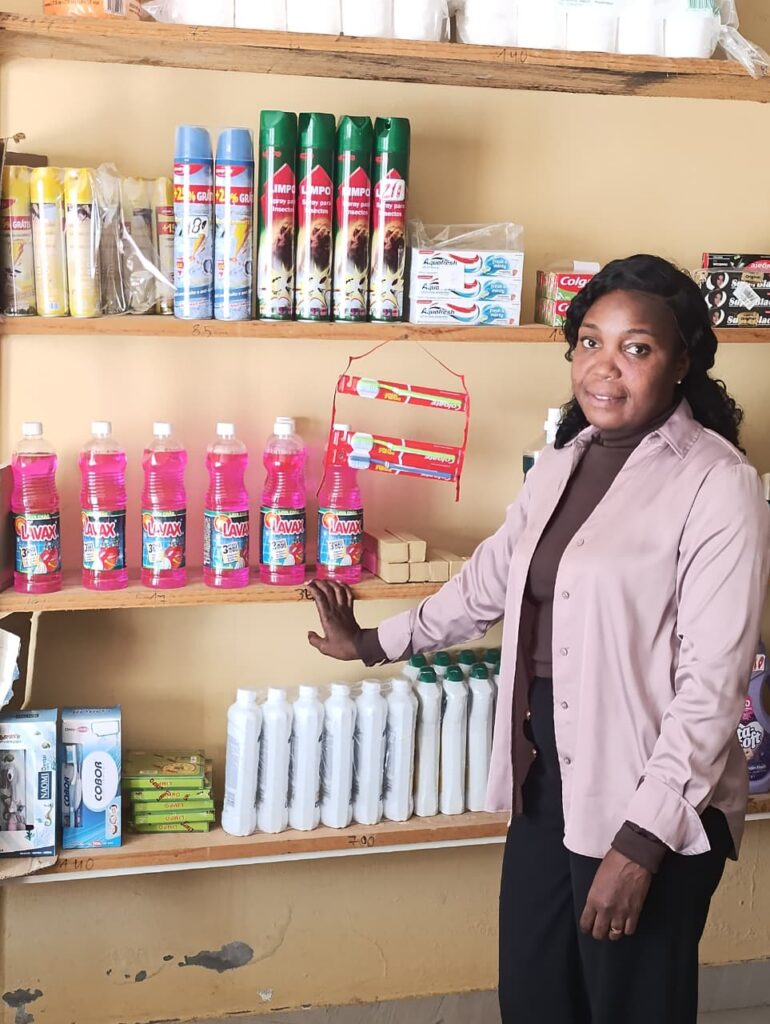
Eventually, with her husband’s support, Elsa moved from her market stall to open a small grocery store in Maputo, Mozambique. There she sold food, hygiene products, and cleaning supplies. But the payment problem followed her.
Bringing Paga Fácil to Shop Owners
Then, in April 2025, a Paga Fácil promoter visited Elsa’s store. Paga Fácil, which means “easy pay” in Portuguese, is a digital payment service tailored for formal and informal business owners. The visit was part of a partnership between TechnoServe’s Women IN Business (WIN) 2.0 program and M-Pesa, the parent company and a leading mobile phone-based money transfer and microfinance service. TechnoServe co-developed a communications strategy with M-Pesa to help promote Paga Fácil, with a particular focus on reaching women entrepreneurs.
Rather than just handing out flyers, the Paga Fácil promoter explained that the service provides shop owners with a private account to manage business funds separately, giving them greater control over the payments they receive from customers.
“If it weren’t for that young woman [promoter] explaining it to me, I don’t know if I would have been interested in Paga Fácil, because it had been around for a long time, but I had never paid any attention to it,” Elsa said.
Elsa is a married mother of four and one of roughly 13,600 informal merchants registered in this payment service. Over her first year using Paga Fácil, she received about 90 payments, averaging 180 meticais ($2.82) per transaction. That volume made her one of the top-performing Paga Fácil merchants in Maputo.
Separating Business Revenue from Personal Savings
Women run many of Mozambique’s informal micro-retail businesses, but they operate under distinct constraints compared to men. They balance significant domestic responsibilities, face safety risks carrying physical cash, and often hold less control over household assets.
For Elsa, being able to separate household money from store revenue digitally was one of the main benefits.
“Paga Fácil is already like a bank, where you can save little by little for any business, even if it’s just the 10 meticais you earn each day,” Elsa said. “Just being able to say, ‘No, I’m not going to withdraw this money until the end of the month,’ is already a win.”
Managing daily earnings requires discipline and sticking to a plan.
“What makes a business grow is knowing how to use your own money,” Elsa explained. “It doesn’t matter if it’s a lot or a little. Using it means knowing how to allocate it: you need money to restock products, and you need money set aside for savings.”
Educating Customers at the Checkout Counter
Because many shoppers aren’t familiar with Paga Fácil, Elsa actively introduces it at her counter. Recently, a customer tried to buy 220 meticais’ worth of items using M-Pesa, but checked her balance and hesitated.
“I only have these 220; I don’t think it’ll cover it,” the customer said, assuming she would also need to pay the withdrawal fee.
Elsa showed her how to pay via Paga Fácil with no extra charges and walked her through the steps on her phone. The customer completed the transaction and left satisfied. Elsa noted that once buyers hear “easy” and “no fees,” they get interested right away. She frequently walks customers through the payment steps on their phones while they enter their PINs. Although Paga Fácil is free for end customers, shopkeepers who use it pay a small fee when they withdraw funds from their accounts.
Elsa is one of approximately 6,100 micro-entrepreneurs who received guidance and basic financial literacy training. It is estimated that about 9% of these micro-entrepreneurs now separate personal money from business money.
A Different Way to Make A Difference.
Discover how TechnoServe bridges the gap between “thinking big” and practical business solutions that help hardworking people move from poverty to prosperity around the world.
Building a Legacy of Financial Inclusion in Mozambique
Moving from cash to digital payments helps entrepreneurs, particularly women, take control of their finances. When shopkeepers like Elsa can keep their business money separate from their personal expenses, they’re empowered to make smarter financial decisions. And by building a digital sales trail, they’re creating the proof they need to eventually access the credit and capital that can take their businesses to the next level.
M-Pesa knows that while teaching merchants the basics was a great start, the real challenge now is getting more customers to use the service since many shoppers still don’t know it exists. Looking ahead, M-Pesa is focused on making Paga Fácil even more useful. The company is exploring new ideas, such as using payment history to add new services and value propositions. By focusing on these changes, M-Pesa aims to make Paga Fácil a trusted, go-to tool for business owners and their customers across Mozambique.