Resources for Expanding Rural Financial Services
Research, guidance, and tools from WIN 2.0 offer practical lessons for supporting financial service providers to reach women in rural Mozambique.
This study is one of a five- part series of learning products and tools designed to help companies to be more gender inclusive. This brief focuses on the learnings from a 12-month pilot, where four clear barriers were identified to successful implementation and the team eventually pivoted to redirect…
The guide places a particular focus on reaching women smallholder farmers (SHFs) as a customer segment. It is designed to be used alongside WIN’s other learning products including a study on rural women’s financial behaviours. Click here to download the Rural Readiness Self-assessment Tool: EN or PT…
This guide provides a structured approach that combines segmentation, inclusive materials, usability testing, capability-building across staff, and practical education to expand the reach and impact of products and services among women customers. Click here to download the Gender Inclusion Toolkit: EN or PT…
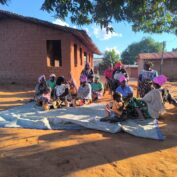
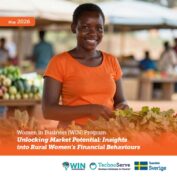
Low-income rural women in Mozambiqueare active economic agents. They farm, save,borrow, and invest in their business. Yet theformal financial sector has largely failed toreach them. This brief summarises findingsfrom 753 interviews with women smallholderfarmers (SHFs) across Nampula, Niassa, andZambezia provinces.
Low-income rural women in Mozambique are active economic agents. They farm, save, borrow, and invest in their business. Yet the formal financial sector has largely failed to reach them. This brief summarises findings from 753 interviews with women smallholder farmers (SHFs) across Nampula, Niassa, and Zambezia provinces.
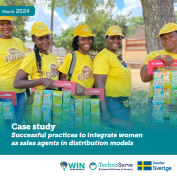
This case study is one of a four-part series designed to explore the effectiveness of interventions across different sectors to increase women’s economic empowerment. The series includes case studies on achieving women’s economic empowerment through four of WIN’s intervention areas: media, financialservices, distribution and management tools and information.
This case study is one of a four-part series designed to explorethe effectiveness of interventions across different sectors to increase women’s economic empowerment. The series includes case studies on four of WIN’s intervention areas: media, financial services, distribution and management tools and information. By promoting management tools and information…
This Food Processing Mapping was carried out between October 2022 – January 2023 as part of a series of studies designed to provide background context and strategic recommendations to inform FTF Premier’s strategy and workplan development. FTF Premier is a 5-year, USAID supported agricultural markets program with a goal of…