


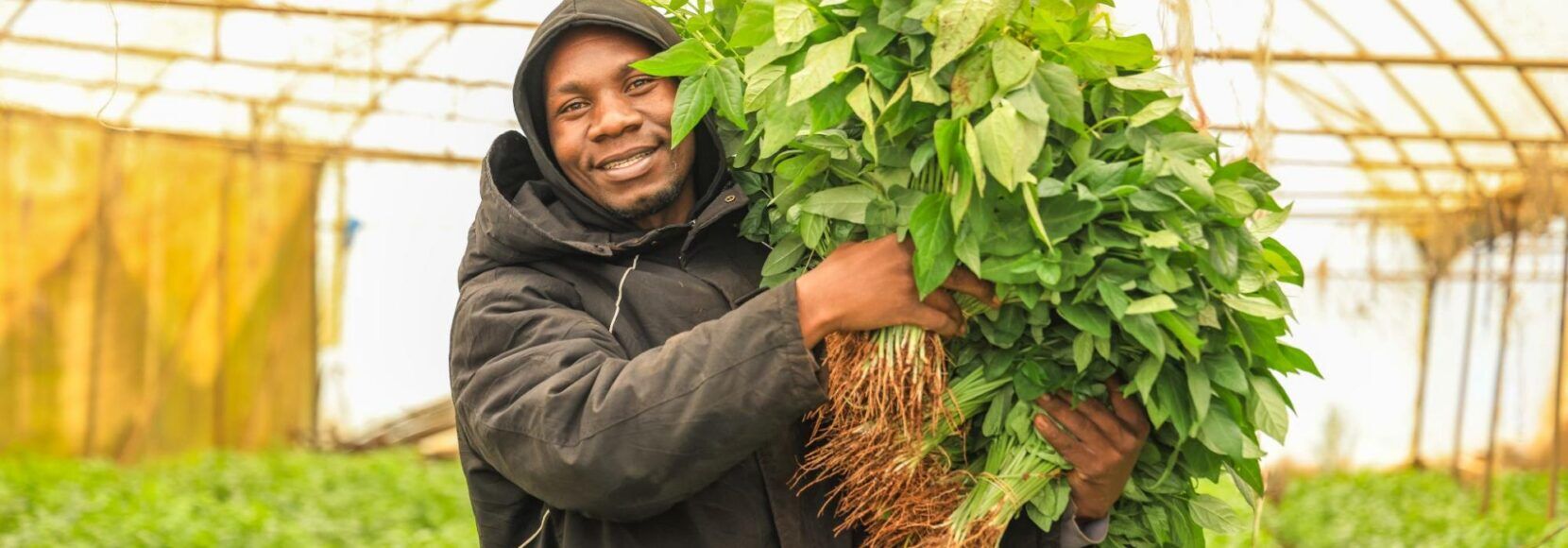
Building Sustainable Food Systems for a Healthier Future
Table of Contents
- Introduction
- Sustainable Food Systems Start With the Farmers Who Grow Our Food
- What Is a Sustainable Food System?
- The Four Dimensions: Environmental, Economic, Social, and Health
- Sustainable Food Systems vs. Food Security vs. Food Sovereignty
- The Problem: Why Current Systems are Falling Short
- Who Bears the Cost: Inequality in the Food Chain
- Strategies for Sustainable Food Systems: What Actually Works
- Sustainable Food Systems in Action: TechnoServe’s Approach
- Women Are the Backbone of Sustainable Food Systems
- How You Can Help Build Sustainable Food Systems
- Frequently Asked Questions About Sustainable Food Systems
What are sustainable food systems and why are they important? Find out how TechnoServe is helping build more sustainable food systems across Africa, Asia, and Latin America in our latest explainer.
Sustainable Food Systems Start With the Farmers Who Grow Our Food
Mexico is one of the world’s top strawberry producers and the biggest supplier of fresh berries to the United States. Yet Mexican strawberry farmers face significant challenges, including high production costs, water scarcity, and poor soil quality.
“Before, I felt that the land was exhausted,” said Claudia Cuenca, a strawberry farmer in Michoacán, Mexico, who participated in a TechnoServe program. Claudia learned to implement regenerative practices on her farm, reducing her reliance on chemical inputs and easing pressure on natural resources.
“Now my crops are stronger, and I know I am taking care of the soil that will sustain my family for many years, even generations,” she said.

What Is a Sustainable Food System?
According to the UN Food and Agriculture Organization (FAO), a sustainable food system delivers food security and nutrition for all without compromising the economic, social, and environmental bases needed to provide food security and nutrition for future generations. Sustainable food systems must feed people today, keep feeding them tomorrow, and do so without damaging the environment, the economy, or society.
Food systems extend far beyond the farm. They include processing, packaging, and transporting food to consumers, as well as what happens to food once it reaches someone’s home.
The Four Dimensions: Environmental, Economic, Social, and Health
Food system sustainability depends on four main dimensions, and failure in one area creates costs in the others.
| Dimension | What it measures | What failure looks like |
| Environmental | Soil health, water availability, biodiversity, emissions, biological health | Degraded topsoil, depleted aquifers, deforestation, excess emissions |
| Economic | Livelihood viability across the supply chain | Producers below the poverty line, price volatility, zero reinvestment |
| Social | Equity, labor standards, access to land and power | Deep inequality, excluded women and small-scale growers |
| Health | Nutrition quality, access, food safety | Chronic hunger, micronutrient deficiencies, diet-related illness |
Sustainable Food Systems vs. Food Security vs. Food Sovereignty
These terms are often grouped together, but they mean different things.
- Food security “exists when all people, at all times, have physical and economic access to sufficient, safe, and nutritious food to meet their dietary needs and food preferences in order to lead a healthy and active life.”
- Food sovereignty “is the right of peoples to healthy and culturally appropriate food produced through ecologically sound and sustainable methods, and their right to define their own food and agriculture systems.”
- Food systems are “complex networks that include all the inputs and outputs associated with agricultural and food production and consumption.”
Learn more about food systems.

The Problem: Why Current Systems are Falling Short
Conventional agriculture relies on synthetic pesticides, herbicides, and fertilizers to fight pests and weeds and provide plant nutrition. This type of agriculture often produces high yields, but it can also harm the environment and human health. For example, conventional agriculture is often linked to soil degradation, groundwater pollution, and biodiversity loss.
Who Bears the Cost: Inequality in the Food Chain
Smallholder farmers with less than two hectares of land produce approximately one-third of the world’s food. Despite their critical contributions to global food systems, they face immense challenges, including financial barriers, market obstacles, and environmental pressure.
Financial barriers include limited access to credit and high input costs. Smallholder farmers also often face limited market access and unfair pricing set by intermediaries. Finally, these farmers are more vulnerable to environmental challenges because of their reliance on rainfed agriculture, poorer access to adaptation technologies, and fewer financial safety nets.
Strategies for Sustainable Food Systems: What Actually Works
Practical strategies can improve farm incomes and environmental outcomes at the same time. Three approaches work particularly well for smallholders in developing economies.
- Regenerative Farming and Agroecology
Regenerative agriculture involves using farming methods that not only avoid harming the environment but also actively regenerate the local ecosystem. It applies farming techniques that can improve soil health and the water cycle, increase biodiversity, and strengthen climate change resilience.
A TechnoServe study found that transitioning to regenerative agriculture could boost coffee farmer income by an average of 62%. It could also increase coffee exports by an average of 30% and reduce greenhouse gas emissions by an average of 38%.
Agroecology similarly focuses on soil health, biodiversity, and reduced dependence on external inputs. But farmers and local communities largely lead it, and it considers the political, economic, cultural, social, and environmental systems that surround the farm.
Farmers often need support to transition to regenerative agriculture or agroecology. High upfront costs and lower short-term yields can be daunting for a smallholder farmer without significant cash reserves.
- Cutting Food Loss and Waste and Closing the Loop
Another way to make global food systems more sustainable is to tackle food loss and waste. Around the world, an estimated 30%-40% of all food produced is lost or wasted, generating 8%-10% of global greenhouse gas emissions. High-income countries waste food mostly at the retail and consumer level, while low-income countries lose food during production, storage, and transport.
TechnoServe’s NutriSave program in Kenya was designed to reduce food loss and waste while improving access to affordable nutritious foods for low-income consumers. NutriSave explored and tested different approaches to rescue and redirect surplus and cosmetically imperfect fruits and vegetables, while assessing viable business models and opportunities for private sector partnerships.
TechnoServe partnered with Six Square Limited through NutriSave to pilot the Wash, Cut, Peel and Packaging model. It redirected surplus and imperfect fruits and vegetables into minimally processed, ready-to-cook products for informal food vendors serving low-income communities in Nairobi. Drawing on lessons from the pilot, TechnoServe also supported the development of the Baba Mboga app, enabling informal food vendors to order available produce. To date, over 200 metric tons (4,409 lbs) of produce has been redirected across 50+ value chains, reaching 200+ vendors, 70% of whom are women.
- Market Access, Processing, and Fair Prices
Sustainable farming practices fail without buyers willing to pay for quality.
Informal local markets don’t provide farmers with predictable and timely payments or the investment and training they need to improve their farms and lift their families out of poverty.
When farmers supply a formal value chain, it helps them secure better, more stable prices for their crops and adopt more sustainable production practices. This, in turn, supports economic development in rural communities and creates jobs.
Across Central America, smallholder farmers in fresh produce supply chains encounter multiple production- and market-related challenges that prevent them from achieving sustainable livelihoods through their farms. For example, high production costs, price volatility, and indirect or informal market connections can decrease farmers’ profit margins.
To address these constraints, TechnoServe strengthened business practices at Farmer Producer Organizations to better connect farmers with formal markets, improve access to financing, add value to their products, and secure the best possible prices for their harvests.
Sustainable Food Systems in Action: TechnoServe’s Approach
Today’s global food systems are failing both people and the planet. They contribute significantly to greenhouse gas emissions, natural resource degradation, hunger, and malnutrition. To address these interconnected challenges, TechnoServe uses a holistic, market-driven approach to transform local food systems so they become sustainable, healthy, and fair.
We focus on high-potential entry points across the value chain, from pre-production and harvesting to processing, distribution, and retail. In addition to regenerative agricultural practices, TechnoServe increases the availability of safe, nutritious foods and secures equitable economic benefits for smallholder farmers, marginalized groups, and local consumers.
We collaborate closely with the private sector, partnering with influential food companies, agribusinesses, and diverse market actors to transform food systems. This private sector engagement helps scale innovations, improve value chain resilience, and drive lasting economic, environmental, and nutritional benefits.

Women Are the Backbone of Sustainable Food Systems
Women play essential but often unrecognized roles in global food systems. They account for 41% of the global agrifood workforce and perform a large share of agricultural labor in low- and middle-income countries. Yet despite their critical role, they often face systemic barriers to owning land, obtaining credit, and making business decisions.
For TechnoServe, this means looking at the conditions surrounding women farmers and entrepreneurs, not simply counting their participation. Our programs work to expand economic opportunity while strengthening women’s ability to make and act on decisions that affect their livelihoods.
How You Can Help Build Sustainable Food Systems
Standard consumer advice often focuses on individual habits like buying local produce or reducing household waste. While these everyday actions matter, achieving lasting impact requires broader systemic changes. Change happens when businesses, communities, and organizations collaborate to reshape how food is grown, processed, and distributed at scale.
Creating inclusive business models ensures that commercial growth goes hand-in-hand with environmental stewardship and social equity. Additionally, expanding regenerative farming practices and circular economy solutions helps rebuild soil health, conserve water, and eliminate waste throughout the supply chain.
Driving market transparency and fostering cross-sector coalitions are equally critical to solving shared challenges. By bringing together companies, local producers, and community organizations, we can align around common standards and promote sustainable practices. Together, these coordinated efforts support smallholder farmers, strengthen local economies, and help build resilient food systems for generations to come.
FAQs
Frequently Asked Questions About Sustainable Food Systems
What is a sustainable food system?
A sustainable food system provides reliable food security and nutrition for everyone without depleting natural resources or compromising economic viability for future generations. It covers every step from planting to waste management, and relies on farmers earning a profitable living.
Why is sustainability important in the food industry?
Agri-food systems account for about one-third of total anthropogenic greenhouse gas emissions. Sustainable supply chains protect long-term crop supplies and reduce commercial risk for food businesses.
What are the strategies for sustainable food systems?
Effective strategies include regenerative soil management, reducing post-harvest crop losses through local processing, expanding direct market access for small-scale growers, and targeted capital investment in climate-resilient farming.
