


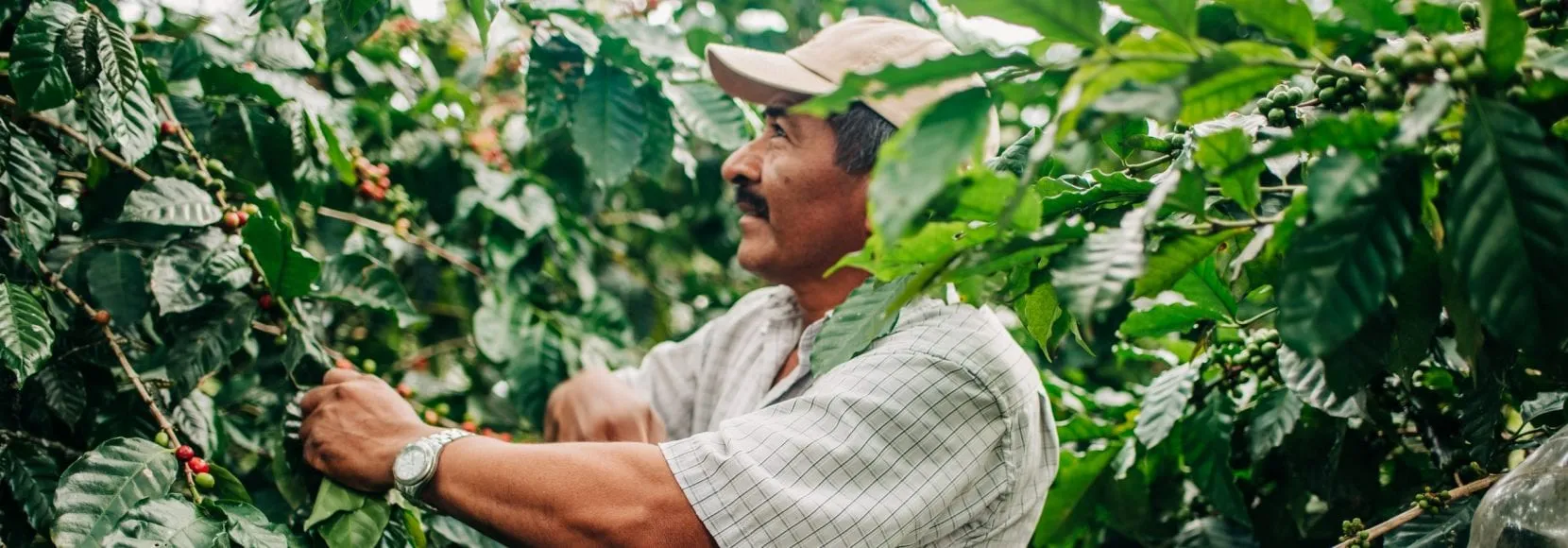
Sustainable Coffee Production: Five Ways Coffee Helps Make the World a Better Place
Table of Contents
- Introduction
- What is Sustainable Coffee Production?
- The Economic Benefits of Coffee: A Major Player in the World Economy
- How Sustainable Coffee Production Fights Climate Change
- How Coffee Production Builds Community for Smallholder Farmers
- Living Wages through Sustainable Coffee Production
- Quality and Sustainable Coffee Farming Promote Upskilling and New Technologies
- The Challenges Facing Sustainable Coffee Production
- FAQs
Millions of cups of coffee are consumed every day by people around the world. Read about the benefits of coffee to people, communities, and the planet.
Editor’s Note: This post was originally published in September 2021 and was updated in July 2026.
Around the world, more than 400 billion–yes, billion–cups of coffee are consumed every year. In the United States alone, more than 500 million cups are consumed per day.
This high–and growing–consumption of coffee brings a number of benefits across the coffee supply chain, from the farm to the consumer levels. This post looks at the impact of sustainable coffee production.

What is Sustainable Coffee Production?
Sustainable coffee production involves methods of growing and processing coffee that generate positive environmental, social, and economic impact. It is grounded in the idea that smallholder farmers and workers in the coffee value chain should benefit from this important commodity, and that communities and landscapes should be able to continue producing coffee for generations to come.
This means adopting regenerative agriculture practices to protect and restore natural resources. Shade-grown production and agroforestry systems support biodiversity. Contour planting and mulching prevent soil erosion, and compost and biofertilizers support soil health. Regenerative practices that help farmers boost production on existing farms help to combat deforestation. And sustainable processing prevents waste-water pollution.
Sustainable coffee production is also a means of boosting the livelihoods of smallholder farmers. Practices that improve yields while reducing the use of costly inputs means that farmers earn more with each harvest. These production methods also boost the resilience of farms to the impacts of climate change and extreme weather.
When coffee is produced in a socially responsible way, it also means that the rights of workers on coffee farms and coffee-processing facilities are respected and supported, and that women and men are able to benefit equally from the growth of the coffee sector.
In this post, we take a look at five ways the world is better with coffee:
- Economic value
- Environmental sustainability
- Community creation
- Living wages
- Upskilling workers
The Economic Benefits of Coffee: A Major Player in the World Economy
Through the complex and lengthy process of growing, exporting, and roasting coffee, there are costs associated with every cup – no matter how you take your coffee.
Globally, the coffee industry is valued at over $90 billion. And while climate change and other disruptions have created an increasing number of challenges for coffee producers and retailers, the global demand for coffee is still on the rise.

This ongoing rise in demand has led to coffee being the fourth most-consumed beverage by sales volume, benefitting people around the world and in various places in the supply chain.
Although there is still important progress to be made in ensuring coffee farmers can earn a sustainable income from the crop, 2.3 cups of coffee consumed every minute can mean a reliable income for nearly 125 million people in coffee growing, roasting, exporting, and retail.
And when coffee producers receive the agricultural and business training to improve their coffee’s yields and quality, the world’s java habit can help millions of smallholder farmers escape poverty. With better coffee income, people can make the money they need to support their families, send their children to school, and purchase the things they need.
How Sustainable Coffee Production Fights Climate Change
Before the days of industrialized coffee production, coffee growing often benefited its local environment. Coffee was often grown under a tree canopy, providing natural habitats for wildlife. In fact, recent data show that there’s a direct correlation between the structural complexity of a coffee farm and the number of species there.
Research also shows that sustainable coffee production, like shaded coffee, can help fight more recent climate change impacts by:
- Preventing soil erosion
- Supporting greater biodiversity, which is often under threat due to extreme weather patterns
- Returning carbon to the soil, where it is often being aggressively depleted through industrial agriculture
Shade-grown coffee is often more resilient to the impacts of climate change, as the canopy protects coffee plants from rising temperatures and helps the soil to retain moisture. Because shade-grown coffee takes longer to mature, it often develops better flavor and aroma–earning farmers higher prices.
In Ethiopia, many smallholder coffee farmers are producing wild and semi-wild forest coffee with the support of TechnoServe programs aimed at maintaining the diversity of forests while increasing productivity for farmers.
So, while it may take a shift in the way coffee is grown on a large scale, there are immense climate-related benefits to sustainable coffee production.
How Coffee Production Builds Community for Smallholder Farmers
For smallholder coffee producers—especially in places like East Africa where farm sizes are historically small—many cooperatives are in place to support the farmers. When these groups of coffee farmers work together, they can gain better access to resources, opportunities, markets, and technologies—improving both their skills and their incomes.
Working within these collective enterprises, consider just three of the positive outcomes many coffee farmers have achieved at scale, around the world:
- Establishing new schools and clinics in their communities
- Helping women enhance their socio-economic power
- Undertaking ambitious environmental improvement projects
Smallholder farmers are not the only ones to benefit from cooperatives. They also provide seasonal work for other community members during the harvest season.
Coffee consumption often revolves around community, too. People around the world meet at coffee shops for work and fun, often creating a sense of community for patrons and employees. In many places, socializing and coffee go hand-in-hand – along with a nice productivity boost.
Living Wages through Sustainable Coffee Production
From wild forest coffee in Ethiopia to the high altitudes of Colombian coffee production, smallholder farmers produce nearly 80% of all coffee consumed around the world.
But too often, these farmers do not earn enough to cover their families’ basic needs, let alone invest in improving their production.
Sustainable coffee production can change this reality, however. Between 2009 and 2025, TechnoServe provided training to one million coffee farmers, and in recent years, every dollar invested in these programs has helped farmers earn an additional $4.71.
TechnoServe’s Coffee Initiative trained nearly 140,000 farmers in East Africa in climate-smart ways to improve their coffee’s quality and value. The improved coffee helps farmers start selling to higher-paying, reliable coffee roasters, enabling many to create more profitable and stable livelihoods.
Overall, farmers in the program achieved yield improvements of 38% and average income increases of 27%. New research has shown that the adoption of regenerative agriculture is an important tool in helping farmers earn a living income.
And for women, who are often shut out of the most profitable agricultural opportunities, coffee helps create a pathway to greater income and independence. Working with TechnoServe, many women have taken on leadership roles in coffee cooperatives and become community role models through their path-breaking work as coffee agronomists.
Quality and Sustainable Coffee Farming Promote Upskilling and New Technologies
Sustainable coffee production is supported by new technology and skills.

For example, light detection and ranging (LIDAR) is used to measure coffee tree growth by using a pulsed laser to register the distance from the ground to the tree’s leaves. Climate-smart technologies are used to prevent post-harvest losses by way of evaporative cooling chambers, coolers that use evaporation to keep perishable food fresh.
Through TechnoServe programs, farmers are learning how to use, implement, and troubleshoot new technologies and enabling them to learn new skills.
For farmers who may want to prepare for future technological advances – or provide new opportunities for their children and communities – this training may allow them to do so. For example, an SMS bookkeeping project in Rwanda helped nearly 100,000 coffee farmers get access to working capital from finance providers.
The Challenges Facing Sustainable Coffee Production
While coffee offers enormous opportunities for improving livelihoods, fighting poverty, and strengthening the environment, coffee farmers and others continue to face challenges:
- Small farm sizes and low yields
- Natural disasters and climate change, which bring new weather patterns and extremes
- Price fluctuations, driven by shifts in the global coffee market
- Rising costs for inputs like fertilizers, pesticides, and labor
- Concerns about deforestation
- Human-created conflict, which disrupts supply chains and endangers farmers
In order to overcome these challenges, coffee farmers need technical assistance and access to finance to enable on-farm investments. This will enable farmers to improve their livelihoods and resilience, and to sustainably manage their natural resources.
This will help to ensure that communities can produce–and benefit from–coffee for generations to come.
FAQs
What is sustainable coffee production?
Sustainable coffee production grows coffee in ways that protect the environment, support farmer livelihoods, and stay economically viable over the long term. It includes shade-grown and agroforestry methods that preserve biodiversity, reduce deforestation, and return carbon to the soil, while helping smallholder farmers earn a fair, reliable income.
How can coffee production be more sustainable?
Coffee production becomes more sustainable when farmers adopt climate-smart practices such as shade-grown canopies, agroforestry, and soil conservation, paired with training to raise quality and yields. TechnoServe trained nearly 140,000 East African farmers in these methods, lifting yields 38% and incomes 27% while protecting local ecosystems.
What is the most environmentally friendly coffee?
The most environmentally friendly coffee is shade-grown, sustainably produced coffee farmed under a tree canopy. This approach supports biodiversity, prevents soil erosion, and returns carbon to the soil. In Ethiopia, smallholder farmers grow wild and semi-wild forest coffee that conserves forests while improving productivity through sustainable coffee production.
What is the most sustainable way to make coffee?
The most sustainable way to make coffee starts with choosing sustainably produced beans, then reducing waste at home by composting grounds. Buying coffee that supports living wages for smallholder farmers extends sustainability beyond the cup to the communities and ecosystems that grow it.
Is coffee ethically sourced?
Ethically sourced coffee ensures smallholder farmers, who grow nearly 80% of the world’s coffee, earn a living income for their work. Certifications help, but sustainable coffee production matters most: when farmers improve quality and reach reliable buyers, they gain fair pay and lasting economic independence.
