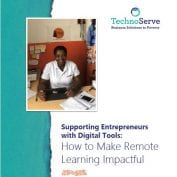

Supporting Entrepreneurs with Digital Tools: How to Make Remote Learning Impactful
Drawing from a study that engaged a global cohort of entrepreneurs, TechnoServe provides four core principles for remote program design.
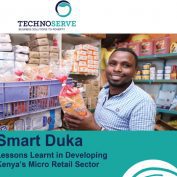
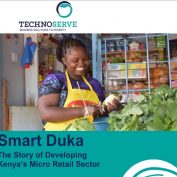
This case study summarizes the key learnings from the Smart Duka partnership, which has strengthened the micro-retail sector in Kenya.
The Smart Duka partnership has worked to improve the livelihoods of women and men who own and operate essential micro-retail outlets. This case study highlights the progress and impact of the program.
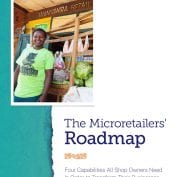
Drawing from TechnoServe's experience, the roadmap lays out four capabilities that shop owners need in order to transform their businesses and the developing world.
This study, produced by the SAPFF program, provides insights into the business environment for food fortification in Nigeria.
Produced under the auspices of the SAPFF program, this study evaluates opportunities for Nigerian food processors to fortify edible oils.
The SAPFF program published this study explaining why it makes business sense for Nigerian food processors to properly fortify their products.
In 2017, TechnoServe engaged ImpactMatters, an impact audit firm founded with support from Innovations for Poverty Action (IPA), to review several projects within our portfolio. This impact audit reviews the Impulsa Tu Empresa program implemented in El Salvador, Guatemala, Honduras and Nicaragua from 2013 to 2017.
This final report explores five years of impact through the Solutions for African Food Enterprises (SAFE), a public-private partnership between TechnoServe, Partners in Food Solutions and the United States Agency for International Development that aimed to increase the competitiveness of the African food processing sector and expand the availability of…