
Creating Opportunities for Women Across the World
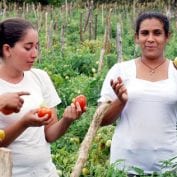
In honor of International Women’s Day, we share a story about an inspiring woman in Nicaragua who has found independence and self-sufficiency through farming.
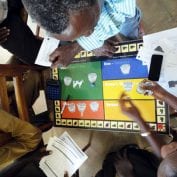
In Nicaragua, Iveth Juárez, a small business owner who processes and sells cereal to the local market, had attended seminars, workshops, courses and training sessions on accounting and finance. But at the end of each session, she always felt the same sense of confusion.
Sons and daughters of landless farm workers, these producers gained ownership of land in the village of Gualtaya through 1970s agrarian reforms. Their plots have the combination of altitude and shade needed to produce some of the country’s best coffee. But for years, these farmers sold their coffee through local…
Mónica’s path to independence began three years ago when she joined an association of women from the San Lucas Tolimán region, who learned practical skills like weaving in an effort to find income opportunities. Mónica’s husband had abandoned the family, leaving her in debt and with few opportunities for employment.
Oil palm farmers in Honduras more than doubled the amount of oil they can collect thanks to a partnership between TechnoServe and the U.S. Department of Agriculture’s Food for Progress program. These small-scale farmers now own an oil processing plant, enabling them to generate income and jobs for their…
Carmela Francisca Sacuj Matzar is a leader among Mayan women in San Andrés Semetabaj, a poor rural community in central Guatemala. As the founder of Asociación Visión Maya Mujeres, a women’s association that produces textiles and cultivates mushrooms, Sacuj is helping 50 women to generate income and improve the…
El Petén has long suffered as one of Guatemala’s poorest areas despite its bounty of natural resources. Two thirds of El Petén’s residents live below the poverty line and half lack sanitary services. Many of the children living in this area are severely malnourished, jeopardizing Guatemala’s future generations. Gladis Rodriguez…
In early 2001, much of El Salvador was devastated by massive landslides. Thousands of already poor farming families in the highlands were left homeless and destitute. Ana Rosa Graf, an architect from San Salvador, joined the rebuilding efforts. But she soon realized that without sustainable livelihoods, people would still struggle…
The Jorge Salazar Cooperative, located in the northern municipality of El Tuma-La Dalia, is a collective of 46 farmers – mostly veterans of Nicaragua’s civil war in the 1980s, which devastated the country’s economy. In an effort to incorporate ex-guerillas back into civilian society, TechnoServe – with the support of…
Intibucá, in southwestern Honduras, enjoys a favorable climate for farming, yet is one of the country's poorest regions. Most area farmers own less than three acres, but in the past decade, they have improved their lot by planting market crops like cauliflower, broccoli and lettuce, and by organizing a…