


World Food Day 2026: 4 Practical Innovations Transforming Agrifood Systems
Every year on October 16, we celebrate World Food Day. This year’s theme is “Innovate Today, Nourish Tomorrow.” Learn how TechnoServe programs are using practical innovations to transform agrifood systems.
What Is World Food Day?
World Food Day is an international day observed every October 16 to mark the founding of the Food and Agriculture Organization of the United Nations (FAO) in 1945. FAO’s member countries established the day in 1979, and today it is celebrated across 150 countries to raise awareness and inspire action to end global hunger.
Globally, an estimated 645 million people faced hunger in 2025, 2.69 billion could not afford a healthy diet, and over 3 billion people suffer from vitamin and mineral deficiencies, according to the UN’s 2026 “State of Food Security and Nutrition in the World” report. This World Food Day, we’re discussing how innovation in agrifood systems can help ensure everyone has reliable access to affordable, nutritious food.
World Food Day 2026 Theme: Innovate Today, Nourish Tomorrow
The World Food Day 2026 theme of “Innovate Today. Nourish Tomorrow” focuses on how innovation is transforming how food is produced, stored, transported, and sold.
At TechnoServe, innovation means practical changes that serve our clients: thoughtful digital tools for smallholder farmers and entrepreneurs, improved post-harvest storage, regenerative farming techniques, and direct connections to commercial buyers. When local agricultural businesses grow and farmers gain reliable market access, food supplies become more secure for entire communities.
Here are four TechnoServe projects showing how practical innovations strengthen agrifood systems.
4 Practical Innovations Transforming Agrifood Systems
- Food Fortification Indexes: Micronutrient Fortification Index and Kenya Millers Fortification Index

In Kenya and Nigeria, millions of families rely on everyday foods like maize flour, wheat flour, and cooking oil for essential vitamins and minerals. Food processors fortify these products to restore nutrients lost during milling and processing and to address micronutrient malnutrition. But compliance with national standards was inconsistent, and there was no reliable way to see which companies were meeting the standard. That gap left families exposed to “hidden hunger,” a lack of vitamins and minerals that insidiously undermines growth, immunity, and long-term health.
TechnoServe built an index and recognition platform to rate brands of food processors on how well they fortify their products. It works like an independently verified leaderboard. Brands are assessed through self-review, independent lab testing of products already on store shelves, and industry-expert evaluation, then given a public ranking. Because businesses compete on reputation, the ranking became a powerful lever. High scorers use it to win major supply contracts and justify quality investments to their own leadership. TechnoServe is now exploring how to build sustainability metrics into the same platform to guide processors toward greater environmental and operational efficiency.
In Kenya, participation grew from five companies in 2023 to 26 companies (114 brands) in 2025, now reaching an estimated 31 million people a year. In Nigeria, participation grew from four companies in 2021 to 18 companies (36 brands), reaching an estimated 134 million people annually. Fortification compliance, which once hovered between 30% and 50% in the country, has hit more than 80% in several product categories.
- Takura Packhouse: From a Donor Program to a Commercial Business
Smallholder farmers in Zimbabwe supported by the Takura Agriculture Value Chains Program struggled to access commercial export markets due to strict international compliance standards. The fragility of their market access became clear during coronavirus lockdowns, when flight cancellations caused entire harvests to be dumped. This loss threatened the program’s viability and left newly commercial farmers exposed to future supply chain shocks without storage or processing infrastructure.
TechnoServe partnered with Anglo American to fund and construct a commercial, international-standard packhouse with cold-chain and packing facilities capable of processing 50 metric tons of produce weekly. Registered as a standalone business, TechnoServe developed a 5-year commercial plan for the enterprise, trained program staff to step into full-time operations and quality management roles, and began building direct export channels to absorb growing production volumes.
The packhouse restored farmer confidence by guaranteeing smallholders consistent prices and stable earnings in export currency. Direct exports grew to over 25% in 2025, and by 2026, the facility secured market off-take for 100% of its produce. Led by former TechnoServe staff and supported by working capital from Anglo American, the enterprise is on track to break even in 2026 and achieve full self-sustainability by 2027.
- Feed Loans for Kenya’s Fish Farmers: AquaFedha

Tilapia farming in Kenya should be a good business. People want about twice as much fish as the country produces. But fish only grow as fast as they are fed, and good feed is expensive. Feed is a fish farmer’s highest cost, and most must pay in cash months before they have anything to sell. Banks rarely step in. Agriculture employs around one-third of Kenya’s workforce but receives only about 4% of bank lending. Fish farming is seen as even higher risk, partly because loans come due before the fish are ready. As a result, farmers buy less feed, and their fish stay small.
Aquarech is a tilapia company in Kisumu, Kenya. The company created AquaFedha, a loan that lets farmers take the feed they need now and pay after harvest. CASA Kenya, a TechnoServe program that helps Kenyan agribusinesses grow, made the loan possible. It shared early risk with Aquarech and Equity Bank through a guarantee, helped Aquarech set fair qualification rules, and built a simple traffic-light alert into Aquarech’s app that flags a struggling pond before a loan goes bad.
Every farmer who received assistance from AquaFedha received a formal loan for the first time, and at a lower interest rate than other lenders. Nearly all of them share that they can now buy feed they previously could not afford. If the pilot keeps proving itself, commercial banks may finally start lending to Kenya’s fish farmers at scale.
- Turning Food Loss and Waste into Nutrition: NutriSave and Baba Mboga

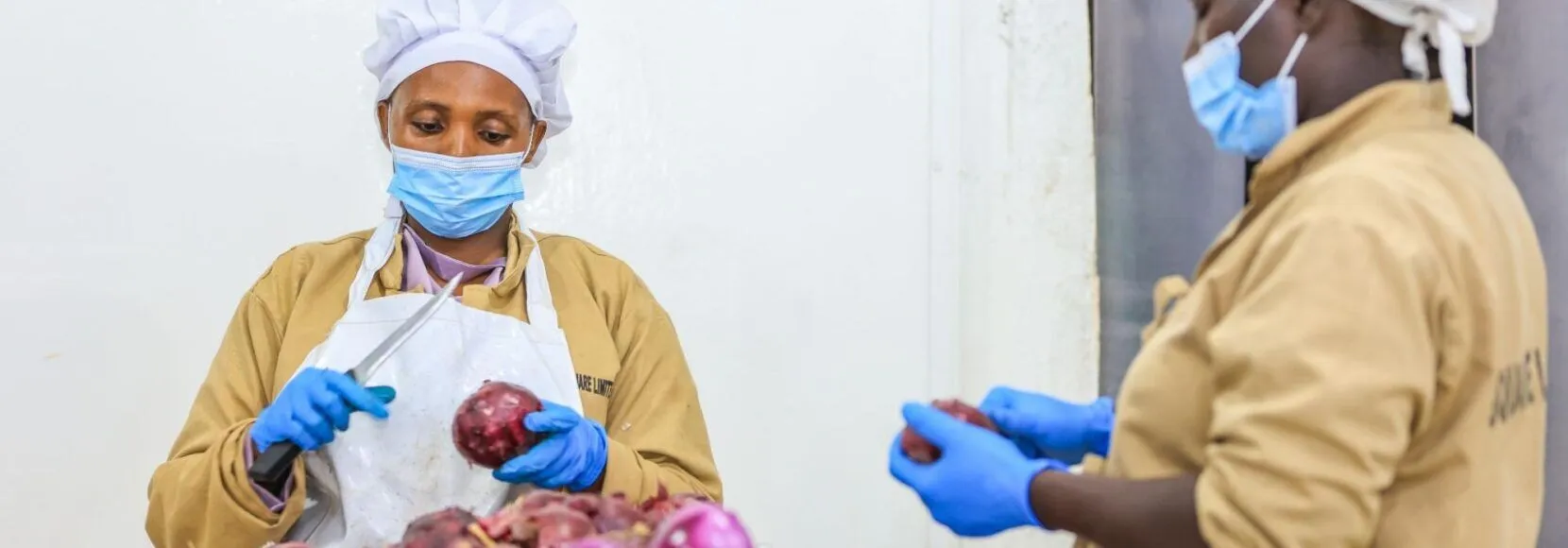
Six Square Ltd (SSL) operates a processing facility in Nairobi and sources fresh produce from smallholder farmers across Kenya. Tri-weekly harvests supply high-end markets with fruits and vegetables that meet strict cosmetic standards and are processed at the SSL facility. But farmers faced significant losses from produce that failed cosmetic specifications and was rejected during processing, hitting both consumers’ access to nutrition and suppliers’ bottom lines.
To minimize this waste, SSL partnered with TechnoServe’s NutriSave program to pioneer an innovative recovery model: the Wash, Cut, Peel, and Pack (WCPP) process. This minimal processing technique rescues nutritionally dense fruits and vegetables that would otherwise be discarded, redirecting macro- and micronutrients directly to low-income urban consumers.
To power and scale this innovative model, SSL developed Baba Mboga, a B2B ordering and fulfillment app. Baba Mboga connects downstream vendors and buyers to streamline demand forecasting, order consolidation, route planning, and last-mile delivery, while generating rich value-chain metadata.
Since launching pilot operations, Baba Mboga has rescued over 200 metric tons of fresh produce and redirected it to underserved Nairobi communities, delivering between 500,000 and 1.4 million daily servings of fruits and vegetables to low-income consumers while safeguarding farmer incomes, curbing food waste, and boosting local nutritional security.
Frequently Asked Questions About World Food Day
What is World Food Day?
World Food Day is an international day observed every year on October 16. The Food and Agriculture Organization of the United Nations (FAO) leads it, and it is celebrated in around 150 countries to raise awareness of hunger and promote action for healthy, sustainable diets for all.
Why is World Food Day important?
World Food Day is important because hunger remains widespread. An estimated 645 million people faced hunger in 2025, and 2.69 billion could not afford a healthy diet. The day highlights the farmers, businesses, and policies that can make nutritious food affordable and reliable for everyone.
What is the theme for World Food Day 2026?
The World Food Day 2026 theme is “Innovate Today. Nourish Tomorrow.” It highlights how innovation is transforming the way food is produced, stored, transported, and sold.

A Different Way to Make A Difference.
Discover how TechnoServe bridges the gap between “thinking big” and practical business solutions that help hardworking people move from poverty to prosperity around the world.

