


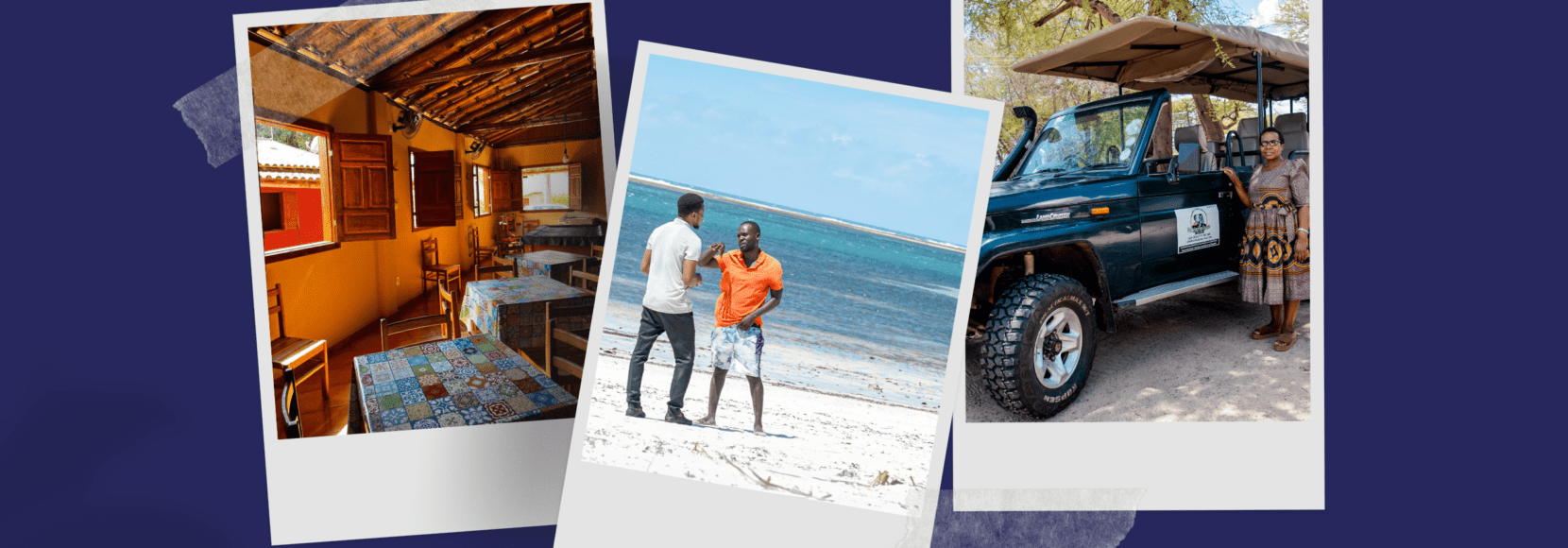
July 2026 Photo of the Month: Sustainable Tourism Creates Opportunities
Table of Contents
- Introduction
- Why Sustainable Tourism Matters for Local Communities
- 1: Sustainable Tourism in Brazil: Local Food, Waterfalls, and Community-Led Travel
- 2: Sustainable Tourism in Kenya: Ocean Conservation and Coastal Entrepreneurship
- 3: Sustainable Tourism in Botswana: Safari Businesses Creating Local Opportunity
Our monthly photo series highlights the beauty and emotion in the lives of our clients around the world. This month, we highlight entrepreneurs who are building sustainable livelihoods and running eco-friendly travel businesses.
Why Sustainable Tourism Matters for Local Communities
Tourism accounts for one out of every ten jobs worldwide. In lower-income countries, a thriving sustainable tourism industry attracts visitors and provides a steady income that helps families improve their standard of living while protecting their local environment.
1: Sustainable Tourism in Brazil: Local Food, Waterfalls, and Community-Led Travel

In Brazil, tourism contributes roughly 8% to the country’s GDP. The region of Minas Gerais is a major ecotourism destination, drawing visitors with its waterfalls, caves, and hiking trails.
Dona Beth lives right near the picturesque Três Barras Waterfall. Recognizing the potential of her location, she opened the Kayua Inn and Restaurant and began leading guided tours to local natural attractions.
To grow her business, Dona Beth joined an entrepreneurship training program run by TechnoServe in partnership with Anglo American Brazil, the Anglo American Foundation, and the Inter-American Development Bank. This initiative has worked with over 4,000 Brazilian entrepreneurs to expand their operations. Through the program, Dona Beth learned essential business management skills, which gave her the confidence to welcome a growing number of tourists.
Today, her guests enjoy homemade meals prepared with locally sourced ingredients. She also serves as the legal representative for the “Rota das 10 Cachoeiras” (10-Waterfall Route), a tourism experience developed entirely by the local community.
“The courses offered by TechnoServe in our community strengthened small businesses,” Dona Beth said. “My business gained greater visibility, and as an entrepreneur, I felt more confident welcoming tourists. It sparked the entrepreneurial spirit in many people, especially women, who are now finding dignified opportunities to earn a living.”
She is actively reinvesting her profits to upgrade her facilities.
2: Sustainable Tourism in Kenya: Ocean Conservation and Coastal Entrepreneurship

Tourism drives the local economy along the Indian Ocean coastline in Mombasa, Kenya. Emmanuel Chai Chengo wanted to make the most of this traffic, so he launched a small beach shop to rent out equipment, offer swim lessons, and provide marine tours.
He struggled at first. Without formal training, Emmanuel found it tough to manage budgets and handle the complex permitting systems required to operate on the beach.
Emmanuel found the tools he needed through the BlueBiz program, a partnership between TechnoServe and the Mastercard Foundation. BlueBiz works with thousands of small business owners in coastal communities to grow their livelihoods in ways that support ocean conservation. Emmanuel learned how to budget, track profit and loss, and build a digital marketing presence to attract customers online.
In a country where ocean ecosystems face threats from erosion and pollution, Emmanuel represents a new generation of business owners whose success depends directly on a healthy marine environment.
3: Sustainable Tourism in Botswana: Safari Businesses Creating Local Opportunity

Over a million tourists visit Botswana each year to explore the Okavango Delta and the Kalahari Desert. Joyce Chika spent years working as a travel agent for other providers, but she wanted to run her own show. She eventually launched her own company, No. 1 Lady Tours and Safaris.
Operating without a formal business structure or financial records created immediate roadblocks. She had to rely entirely on third-party operators for vehicles, which left her with small commissions. Without proper documentation, she couldn’t secure the bank loans needed to expand.
Joyce enrolled in an entrepreneurship training program offered by TechnoServe in collaboration with the Government of Botswana, Debswana, the De Beers Group, and Anglo American. She learned accounting, financial planning, and customer segmentation. With clean financial records, Joyce proved her business’s growth and secured the funding needed to buy two safari vehicles, a river safari boat, and multiple minibusses.
Within two years, revenue for No. 1 Lady Tours and Safaris shot up by over 900%.
Today, she runs multi-day tours and attracts international travelers. Paying her success forward, Joyce now mentors young people entering the industry and funds the education of local youth.
“We grew up believing that men are the leaders,” Joyce says. “But I knew that I had to take my business seriously, and over time, people started respecting my work.”

