Climate Change and Food Security: Climate-Smart Solutions for Smallholder Farmers
Table of Contents
- Introduction
- How Does Climate Change Affect Food Security?
- Climate Change and the Four Pillars of Food Security
- Extreme Weather, Heat Stress, and Shifting Rainfall
- Who Is Most Vulnerable to Climate-Related Food Insecurity?
- Smallholder Farmers on Rain-Fed Land
- Why Women Farmers Face the Steepest Climb
- What Is Climate-Smart Agriculture?
- The Three Pillars of Climate-Smart Agriculture
- Climate-Smart vs. Climate-Resilient Agriculture: What’s the Difference?
- Climate-Smart Farming Practices That Build Resilience
- Protecting Soil and Water
- Drought-Tolerant Crops and Improved Seed Varieties
- Crop Diversification and Agroforestry
- Cutting Post-Harvest Losses
- Reducing Greenhouse Gas Emissions on the Farm
- Scaling Climate-Smart Agriculture: Finance, Information, and Markets
- Solutions to Food Insecurity in a Changing Climate: TechnoServe’s Approach
- Nigeria: Climate-Smart Grain Farming with StreFaS
- Uganda: Climate-Smart Horticulture with HortiMAP
- Measuring What Works
- How You Can Help
- Frequently Asked Questions About Climate Change and Food Security
- How does climate change affect food security?
- What is climate-smart agriculture?
- What are the three pillars of climate-smart agriculture?
- Who is most vulnerable to climate-related food insecurity?
- What is the difference between climate-smart and climate-resilient agriculture?
- What barriers limit adoption of climate-smart agriculture?
Smallholder farmers produce a third of the world’s food, yet erratic rain, rising heat, and extreme weather are breaking the seasonal patterns they depend on to survive. Climate-smart agriculture offers a proven path forward—equipping farmers with practical techniques that protect harvests, cut emissions, and boost incomes. Discover how making resilience profitable turns sustainable farming into a lasting solution for global food security.
For a farmer who depends on the rain, seasons used to follow a pattern. Plant when the rain comes, harvest when it stops. Today that pattern is breaking.
Climate change and food security are tightly linked. Rising heat, erratic rainfall, and extreme weather reduce how much food farmers can grow, raise prices, and make supplies less reliable. Climate-smart agriculture is the solution: farming practices that help smallholder farmers grow more, adapt to a changing climate, and cut emissions at the same time. At TechnoServe, we’ve seen that these practices spread fastest when they also make farming more profitable. That’s what turns a good idea into a lasting solution.
How Does Climate Change Affect Food Security?
Food security means that everyone, at all times, can get enough safe and nutritious food. Climate change threatens every part of that promise. Researchers estimate that climate change has already cut global agricultural productivity by about 21% since 1961, with the steepest losses in warmer regions like Africa and Latin America.
Climate Change and the Four Pillars of Food Security
Experts describe food security in four pillars, and climate change strains each one:
- Food availability: Heat stress, drought, and floods lower crop yields, leading to less food grown.
- Food access: When a harvest fails, a farming family loses both its food and its income, just as food prices rise in local markets.
- Food utilization: Stressed crops can carry fewer nutrients, and poor diets deepen hidden hunger, the lack of essential vitamins and minerals.
- Food stability: More frequent shocks make supplies unpredictable from one season to the next, making it increasingly challenging for families to plan or save.
Extreme Weather, Heat Stress, and Shifting Rainfall
Climate change affects crop yields in many ways: a drought that withers maize before it flowers, a flood that washes out a field days before harvest, or new pests and diseases moving into areas that used to be too cool for them. Shifting rainfall is often the hardest to manage, because most smallholder farms are rain-fed, and no rain means no crops.
Who Is Most Vulnerable to Climate-Related Food Insecurity?
Climate change affects everyone who eats, but it doesn’t affect everyone equally. The people most vulnerable to food insecurity are the people who grow food with the fewest buffers.
Smallholder Farmers on Rain-Fed Land
Smallholder farmers produce about one-third of the world’s food, often on less than 2 hectares. Most rely on rain-fed agriculture, with no irrigation, no crop insurance, and little savings. When the weather turns, they have little to fall back on. Many are still farming mainly to feed their families, a pattern known as subsistence farming, which leaves little surplus to sell or store. It’s why smallholder farmers are so vulnerable to climate change, and why supporting their ability to adapt is so critical.
Why Women Farmers Face the Steepest Climb
Women farmers grow a large share of the food in low-income countries, yet they often have less access to land, credit, quality seed, and training. When climate shocks hit, those gaps widen. The ways climate change affects women go beyond the farm, from longer walks for water to more unpaid work at home. That’s why women’s economic empowerment has to be part of any climate solution.
What Is Climate-Smart Agriculture?
Climate-smart agriculture is an approach to farming that tackles food security and climate change together. As defined by the United Nations Food and Agriculture Organization, it aims to raise agricultural productivity and incomes, help farmers adapt to a changing climate, and reduce greenhouse gas emissions where possible. It isn’t a single technique. It’s a way of choosing the right mix of practices for each farm, crop, and climate.
The Three Pillars of Climate-Smart Agriculture
- Productivity: sustainably increasing crop yields and farm incomes.
- Adaptation: building climate resilience to drought, floods, heat, and pests.
- Mitigation: reducing or removing greenhouse gas emissions where possible, for example by storing carbon in soil and trees.
The best projects balance all three. A practice that cuts emissions but lowers a family’s income won’t last, and a practice that raises yields today but degrades the soil won’t either.
Climate-Smart vs. Climate-Resilient Agriculture: What’s the Difference?
| Climate-resilient agriculture | Climate-smart agriculture | |
|---|---|---|
| Main goal | Withstand and recover from climate shocks | Productivity, adaptation, and mitigation |
| Focus | Protecting the harvest | Protecting the harvest, raising incomes, and cutting emissions |
| Example | Drought-tolerant seed | Drought-tolerant seed and mulching that builds soil carbon |
In practice, most climate-smart practices also make farms more climate-resilient. Climate-smart agriculture simply raises the bar.
Climate-Smart Farming Practices That Build Resilience
There is no one-size-fits-all list. What works on a hillside in Uganda differs from what works in the plains of northern Nigeria. These are the practices that come up again and again.
Protecting Soil and Water
Healthy soil holds more water, so crops survive longer without rain. Cover crops, mulch, and reduced tillage protect the soil from heat and erosion. These practices also build organic matter over time. These are also the foundations of regenerative agriculture. Better water management practices stretch every drop further: rainwater harvesting, simple drip irrigation, and terracing that stops water and soil from running off slopes.
Drought-Tolerant Crops and Improved Seed Varieties
Improved seed varieties bred to tolerate drought, heat, or disease can mean the difference between a thin harvest and none at all. Choosing drought-tolerant crops suited to each farmer’s land, and buying seed from reliable suppliers, is often the first and cheapest step a farmer can take.
Crop Diversification and Agroforestry
Growing several crops, rotating them and planting trees alongside them spreads the risk. If one crop fails, another may still yield. Agroforestry adds shade, protects soil, and stores carbon—also known as carbon sequestration—while fruit or timber trees can become a second source of income.
Cutting Post-Harvest Losses
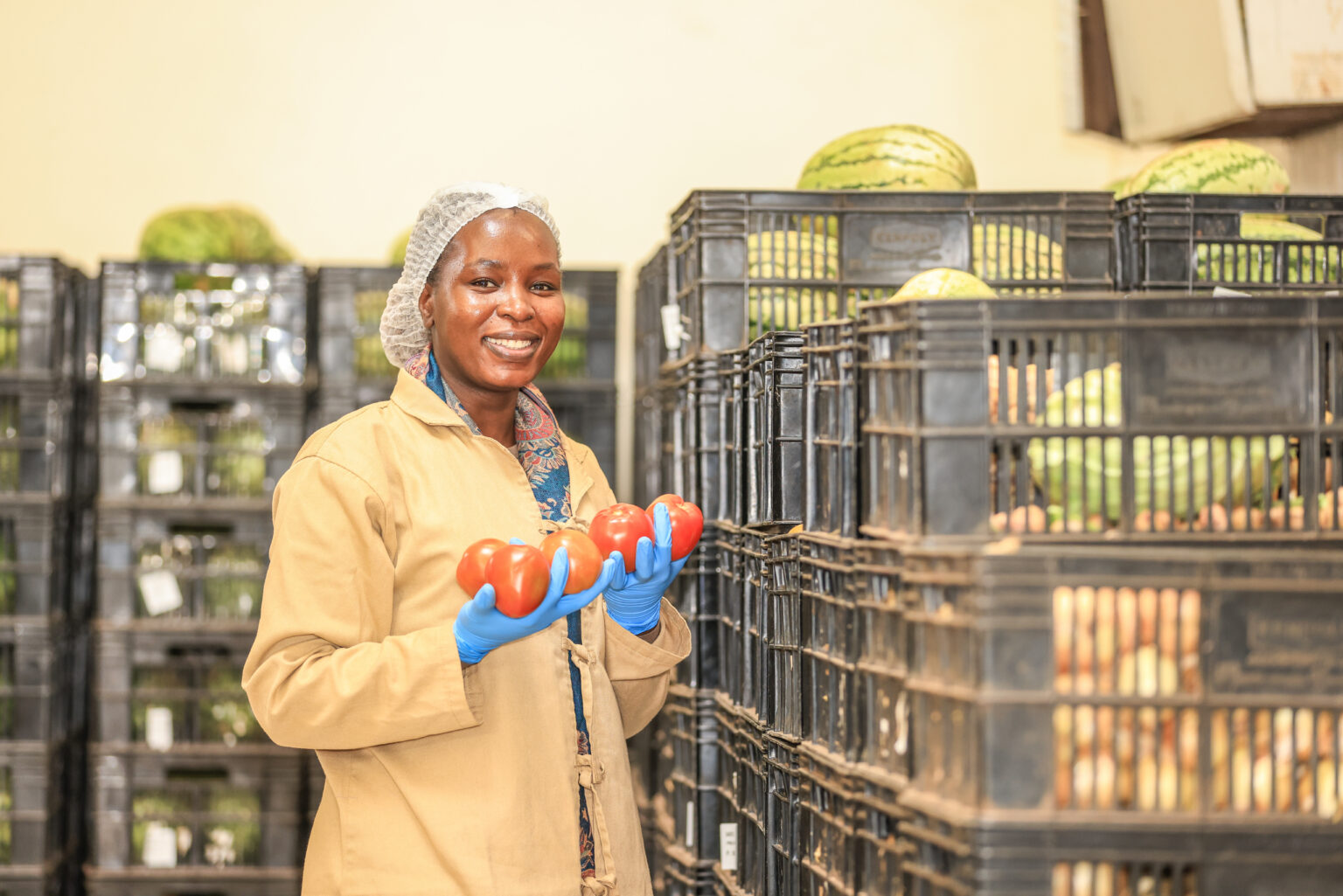
Making nutritious food affordable isn’t only about growing more. It’s also about losing less. In Kenya, a healthy diet costs $4.50 per day—putting essential nutrition out of reach for 76% of the population, as severe spoilage in perishable fruits and vegetables drives up retail prices. Through the NutriSave initiative, TechnoServe partnered with Six Square Limited in Nairobi to pilot a processing and digital ordering model that turns surplus and cosmetically imperfect produce into ready-to-cook food for informal street vendors.
Reducing Greenhouse Gas Emissions on the Farm
Agriculture contributes to climate change and is also affected by it. Food systems account for between 21% and 37% of global greenhouse gas emissions. On smallholder farms, mitigation usually comes as a co-benefit. Healthier soils store carbon, better manure and livestock management cut methane and nitrous oxide, and trees draw carbon out of the air.
Scaling Climate-Smart Agriculture: Finance, Information, and Markets
If climate-smart practices work, why doesn’t every farmer use them? Because adoption has real barriers: upfront costs, little access to finance, weak extension services, unreliable weather forecasts and early-warning systems, and, above all, uncertain buyers. A farmer won’t invest in better seed or new practices unless they can see the payoff.
That’s why scaling climate-smart agriculture is as much a business challenge as an agronomic one. Farmers need training and demonstrations where they can see results with their own eyes. They need access to inputs and finance. And they need climate-smart value chains with buyers who reward sustainable production. When those pieces come together, climate-smart agriculture stops being a project and becomes part of a sustainable food system.
Solutions to Food Insecurity in a Changing Climate: TechnoServe’s Approach
TechnoServe has spent more than 50 years helping people build regenerative farms, businesses, and markets that increase incomes. Our approach to climate change and food security follows the same principle. When climate-smart farming pays, farmers keep doing it, and the benefits last long after a project ends. TechnoServe ensures incentives for farmers are in place for them to make climate-smart choices and transition to regenerative practices.
Nigeria: Climate-Smart Grain Farming with StreFaS
In Kaduna and Nasarawa states, TechnoServe is implementing StreFaS, a climate-smart grain initiative funded by AGRA and Nestlé Nigeria. Running from 2024 to 2027, it aims to reach 25,000 smallholder farmers growing maize, soybean, rice, and sorghum, linking them to aggregators and structured markets. As of May 2025, the project had engaged 12,373 farmers, 40% of them youth, set up 270 demonstration farms, and brought 1,853 hectares under regenerative practices. As TechnoServe Nigeria Country Director Adesuwa Akinboro put it at the launch, the goal goes beyond higher yields to restoring soils and dignity in farming.
Sorghum is considered a climate adapted crop, also known as an ‘Opportunity Crop’ that is both resilient and nutritious. Other examples include millets, cow pea, and teff. TechnoServe is also working with AGRA and Bain&Co on the African Adapted Crops Initiative (AACI) to build demand that strengthens value chains.
Uganda: Climate-Smart Horticulture with HortiMAP
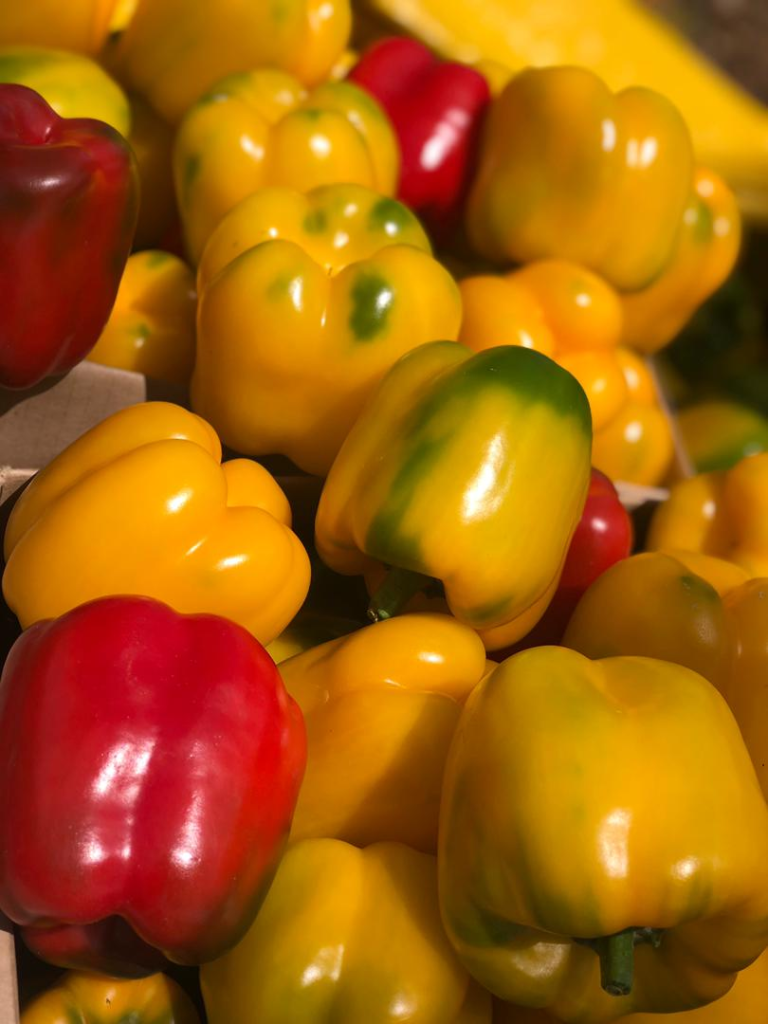
In Uganda, the HortiMAP project, funded by the Dutch government, worked with smallholder farmers across 10 horticulture value chains, from tomatoes and peppers to passion fruit and mango. Project Director Annette Bogere described farmers who are highly affected by climate change: degraded land, unpredictable rains, and new pests. Farmers learned climate-smart practices such as integrated pest management, soil testing, mulching, cover crops, and terracing, demonstrated by lead farmers on their own plots.
One of them, 25-year-old Mike Ssali, used his training and a cost-sharing grant to start a seedling business. He now supplies hybrid seedlings to more than 200 smallholder farmers and employs five women and four men.
Measuring What Works
Climate solutions should be judged by their results. In 2025, TechnoServe’s work helped bring 239,000 hectares of land under regenerative management and mitigate 279,000 tons of CO2e emissions, while generating $489 million in financial benefits for the people and businesses we serve. Every $1 invested in our projects returned $5.70.
How You Can Help
Climate change is moving faster than many farming families can adapt on their own. You can help change that. A gift to TechnoServe gives smallholder farmers the skills, connections, and confidence to grow more food, earn more, and withstand a changing climate.
Support farmers using climate-smart practices today.
Frequently Asked Questions About Climate Change and Food Security
Climate change disrupts all four core pillars of food security:
- Availability: Extreme heat, droughts, and floods directly reduce crop yields.
- Access: Lost harvests and disrupted supply chains drive up food prices while squeezing household incomes.
- Utilization: Stressed crops can carry fewer nutrients.
- Stability: More frequent and severe weather shocks make food supplies and prices increasingly unpredictable.
Smallholder farmers relying on rain-fed agriculture are typically hit first and hardest by these compounding pressures.
Climate-smart agriculture is an approach to farming that tackles food security and climate change together. As defined by the UN Food and Agriculture Organization, it aims to raise productivity and incomes, help farms adapt to a changing climate, and reduce greenhouse gas emissions where possible, using practices suited to local conditions.
The three pillars of climate-smart agriculture are productivity, adaptation, and mitigation. Productivity means sustainably raising yields and incomes. Adaptation means building resilience to drought, floods, heat, and pests. Mitigation means reducing or removing greenhouse gas emissions where possible. Strong projects balance all three to fit each farm’s conditions.
The people most vulnerable to climate-related food insecurity are smallholder farming families in low-income countries who rely on rain-fed crops and have little savings, insurance, or irrigation. Women farmers face extra risk because they often have less access to land, credit, seeds, and training, even though they grow much of the food.
The difference between climate-smart and climate-resilient agriculture is scope. Climate-resilient agriculture focuses on helping farms withstand and recover from shocks like drought and floods. Climate-smart agriculture includes that resilience but adds two goals: raising productivity and incomes, and cutting greenhouse gas emissions. Most climate-smart practices also make farms more resilient.
The main barriers limiting adoption of climate-smart agriculture are upfront cost, limited access to finance, weak extension and weather information, insecure land rights, and unreliable buyers. Farmers rarely change practices unless they can see the payoff. That’s why training, demonstration farms, and market linkages matter as much as the practices themselves.