


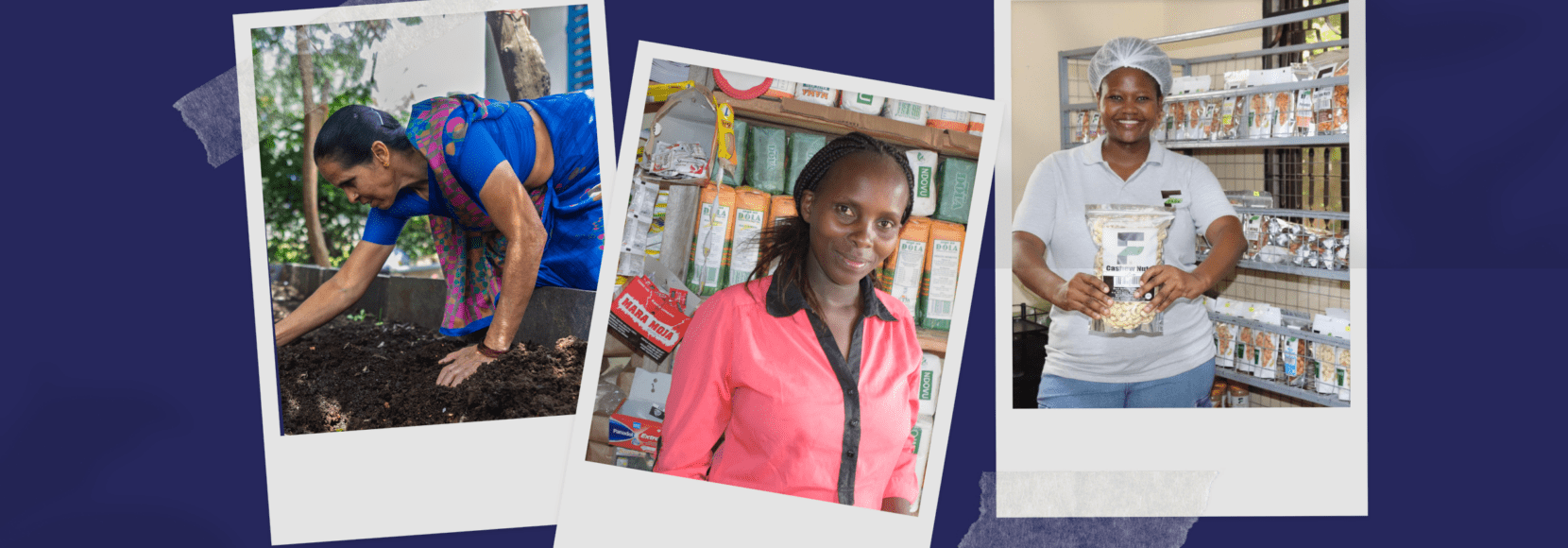
September 2026 Photo of the Month: Women Powering Food Systems
Our monthly photo series highlights the beauty and emotion in the lives of our clients around the world. This month, as we continue to recognize the International Year of the Woman Farmer, we look at women working across food systems, from farms to processing and retail.
Food Systems Depend on Many People
Food systems are bigger than farms.
Farmers produce crops and livestock. Other businesses process, transport, and sell food. Retailers connect those products with consumers. Each part depends on the others.
Women play important roles across this system, but they do not always participate under the same conditions as men. Women may still have more limited access to land, finance, information, technology, and markets. That can affect how much they earn and how much influence they have over business decisions.
For TechnoServe, supporting women in food systems means looking beyond participation alone. It means understanding the specific barriers women face and creating better conditions for them to grow farms, build businesses, and make economic decisions.
This month, three photos show what that can look like at different points in the food system.
Regenerative Agriculture in India
PHOTO 1: Turning better soil into a business opportunity

Meenakshi Shivappa farms in Karnataka, India, where she participated in the Cargill-funded Project Srishti. Through the project, she learned to produce vermicompost, an organic fertilizer made with earthworms. She began using it on her own farm to improve soil health and reduce reliance on chemical inputs.
The practice also created another opportunity. Meenakshi began selling vermicompost, turning something she first adopted for her farm into an additional income source.
Creating More Value from What Farmers Grow in Tanzania
PHOTO 2: Felistus Issangya connects local farmers with new markets
Felistus Issangya saw an opportunity in Tanzania’s growing demand for healthier snacks.
In 2016, she founded Feda Foods, which produces snacks using locally sourced nuts such as cashews and peanuts. As the company grew, Felistus began buying more directly from local farmers and traders, including women.
Through TechnoServe’s Implementing Inclusive Growth Strategies program, funded by the Visa Foundation, she developed a business plan focused on strengthening those supplier relationships.
Buying locally helped Feda Foods reduce costs while giving smallholder farmers another route to market. Between 2022 and 2023, the company increased its revenue by 56%.
Felistus’ story shows why what happens after harvest matters. Processing businesses can create value from agricultural products while opening new markets for the farmers who grow them.
Connecting Food with Consumers in Kenya
PHOTO 3: Nancy Wambui builds a stronger neighborhood shop
Nancy Wambui opened Lucky Genesis Shop in 2016, selling everyday foods such as eggs, tomatoes, milk, and snacks.
After participating in TechnoServe’s Smart Duka program, she reorganized her store and began keeping better stock records.
“Before Smart Duka, my products were all over the place,” Nancy said. “My display window was so crowded I had to peep through products to talk to customers. Now I have more customers, and I keep records of my stock.”
Her daily revenue has since grown from about $50 to $300. She has been able to reinvest in the business while supporting her family.
Small retailers like Nancy are an important part of food systems because they shape what products reach consumers and how easily people can find them.
An Inclusive Food System Depends on the Sum of its Parts
Meenakshi, Felistus, and Nancy work at very different points in the journey from farm to table.
Together, their stories show why inclusive food systems require attention beyond the farm. Women contribute throughout these systems, and greater economic opportunity can also give them more influence over decisions that affect their families’ well-being.
The International Year of the Woman Farmer puts a welcome spotlight on women in agriculture. Women’s role in food systems reaches well beyond farming and well beyond 2026. Investing in women across food systems can strengthen the businesses and markets that bring food to consumers, with benefits that extend into their households and communities.
Read more about the International Year of the Women Farmer.

