



Women Coffee Farmers in Guatemala Play a Central Role in Coffee Production
Women have long played an essential role in coffee farming in Guatemala, contributing to harvesting, pulping, and tending nurseries. Yet their work is often viewed as secondary, and they rarely receive the same social or economic recognition.
Today, international migration to countries like the United States and Canada is reshaping household and agricultural dynamics in some of Guatemala’s rural coffee-growing communities. As men leave, women are assuming greater responsibility for planning coffee production and managing household and farm resources. These changing roles can expand women’s participation in decision-making, while also increasing their productive and caregiving responsibilities.
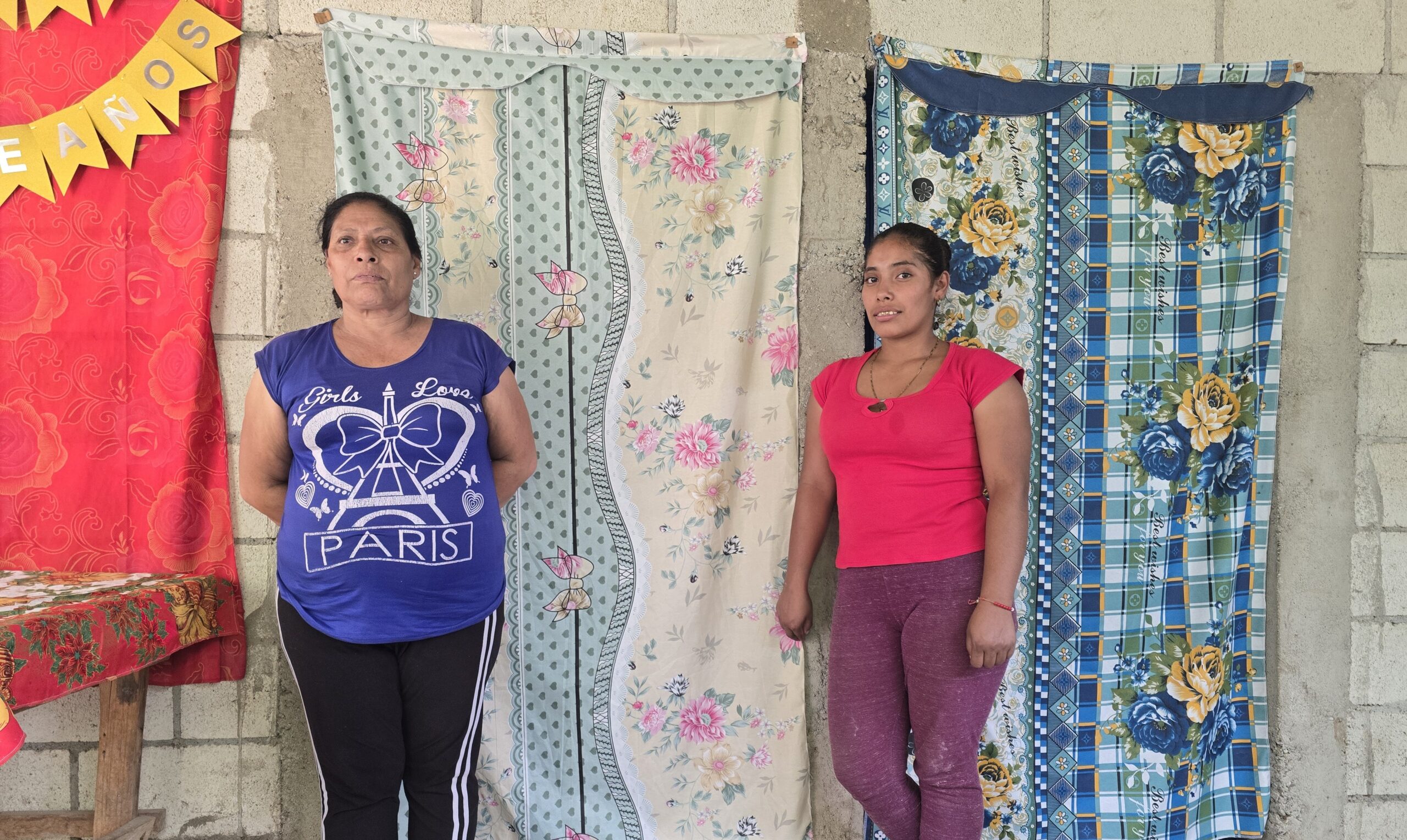
For María Gregoria Sánchez, 59, and her daughter Luz María Sánchez, 25, coffee is both a family legacy and the livelihood they want to carry forward. Their family has cultivated coffee for three generations in El Limar, Santa Rosa, Guatemala.
“At one point, I moved to Guatemala City and began working in garment factories, but I preferred to return to El Limar and continue working in coffee,” María Gregoria said.
Today, mother and daughter are working together to strengthen their family farm and build their future through coffee.
TechnoServe is Committed to the Economic Empowerment of Women
María Gregoria and Luz María’s plans for their farm reflect a broader shift across the coffee-growing departments of Santa Rosa and Jalapa in eastern Guatemala, where TechnoServe implements two programs to support coffee farmers: Cafetec and Plus Café. As women take greater responsibility for managing coffee farms, they help sustain coffee as a source of family income and an important part of their communities’ cultural and economic heritage. They are also shaping how farms adapt and grow for the future.
Women’s economic empowerment remains a priority across TechnoServe’s coffee programs. In Guatemala, TechnoServe addresses practical barriers to participation by inviting women directly, scheduling activities around farming and caregiving responsibilities, and providing childcare during training where possible. The programs also work with women and men to shift norms and attitudes that can limit women’s influence over decisions at home, on the farm, and regarding the use of household and farm income.
This foundation has become increasingly important as more women assume responsibility for managing coffee farms. Strengthening women’s voice, confidence, and decision-making power puts them in a better position to evaluate and introduce changes in farm management, including regenerative practices that may differ from past methods.
TechnoServe is therefore focused not only on reaching women, but also on ensuring they can participate fully, build practical skills, and receive the coaching and follow-up needed to apply new practices successfully. Together, these efforts support the sustainability of the global coffee supply chain.
The Cafetec and Plus Café Programs
Cafetec and Plus Café programs combine training in improved agronomic practices with TechnoServe’s Empowering Farming Families (EFF) methodology. This combination recognizes that women’s ability to apply new technical knowledge is influenced not only by their skills, but also by their voice and participation in decisions about the farm and its resources.
Funded by Tim Hortons, Cafetec has registered 1,976 women, representing 57% of its participants. Plus Café, which is funded by J.M. Smucker Co., has registered 1,905 women, representing 72% of its participants. These figures reflect the programs’ intentional efforts to reach women coffee producers and support their meaningful participation.
María Gregoria and Luz María are among the women participating in Plus Café. Luz María described how women coffee farmers in her community took the initiative to organize themselves and request training: “As small-scale women coffee farmers in this area, we enjoy coming together for training. We formed our own women’s group and asked the TechnoServe advisor to provide training specifically for our group.”
Training topics include:
- Adult plant grafting: Also known as “topworking,” this technique allows established coffee trees of less productive and/or disease-susceptible varieties to be converted into more productive and disease-tolerant varieties.
- Integrated pest management: This prioritizes preventing infestations and minimizing agrochemical use. Chemical applications are based exclusively on prior on-farm monitoring and are initiated only when infestation levels exceed the established economic damage threshold.
- Coffee nutrition: Nutrition is one of the factors that most influence coffee yields. Proper integrated nutritional management can contribute to higher yields, better quality, more resilient crops, and cost savings.
- Empowering Farming Families: Developed by TechnoServe, this participatory methodology engages women and men in dialogue about household and farm roles, challenges norms that limit women’s voice, and promotes more inclusive decisions about production and economic resources.
“We have seen that women participating in the programs are eager to test new techniques and apply what they learn on their farms,” said José Paiz, manager of the Cafetec and Plus Café projects in Guatemala. “That openness to experimentation, combined with practical training and follow-up support, helps them build the confidence to make informed decisions and introduce new practices.”
Women Investing in the Future of Coffee
For many women participating in Cafetec and Plus Café, coffee represents both a source of income today and a family business they want to strengthen for the future. As they take greater responsibility for their coffee plots, they are planning how to balance immediate household and production needs with opportunities to save and reinvest in their farms.
Technical knowledge and decision-making power are essential, but sustaining a coffee farm over time also requires financial planning and access to resources. For María Gregoria and Luz María, building their farm’s future happens little by little. They balance immediate household and production needs with opportunities to save and reinvest.
“Coffee is our livelihood here,” Luz María said. When they can, the family sets aside resources to expand the farm. “If there’s enough left over, we buy about a hundred coffee plants and plant them somewhere else. That’s how we keep growing, little by little.”
Cafetec and Plus Café support long-term planning through financial education and access-to-finance activities. In partnership with Fundación Génesis Empresarial, women learn about available financial products and explore credit options suited to their needs and goals, helping them make informed decisions about investing in their farms.
The programs also encourage women to join cooperatives and producer organizations, where they can build relationships and improve access to information, services, and markets. Deepening these connections represents an important opportunity to strengthen women’s collective voice within the coffee sector.
María Gregoria and Luz María are demonstrating that women are taking on new responsibilities and making deliberate decisions about how coffee can support their families in the years ahead. By combining technical knowledge, greater decision-making power, financial capabilities, and connections to producer organizations, women can continue strengthening their farms and shaping the future of coffee in Guatemala.

A Different Way to Make A Difference.
Discover how TechnoServe bridges the gap between “thinking big” and practical business solutions that help hardworking people move from poverty to prosperity around the world.


