


Scaling Impact: How One Entrepreneurship Development Program Helped an Inclusive School Grow
Table of Contents
- Introduction
- Why Banks Wouldn’t Lend: Small Business Financing and Licensing Barriers in Francistown
- How Mentorship Through Tokafala, TechnoServe’s Entrepreneurship Development Program, Strengthened the Business
- Securing a Small Business Loan to Buy the School Property
- Expanding an Inclusive School Across Francistown and Tati Siding
Learn how Ontifile Gaokgorwe overcame the odds to secure a major loan, buy her school's building, and scale her life-changing impact to 150 students in Botswana.
Ontifile Gaokgorwe, 36, remembers what it felt like to be bullied as a child growing up in eastern Botswana. That feeling of not belonging stayed with her. When she noticed children with diverse developmental and intellectual needs getting labeled and pushed aside in traditional classrooms, she decided to build a different kind of school.
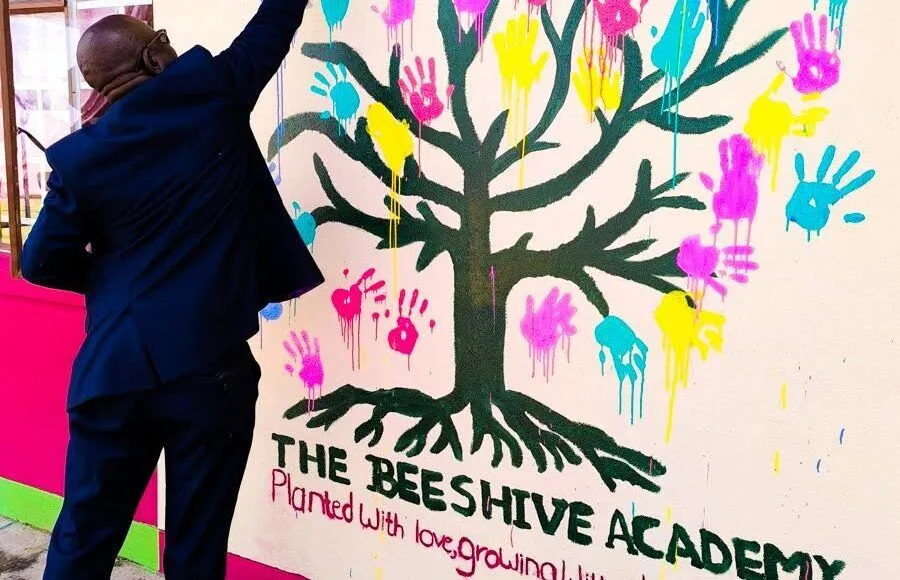
In 2016, she took a risk and left her job to launch The Bees Hive Academy, an inclusive early childhood education center in Francistown, Botswana. Her goal was to create a place where neurodiverse and neurotypical children could learn, play, and grow together.
“When I started, I was excited and hopeful, but I was also afraid,” Ontifile said. “I had left the security of employment to pursue a dream without knowing exactly how everything would work out. I began with limited resources, but I strongly believed in the vision. That belief gave me the courage to continue.”

Why Banks Wouldn’t Lend: Small Business Financing and Licensing Barriers in Francistown
Being an entrepreneur wasn’t easy, especially at the beginning. Licensing delays forced Ontifile to temporarily close The Bees Hive Academy in June 2016, just months after opening. Although she reopened shortly after, she faced ongoing funding challenges.
Access to finance was the biggest hurdle. Banks wouldn’t lend to her because she didn’t have a proper financial management system in place or a bankable business plan. They also didn’t understand how an early childhood education center could operate as both a sustainable business and a social initiative.
For years, Ontifile rented her school property in Francistown. The monthly rent payments drained her cash flow and left little money left over to reinvest in the business.
“As a woman, I had to work harder to prove that I was capable of building and managing a serious, sustainable business,” she said. “At the same time, I was balancing motherhood, leadership, staff management, and the emotional demands of supporting children and families. There was pressure to be available to everyone and to solve every problem personally.”
How Mentorship Through Tokafala, TechnoServe’s Entrepreneurship Development Program, Strengthened the Business
In 2023, Ontifile joined TechnoServe’s Tokafala program, a partnership between the Government of Botswana, Debswana, De Beers, and Anglo American. Tokafala is an enterprise development program that helps entrepreneurs build the business, financial management, and marketing skills they need to build successful, sustainable businesses.
Over 12 years, Tokafala has worked with 1,310 entrepreneurs, supporting over 12,206 jobs. The program has also worked with 1,200 youth through the Youth Development Program.
“Tokafala helped me understand my business beyond my passion for children and education,” Ontifile said. “I learned the importance of financial management, proper record-keeping, budgeting, strategic planning, and monitoring business performance.”
With these new skills, she built a clear business plan designed to meet commercial bank requirements.
Securing a Small Business Loan to Buy the School Property
Equipped with her new business plan, Ontifile secured a P900,000 ($67,160) loan from the National Development Bank. The TechnoServe team helped her prepare for her loan application interview and provided guidance on how to use the funds once the loan was disbursed.
Ontifile used the funds to buy the building she had rented for years.
“It was an emotional and deeply meaningful moment for me,” Ontifile recalled. “We had operated from those premises as tenants for many years, so purchasing the property represented security, stability, and growth. Securing the loan made me realize that the dream was becoming something permanent. We were no longer simply occupying a building. We had created a home for our vision.”
Expanding an Inclusive School Across Francistown and Tati Siding
Buying the property changed the school’s financial structure, and removing monthly rent allowed Ontifile to reinvest directly into the business:
- Student enrollment grew from 25 to roughly 150 children.
- Operations expanded to two locations in Francistown and Tati Siding.
- Average monthly revenue reached P65,000 ($4,850).
- Staff size grew to 10 employees, 90% of whom are women.

Ontifile plans to build an inclusive primary school and open new branches in Palapye and Letlhakane. She is also working to launch The Inclusion Hub Connect, a digital platform designed to help families across Africa access developmental screening and support services.
“For a long time, I believed I had to personally manage every part of the business,” Ontifile reflected. “I now understand that empowering the team makes the organization stronger.”
A Different Way to Make A Difference.
Discover how TechnoServe bridges the gap between “thinking big” and practical business solutions that help hardworking people move from poverty to prosperity around the world.


