


Circular Economy Examples: Youth Turning Waste into Value
Every harvest leaves something behind.
Across India, millions of tons of agricultural residue remain in fields after crops are harvested. Much of it has little economic value and is often burned, contributing to air pollution and greenhouse gas emissions. For most people, crop residue marks the end of the harvest.
For Jenil Gandhi, 23, and his partner Manan Vyas, it marked the beginning of an idea.
Circular Economy Examples in Action: Young People Are Already Building the Future
“Our entrepreneurial journey began with a simple question: how can we create sustainable alternatives while solving pressing environmental challenges?” Jenil recalled.
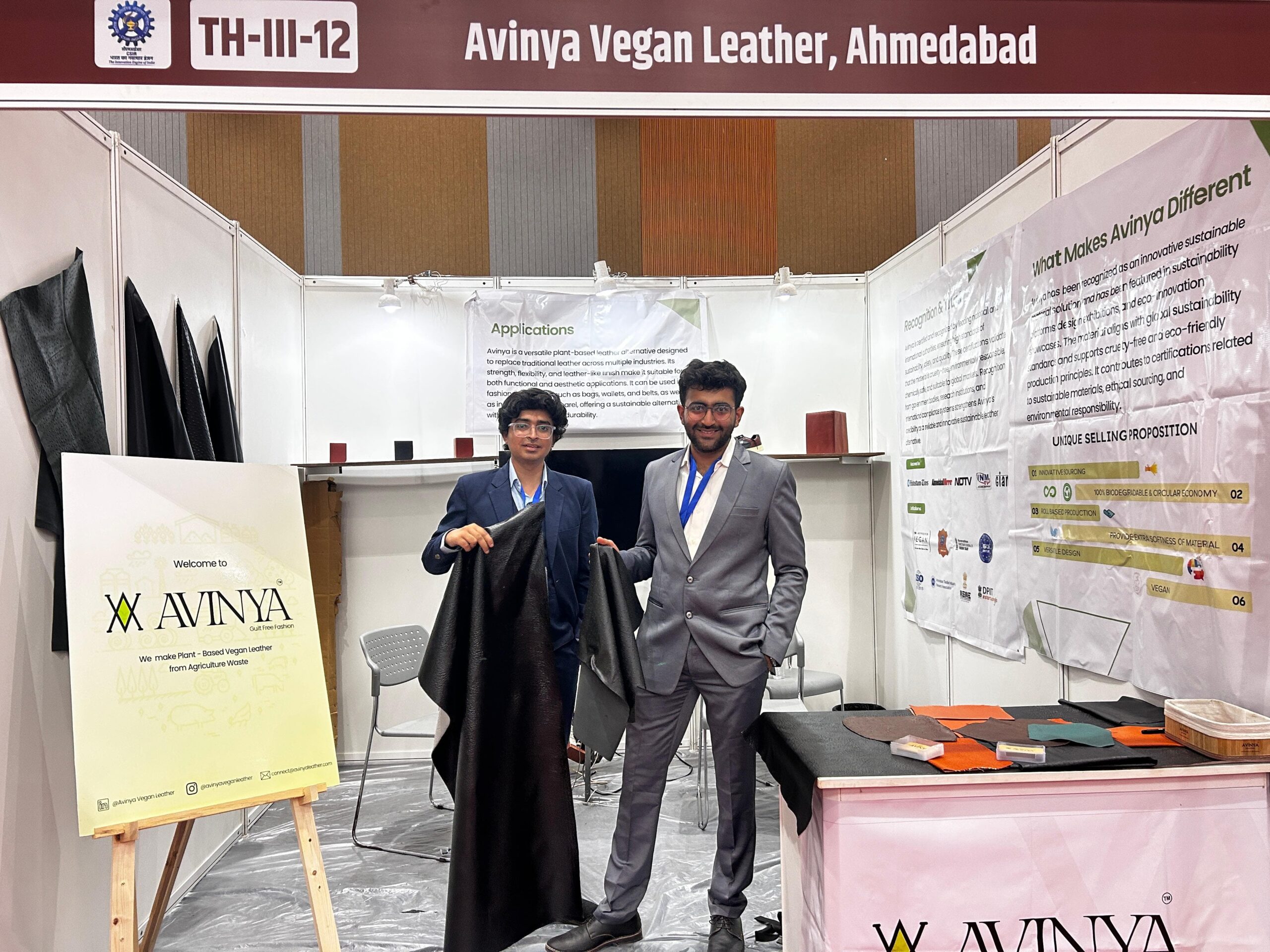
That question led him and his college classmate and co-founder, Manan Vyas, to look at agricultural waste differently. Instead of seeing wheat and rice straw as a byproduct, they saw the potential to create something entirely new: a plant-based alternative to conventional leather.
Today, at 23 years old, Jenil is the co-founder of Avinya Leather, a startup producing 100% vegan leather from agricultural waste while creating new economic opportunities within India’s growing circular economy.
Looking Beyond the Harvest: Turning Crop Waste Into a Resource
Jenil’s journey began during his final year of university, when he was studying for a Bachelor of Computer Applications while his co-founder, Manan Vyas, pursued civil engineering at Gujarat Technological University in Ahmedabad, India. Both shared an interest in sustainability and wanted to build a business that could address an environmental challenge.
As they explored different ideas, they became interested in the environmental impact of the leather industry, from animal welfare concerns to pollution caused by untreated wastewater from leather tanning. They began researching sustainable alternatives made from materials such as cactus, banana fiber, coconut waste, and fruit residues. But many of these materials were difficult to source consistently in India, making it challenging to scale production while keeping transportation emissions low.
The breakthrough came when they turned their attention to something much closer to home. Reports on stubble burning and agricultural residue sparked a new question: could wheat and rice straw become the foundation for a sustainable material? Working with scientists and faculty advisors, they began experimenting with agricultural waste in their university laboratory. After months of research and testing, they developed a pilot product and validated the concept with their first customers.
“What has worked for us is persistence, strong partnerships, and staying close to customer needs,” Jenil said. “Collaborating with research institutions, ecosystem partners, mentors, and early customers has helped us continuously improve both our technology and business model.”
Building an innovative materials company while still in college meant learning by doing.
“One of the biggest struggles has been commercializing an innovative material while simultaneously building market trust, raising funds, setting up pilot manufacturing, and navigating the uncertainties that come with entrepreneurship,” Jenil explained.
Like many young entrepreneurs, he discovered that building a business requires constant adaptation. Each challenge became another opportunity to learn: about technology, customers, manufacturing, finance, and growth.
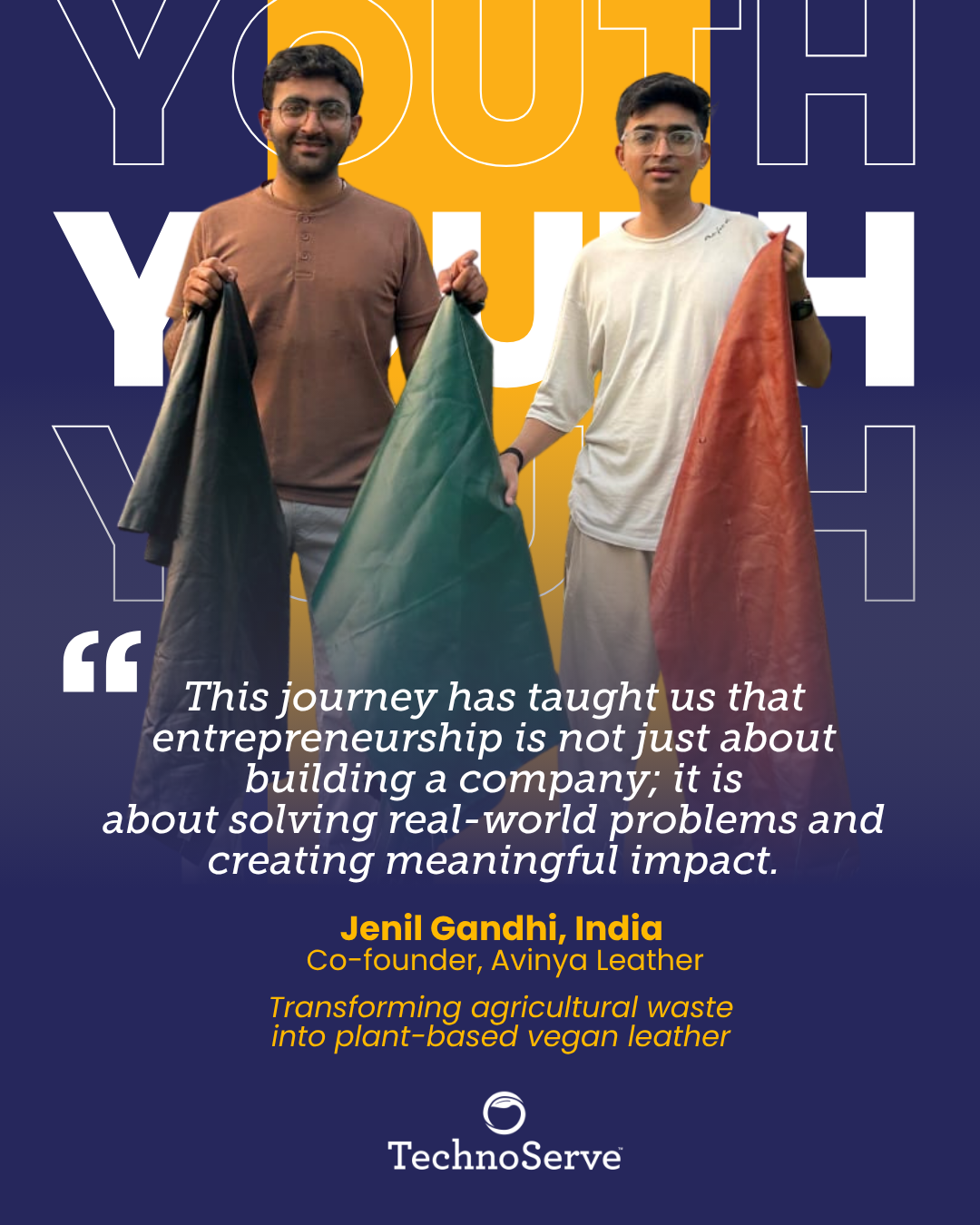
“The journey has taught us that entrepreneurship is not just about building a company,” he said. “It is about solving real-world problems and creating meaningful impact.”
Building a Circular Economy Business That Creates Opportunity
As Avinya continued to grow, Jenil and Manan joined the 2024 cohort of the Greenr Sustainability Accelerator Program, funded by the IKEA Foundation and implemented by TechnoServe. Designed to support green small and growing businesses across India, the accelerator helped Jenil and Manan refine their financial planning, strengthen their go-to-market strategy, and prepare for growth. It also connected them with investors, corporate partners, and fellow entrepreneurs, while helping them better understand how to measure and manage the company’s environmental footprint.
Those experiences helped transform a promising innovation into a growing business.
Today, Avinya has collaborated with more than 100 product manufacturers across India, built a customer base of more than 300 businesses and consumers, generated early revenue through product development partnerships, and earned recognition from national and international innovation programs.
Yet for Jenil, success is measured beyond business milestones.
“What makes me most proud is that through Avinya, we are working toward creating a sustainable alternative to conventional leather while also creating potential livelihood opportunities for farmers and local communities.”
Young People Are Already Building the Future
Jenil believes the future of entrepreneurship lies in solving problems that matter.
By transforming agricultural residue into a valuable raw material, Avinya demonstrates how innovation can create environmental, social, and economic value simultaneously. As the company scales, Jenil hopes it will generate new income opportunities for farmers, create quality jobs, and contribute to a more circular economy.
He also hopes more young people will recognize that they do not need to wait for the perfect moment to start building solutions.
“In the long term, our vision is to build Avinya into a globally recognized sustainable materials company that creates positive environmental, social, and economic impact.”
Jenil’s and Manan’s story reflects something TechnoServe sees across its youth entrepreneurship programs around the world. Young people are preparing for tomorrow’s economy and also helping shape it today. When they have access to the right skills, networks, and opportunities, young people build businesses that strengthen local economies, respond to environmental challenges, and create opportunities that extend well beyond themselves.
Discover more stories featuring young people this International Youth Day.

A Different Way to Make A Difference.
Discover how TechnoServe bridges the gap between “thinking big” and practical business solutions that help hardworking people move from poverty to prosperity around the world.

