


Extreme Poverty: Understanding the Global Crisis and Building Lasting Solutions
Table of Contents
- Introduction
- What Is Extreme Poverty? Definition and Global Measurement
- Extreme Poverty vs. Poverty: Understanding the Threshold
- How the International Poverty Line Is Measured
- Global and Regional Trends in Extreme Poverty Since 1990
- The Progress Made and What COVID Reversed
- Where Extreme Poverty is Most Concentrated
- Who Is Most Affected and Why?
- Why Rural Households and Children Are Overrepresented
- How Lack of Opportunities for Women Perpetuates Extreme Poverty
- Root Causes of Extreme Poverty and Why They Are Solvable
- Business Solutions to Extreme Poverty: The TechnoServe Approach
- Why Entrepreneurship Creates Sustainable Escapes from Poverty
- Smallholder Agriculture as an Economic Engine
- Women’s Economic Empowerment as a Multiplier
- The Coffee Value Chain Transformation
- Measuring What Works: TechnoServe’s Impact Data
- Why Business Solutions Outperform Aid Alone
- Frequently Asked Questions About Extreme Poverty
Explore what defines extreme poverty today and the practical, market-led solutions that help families break the cycle. From addressing women's economic empowerment to building climate resilience, learn how strategic shifts in local markets create lasting economic growth and better futures.
For decades, the world made significant strides against extreme poverty. Yet conflict, climate pressure, inflation, and the long aftermath of COVID-19 have slowed progress, or in some areas reversed it. Today, the challenge is understanding what extreme poverty is and identifying the most effective ways to address it.
What Is Extreme Poverty? Definition and Global Measurement

The World Bank defines extreme poverty as a condition of “severe deprivation of basic human needs,” including food, safe drinking water, sanitation facilities, health, shelter, and education. To quantify this for global policy coordination, economists use the international poverty line (IPL), a standardized monetary threshold.
As of the June 2025 World Bank update, the IPL was officially adjusted to $3.00 per day. This adjustment reflects the significant increase in the cost of essential goods globally. It is important to distinguish that this metric does not represent a “living wage”; rather, it identifies the absolute physiological and economic floor below which an individual’s survival is compromised.
The goal of economic development is to move families permanently beyond this threshold. By generating a $5.70 economic return for every $1 of philanthropic capital invested, these programs ensure that participants maintain financial security.
Extreme Poverty vs. Poverty: Understanding the Threshold
“Poverty” is often a relative measurement—varying by national standards. Those falling below a national poverty line have fewer–sometimes far fewer–resources and opportunities than the average resident of a country. Meanwhile, those in “extreme poverty,” who earn less than the IPL for their country often struggle to afford the bare essentials. For these individuals, minor external shocks, such as weather events or periods of illness, can result in a catastrophic loss of assets, often leading to long-term economic regression.
Beyond monetary thresholds, organizations like the United Nations Development Program use the Multidimensional Poverty Index (MPI) to measure how poverty is affecting a population’s health, education, and living standards simultaneously. This lens reveals that the number of people experiencing extreme deprivation is often even higher than income data alone suggests.
How the International Poverty Line Is Measured
The measurement of the International Poverty Line (IPL) relies on Purchasing Power Parity (PPP), a measurement methodology that enables comparisons of purchasing power across different currencies.
While the International Poverty Line (IPL) focuses on the lowest-income countries, the World Bank also tracks a $4.20/day line for lower-middle-income countries and an $8.30/day line for upper-middle-income countries — both of which were revised in the June 2025 update to reflect the rising global cost of living.
Global and Regional Trends in Extreme Poverty Since 1990
The trajectory of global poverty since 1990 is characterized by two distinct phases: an unprecedented period of progress followed by a contemporary era of stagnation. In 1990, approximately 1.9 to 2 billion people (roughly 36% of the world population) lived in extreme poverty. By 2015, this number had fallen to 736 million (roughly 10%). However, recent data suggests that progress in eliminating global extreme poverty has slowed considerably in recent years.
The Progress Made and What COVID Reversed
The pandemic was a systemic disruptor. According to the UN Sustainable Development Goals 2025 Report, the pandemic pushed an estimated 94 million people into extreme poverty.
Beyond immediate income loss, a concerning long-term trend is the rise in learning poverty. In 2021, the World Bank and UNESCO’s Institute of Statistics determined that “53 percent of children in low- and middle-income countries cannot read and understand a simple story by the end of primary school.” Without foundational literacy, these young people cannot transition into digital or skilled service economies, effectively capping the potential for regional growth.
Where Extreme Poverty is Most Concentrated
The geographic center of gravity for extreme poverty has shifted almost entirely to sub-Saharan Africa and fragile states:
- Sub-Saharan Africa: This region now accounts for nearly 80% of those living in extreme poverty. Factors include rapid urbanization without industrialization and a high reliance on rain-fed subsistence agriculture.
- The MENAAP Region: The Middle East, North Africa, Afghanistan, and Pakistan (MENAAP) region is the only territory where poverty rates are actively rising due to persistent conflict and the collapse of formal governance. In fact, between 2024 and 2026, the World Bank revised the 2024 extreme poverty rate for the MENAAP region upward from 11.8% to 14.4%.
- Fragile States: The three countries with the highest rates of extreme poverty – Democratic Republic of Congo, Mozambique, and South Sudan – have experienced armed conflict in recent years.
Who Is Most Affected and Why?
Extreme poverty disproportionately affects people who are geographically or socially isolated from formal economic activity. Rural households, children, and women are overrepresented in global statistics.
Why Rural Households and Children Are Overrepresented
Data from the Food and Agriculture Organization reveals that rural populations are three times more likely to experience extreme poverty than urban dwellers. These households typically depend on smallholder agriculture, a sector often characterized by low yields, high post-harvest losses, and limited bargaining power.
Children are overrepresented because impoverished households often have higher dependency ratios. When income falls below the survival threshold, the lack of adequate nutrition and healthcare during early developmental stages can lead to permanent cognitive and physical stunting, ensuring the cycle of poverty persists into the next generation.
How Lack of Opportunities for Women Perpetuates Extreme Poverty
Gender inequality is a primary driver of economic stagnation. Globally, 9.2% of women and girls live in extreme poverty, often due to restrictive legal frameworks regarding land ownership and financial access. In many low-income countries, women are consistently underrepresented in formal decision-making processes about resource allocation and policy.
The challenge compounds under climate stress. When extreme weather events displace communities or destroy harvests, women and girls often face heightened risks — including domestic and sexual violence in the aftermath of disasters — on top of the economic setbacks everyone else experiences.
Root Causes of Extreme Poverty and Why They Are Solvable
Extreme poverty is not caused by a lack of effort. It is the result of systemic failures that trap capable people in low-income conditions. Understanding those root causes is essential for moving from a relief-based model to a solutions-based model.
We have identified three primary systemic failures:
- Market Disconnection: When small producers cannot access high-value buyers, they are forced to accept low prices from local intermediaries, often receiving only a small fraction of the value of their goods at the end of the supply chain. Addressing this requires making value chains more transparent and effective: linking producers more directly to buyers, strengthening intermediaries who play a critical role in markets, and ensuring that farmers have access to the information they need to negotiate fairly.
- Climate Instability: Approximately 80% of those living in poverty globally reside in areas with high exposure to climate hazards. When disasters strike in already-fragile contexts, they can trigger food insecurity, displacement, and resource conflict simultaneously, making recovery far more difficult. Without technical training in regenerative agriculture and access to loans and savings, these communities remain in a state of constant vulnerability.
- Institutional Fragility: Conflict works similarly, disrupting markets, destroying productive assets, and forcing families to lose their livelihoods. Countries affected by conflict and violence consistently show the slowest progress on poverty reduction and the most severe reversals during crises. The cost of doing business becomes prohibitive for small entrepreneurs; supply chains collapse; and the institutions that might otherwise provide education, healthcare, and financial services cease to function.
Business Solutions to Extreme Poverty: The TechnoServe Approach
TechnoServe works from a fundamentally different premise than traditional aid organizations. Rather than approaching the people it serves as passive “beneficiaries,” it differentiates itself by treating those in poverty as enterprising individuals capable of lifting themselves out of poverty. Our approach is effective because it addresses the incentive structures within inclusive market systems, ensuring that change is self-sustaining.
Why Entrepreneurship Creates Sustainable Escapes from Poverty
TechnoServe believes that programs that integrate marginalized producers into formal value chains, provide technical training, and help businesses become investment-ready consistently produce better long-term outcomes than cash transfers or commodity distributions alone, because they address the structural barriers that keep households near the poverty line.
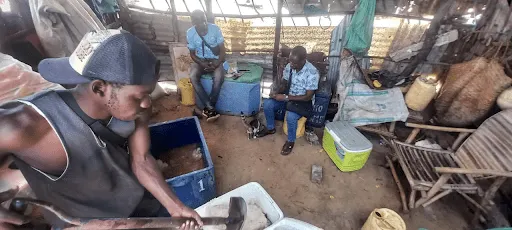
Entrepreneurship, when properly supported, creates a compounding return. Before joining TechnoServe’s BlueBiz program, Abdullahi Said Abdallah was a struggling fish trader in Kenya, moving only 20kg of fish a day with no formal business records. After receiving training in digital marketing and financial management, he became a savvy entrepreneur with over 150 new clients, scaling his daily sales from $31 to an impressive $580. Today, Abdullahi owns his own fishing boat, employs full-time staff, and generates enough profit to fund his sisters’ education while practicing sustainable fishing methods that protect the local marine ecosystem.
TechnoServe’s programs are designed to trigger exactly this kind of compounding. The organization focuses on three strategic levers:
TechnoServe’s methodology focuses on three strategic levers:
- Technical Training & Skills Acquisition: We provide training in technical and business skills to help smallholder farmers and entrepreneurs improve quality and adopt regenerative techniques.
- Market Linkages: We facilitate direct relationships between small-scale producers and large-scale buyers. This removes the “middleman penalty” and increases the producer’s share of the final sale price.
- Capital Access: We assist small businesses in becoming “investment-ready” by helping them secure the credit they need to scale their operations and create local employment.
Smallholder Agriculture as an Economic Engine
For the majority of families living in extreme poverty, agriculture is often the only economic activity available. When farmers adopt better agronomic practices, gain access to improved inputs, connect to formal buyers, and learn to manage their operations as businesses, they can shift from subsistence to surplus.
That shift has far-reaching effects. Higher farm income funds school fees and healthcare. It enables investment in improved equipment and seeds for the next season. It builds the savings cushion that allows a household to take calculated risks, like trying a new crop, expanding an operation, or starting a complementary business. In low-income settings, agriculture is the foundation for broader economic mobility.
TechnoServe’s work in coffee value chains across East Africa illustrates this clearly. In regions where coffee is a primary export, many farmers traditionally lived in extreme poverty despite producing a globally traded commodity — because low yields and small farm sizes meant they captured only a tiny fraction of the value they created.
TechnoServe’s Coffee Initiative supported 340 cooperative wet mills and enabled over 250,000 smallholders to access specialty markets, resulting in an average price increase of $1.54 per kilogram of coffee exported. By providing agronomy training to nearly 140,000 farmers, the project drove average yield increases of 38%, proving that when farmers gain the right technical skills and market links, they can move from subsistence to a sustainable, profitable business model.
Women’s Economic Empowerment as a Multiplier
The “Gender Multiplier” remains one of the most effective tools in development. Research indicates that when women succeed economically, the whole family prospers.
By improving a woman’s economic agency, organizations achieve a disproportionate impact on community-level resilience. Programs that focus on women’s market access, business training, and financial inclusion are among the most cost-effective poverty reduction strategies available.
When women gain access to business training, savings and credit products, and market opportunities, the impact consistently extends beyond the individual. Families benefit through better nutrition and health outcomes. Children are more likely to stay in school. Communities become more economically resilient.
TechnoServe’s approach to women’s economic empowerment is woven into every program. In fact, in 2025, we measured a 44% women’s participation rate across our global portfolio — a target the organization is actively working to increase. Each percentage-point increase in women’s participation compounds the impact of every dollar invested.
The Coffee Value Chain Transformation
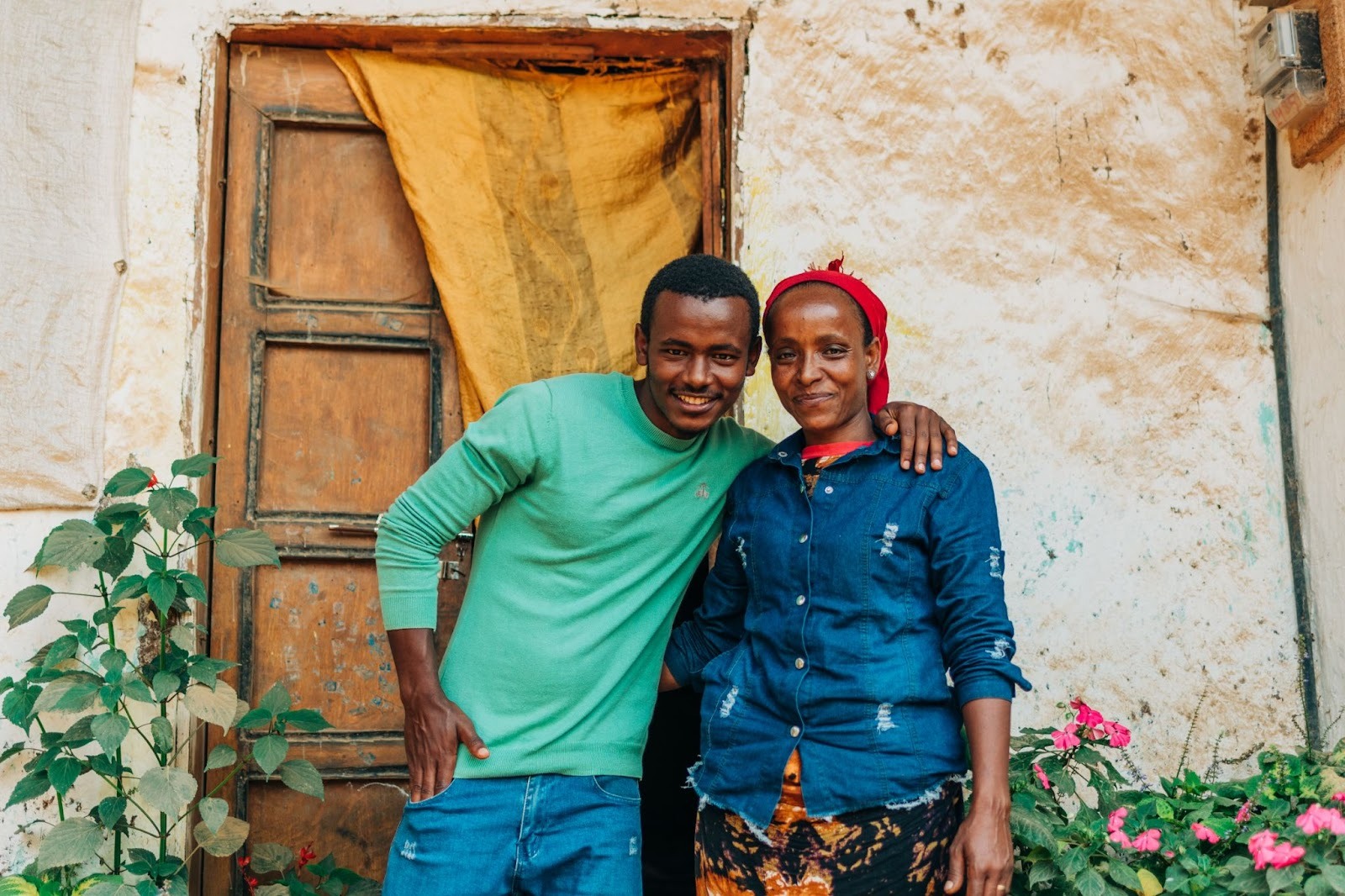
Lubaba Mekonnen, a coffee farmer in Ethiopia’s Jimma zone, represents the multiplier effect in action. Before engaging with TechnoServe’s Coffee Initiative, Lubaba practiced traditional farming methods that yielded limited income, barely sustaining her household. Like many smallholders across East Africa, she faced a cycle of low yields that kept her family near the international poverty threshold with no realistic path to break out.
Through the project, Lubaba mastered advanced agronomy practices, including techniques for revitalizing aging coffee trees and managing soil health. The financial results have been substantial. Over the last twelve years, her income has increased by $200— enough to move from barely covering basic sustenance to generating a surplus that has funded her children’s education, allowed her to build a new house with electricity, and to hire two day laborers.
Lubaba’s story is representative of the impact of TechnoServe’s work. A single strategic intervention, properly designed and executed, can produce community-wide ripple effects long after the program itself concludes.
Measuring What Works: TechnoServe’s Impact Data
Our numbers back up our approach. In the global development sector, impact data is the essential mechanism for proving a program’s efficacy. According to the Center for Global Development, rigorous evaluation is what allows effective models to move beyond pilot phases and achieve the scale necessary to impact millions.
TechnoServe’s 2025 Annual Report provides a quantitative overview of the organization’s results and commitment to transparency:
- 1.2 million individuals successfully increased their income through TechnoServe-supported programs in 2025.
- $5.70 economic return: For every $1 of philanthropic capital invested, TechnoServe’s clients generated an average of $5.70 in additional income and wages.
- 102,000 employment opportunities created or supported through programs focused on job creation and retention
- 44% women’s participation rate across the global portfolio
Why Business Solutions Outperform Aid Alone
Humanitarian Aid has a critical and undeniable role to play in emergency response, crisis stabilization, and the protection of the most vulnerable during acute shocks. It saves lives. But without a corresponding focus on income generation, market access, and skills development, it may not create the conditions needed for lasting economic mobility.
The core limitation of short-term humanitarian aid approaches is that they address symptoms without changing the structures that produce them. A family that receives food aid this season faces the same market barriers, the same skills gaps, and the same structural exclusion next season. Business-based approaches, by contrast, change what the household can do, expanding capability, building assets, and creating the conditions for compounding progress over time.
Frequently Asked Questions About Extreme Poverty
What is the formal definition of extreme poverty?
Extreme poverty is a state of severe deprivation of basic human needs, quantified as living on less than the international threshold of $3.00 per day.
What are the primary classifications of poverty?
Absolute Poverty: An inability to meet the physiological requirements for survival.
Relative Poverty: Income levels that are significantly below the societal norm.
Situational Poverty: Temporary economic hardship caused by specific external events.
Generational Poverty: A chronic state of poverty that persists through successive generations.
Multidimensional Poverty: A measure that identifies multiple deprivations at the household and individual level in health, education, and standard of living, rather than just looking at income.
What are the fundamental drivers of extreme poverty?
The primary drivers include market exclusion, gender-based economic barriers, climate vulnerability, and institutional fragility in conflict zones.
Read our complete 2025 Impact Report.
Support the transition from poverty to prosperity. Contribute to TechnoServe’s mission.

A Different Way to Make A Difference.
Discover how TechnoServe bridges the gap between “thinking big” and practical business solutions that help hardworking people move from poverty to prosperity around the world.


