


TechnoServe Fellows Program: 30 Years, the First Fellows
Table of Contents
- Introduction
- Take me back 30 years ago when you decided to do a volunteer project with TechnoServe. Who were you at that time, and how did the idea for this project come together?
- How did you end up in Peru, and what was the reality when you landed on the ground?
- What was your day-to-day work like back then?
- Were there any specific people or experiences that really stuck with you from that first year?
- Peru was going through major political changes back then. Did you experience any of that firsthand?
- You ended up volunteering with TechnoServe for a second year. Where did you go, and what was your focus?
- How did you two help local teams develop monitoring and evaluation practices on the ground back then?
- How did this two-year experience shape your career paths and who you are today?
- Personally, what were your takeaways?
- Your pilot project back in 1996 evolved into what is now the TechnoServe Fellows Program. What do you think of the program today?
- To close out, what advice would you give to current or future TechnoServe Fellows?
As we celebrate the 30th anniversary of the TechnoServe Fellows Program, we look back to the origin of the program with the very first fellows.
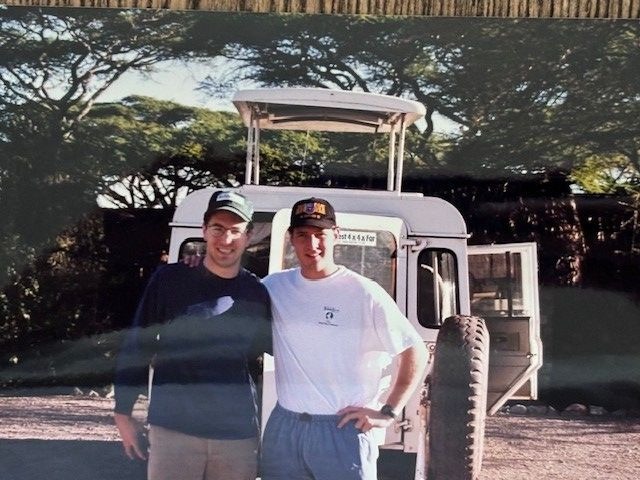
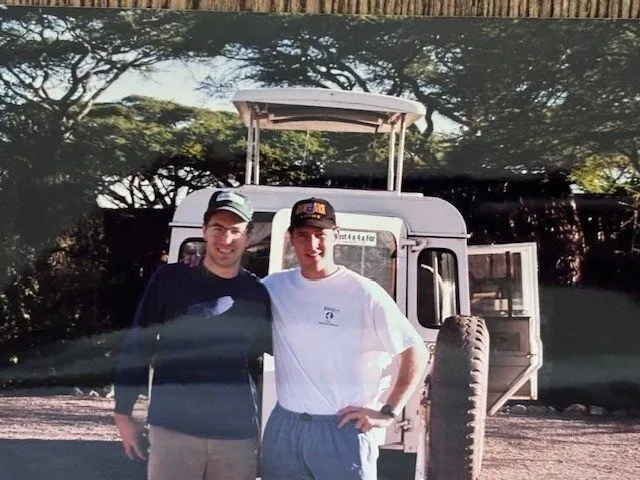
Thirty years ago, Matt Tierney and Eric Sillman boarded a plane to South America, becoming the very first volunteers in what would become the global TechnoServe Fellows Program. We sat down with the lifelong friends to reflect on their time with TechnoServe , navigating geopolitical landscapes, developing a monitoring and evaluation strategy, and how two years in the field shaped their lives and careers.
You two have known each other for decades. How did you first meet?
Eric: We met on the first day of high school at Trinity on the Upper West Side of Manhattan. We sat next to each other on the orientation bus, talked the entire time, and pretty much became best friends. From there, we’ve explored personally and professionally together through TechnoServe and a wide variety of pursuits. There’s been a lot of partnership over the years.
Matt: During college, we stayed in close touch. We were both studying similar subjects. I was a government and international relations major at Georgetown, with a focus on Latin America. We always talked about what we were studying and shared ideas. We both had that entrepreneurial bug, too.
Take me back 30 years ago when you decided to do a volunteer project with TechnoServe. Who were you at that time, and how did the idea for this project come together?
Eric: I was a liberal arts major, straight out of college, interested in a lot of things, and with some entrepreneurial bones in my body. I spent my junior year in Spain and became passionate about Latin America. I wanted adventure and work that did good in society, but I had no idea whether that would be via business, development, or policy.
Matt: I grew up on Indiana Jones movies and always wanted to go abroad for the adventure. I studied Latin American economies, but it was all academic, and I wanted to see policy in practice on the ground. My father, Paul Tierney, had been part of TechnoServe for a long time and was good friends with its founder, Ed Bullard. Ed would come over to our house when I was growing up, and I’d hear these fascinating stories about long bus rides in northern Ghana to visit cashew projects.
Fast forward to my senior year in college, I was actively applying to the Peace Corps, and my father suggested I talk to TechnoServe about possible job opportunities. Peter Reiling, who was the country director of Ghana at the time, was being promoted to CEO. He happened to visit Georgetown, and we met up at a famous local restaurant called The Tombs. Peter latched onto the idea of sending two young people to a TechnoServe office to work on a project. That was the impetus for our initial work with TechnoServe.
Eric: I learned about TechnoServe through Matt and his dad, Paul, who became a close mentor of mine. My senior year of college, I took a Latin American economic development course and wrote a paper on the history of economic development organizations, using TechnoServe as a case study of an effective organization. So when the stars aligned, the organization got interested in us, and we got interested in them.
How did you end up in Peru, and what was the reality when you landed on the ground?
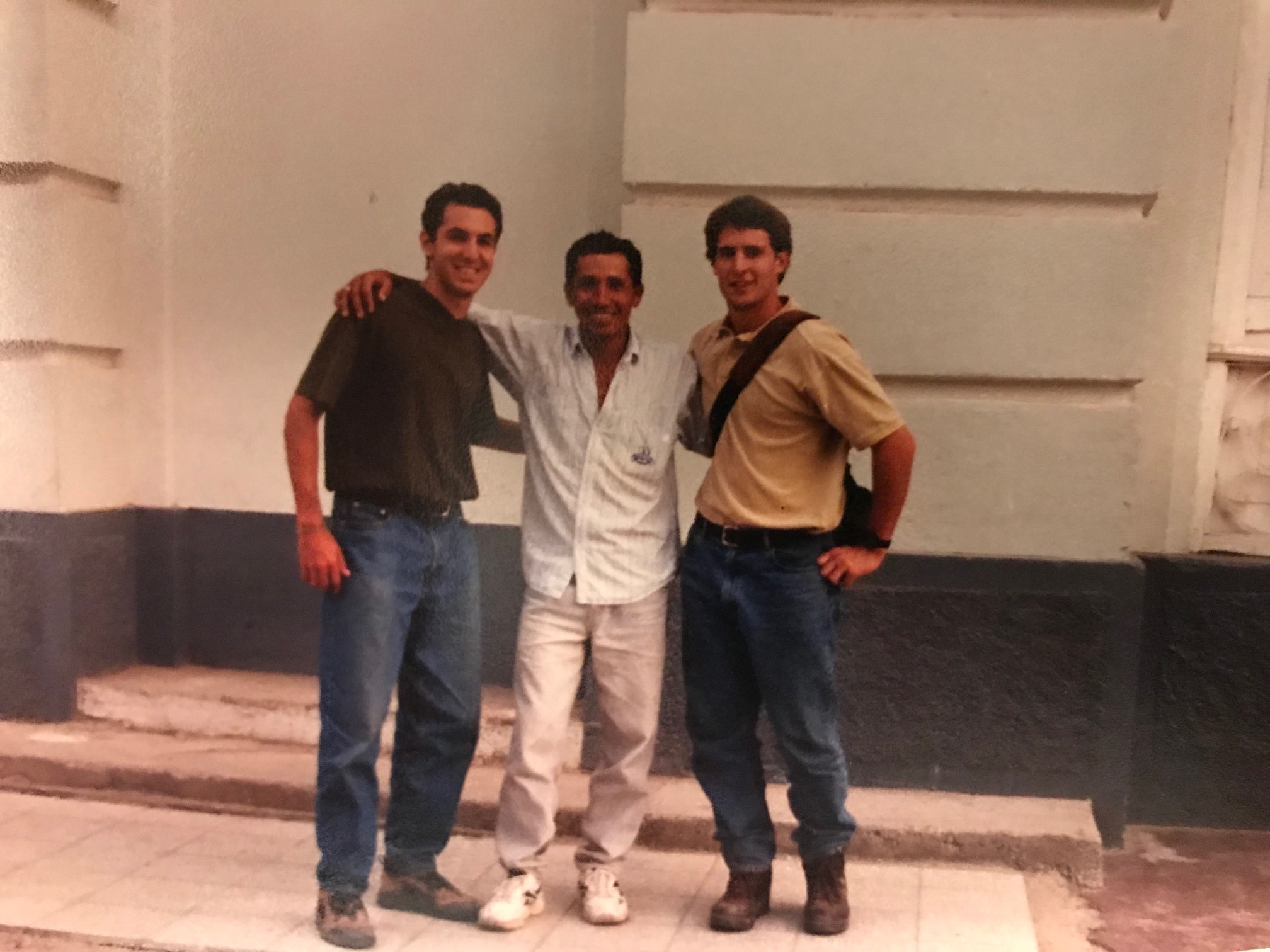
Matt: We spent the summer reading every book possible on Nicaragua because that’s where they told us we were going. Then, two weeks before leaving, we went to the head office, and they said, ‘Yeah, you guys are going to Peru.’ So we pivoted.
When we arrived in Lima, we stayed in a hostel-like B&B and worked out of the central office, which was in a suburban house in the San Borja neighborhood. Our boss, country director Alberto Perez, was pretty hesitant when we showed up. Months later, after we proved ourselves, he was direct and told us, ‘Yeah, I wasn’t sure if I wanted you guys, and what the heck you were going to do.’ He thought we were just two young college grads coming down to Peru who might waste his time.
Eric: I think it was a real feeling-out process from the local staff and from us. We were the first ones, and they didn’t really know what we could bring. We weren’t certain what we could bring either. Still, we had strong liberal arts backgrounds, curiosity, self-starter mentalities, we spoke Spanish, and it didn’t hurt that we liked soccer and all the local foods. Ultimately, we quickly integrated with the local staff and really built trust with them.
What was your day-to-day work like back then?
Eric: A lot of the work focused on implementing a monitoring and evaluation framework, spearheaded by a TechnoServe analyst in the main office, Alberto Espinoza. We traveled all over the country interviewing clients, agronomists, industry participants, economists, and government officials.
Matt: One of our biggest projects was in northern Peru, near Chiclayo, focused on mango cultivation and supply chain analysis. We assisted in the analysis to determine whether the harvest would go to local processors or be exported to the U.S. We lived in Lima but made the 10-hour drive up to Chiclayo multiple times.
We worked with five or six local agronomists and engineers. We would go in and assist them with the data analysis, which was done in the main office. What was more fun and exciting was actually going up to the project and gathering the data. We would go out to the farms to do interviews about crop production, crop yield, total costs, and inputs and outputs. We also collected a lot of qualitative data, asking clients about general life improvements (housing, education, health, etc.), talking to government officials, and trying to understand the overall qualitative impact beyond the direct economic value.
Eric: An interesting fact is that 1996 was when the internet was just becoming more widely available. Almost everything was paper-based and done by speaking to people. Thankfully, the internet didn’t really exist, because if it had, we probably would have spent more time sitting in our office in Lima instead of getting out into the field to interact with the clients, local TechnoServe staff, and other individuals.
Were there any specific people or experiences that really stuck with you from that first year?
Eric: I vividly remember a client named Alberta Mejia who lived in rural Motupe. He was so proud to show us his home because he had a new tin roof and a bicycle so his kids could go to school more easily. That was really eye-opening to me. No matter what one’s base is, they can be proud of their advances in life. He obviously had the entrepreneurial drive, the hard work, and the smarts, and just needed the opportunity and assistance to achieve.
Also, after driving 10 hours up to Motupe, we bonded with two of the TechnoServe agronomists, Cesar Aguinaga and Carlos Loyaza. They taught us the Peruvian national anthem over the course of that long drive. I still remember it but will spare you.
Matt: We became such good friends with the TechnoServe staff. One of them was the local manager, Gerardo, who worked with us in Chiclayo. It was great to see him in the role as a full-time TechnoServe employee, because he had been a client and a farmer and had worked his way up.
We’d play soccer with him when we were up there after work. He was very proud to show us his home, and we could see the difference when he took us to where he lived before working for TechnoServe and afterward. He had a family, and he showed us his young daughter’s school. So, it was nice to see how TechnoServe was also helping local staff improve their lives.
Funny story—we told the whole TechnoServe staff about Thanksgiving, and they thought it sounded like fun. So, we decided to host everyone, and Gerardo volunteered to bring the turkey. So he literally bought a turkey, fed it, and gave it red wine to “add more flavor”. We brought the turkey to a market in Lima, where we had it slaughtered and defeathered, then cooked it in our apartment and had a great Thanksgiving night with all the staff in Lima.
Peru was going through major political changes back then. Did you experience any of that firsthand?
Matt: Alberto Fujimori was president, and the country was just coming out of the grips of a very difficult, violent era with Sendero Luminoso (Shining Path) and terrorism. During our first month, the local staff warned us to stay indoors one evening because it was the anniversary of the incarceration of the leader of Shining Path, and everyone feared retaliatory bombings. That night, the house shook! Eric and I went into the office the next morning and asked if bombs had gone off. Everyone laughed at us—Eric and I had never lived anywhere with earthquakes, and it was just a minor earthquake.
Eric: It was definitely an intense backdrop, but politically it was also an incredible time to be there and witness the country changing and trying to move forward.
Matt: The Shining Path had historically operated out of Ayacucho in the middle of Peru, which had been off-limits and far too dangerous for Peruvians or foreigners to visit for years. But TechnoServe Peru got an introduction to visit a neighboring town called Huanta. Eric and I flew up there with a couple of TechnoServe engineers, and we were among the first international organizations to visit that town since the Shining Path had operated there for decades.
When we landed at the airport, we were picked up by the mayor of Huanta in a pickup truck. We were flanked on either side by two other pickup trucks carrying about six guys with machine guns. Driving into Huanta with an armed escort like that, I remember feeling a little nervous. But we toured the town, met with local leaders, and it was really monumental because it was a huge step for TechnoServe to open that door and eventually launch a project with those local communities.
You ended up volunteering with TechnoServe for a second year. Where did you go, and what was your focus?
Eric: The focus of our work for the second year was expanding the implementation of the monitoring and evaluation framework. The overall economic development sector was becoming more focused on the impact the work was having. People wanted to see the tangible impact in terms of ROI analysis and the qualitative impact in terms of people’s situations, their kids’ educations, new roads, electricity, etc.
So we presented our work to the TechnoServe board and other constituents. At that point, we had proven that we weren’t just a couple of young Americans looking to have fun in Peru, but could actually add value. So then they spoke to other country directors in other regions, and we went to several different countries for a few weeks at a time, doing additional monitoring and evaluation studies in each country and also training local staff on the monitoring and evaluation framework.
Matt: I distinctly remember that presentation to the TechnoServe board. TechnoServe was at the forefront of this type of analysis at the time. Renowned investor and board member Paul Soros was there, and when we presented the ROI analysis, he said, “That’s a pretty good return.”
The board realized TechnoServe should do more to understand the economic return of its projects, which led to our second year. We became internal trainers, traveling to Mozambique, Tanzania, Kenya, Ghana, Nicaragua, and El Salvador to train local staff on how to run monitoring and evaluation analysis. This was the beginning of implementing an ROI analysis as part of every project, which now is standard procedure.
How did you two help local teams develop monitoring and evaluation practices on the ground back then?
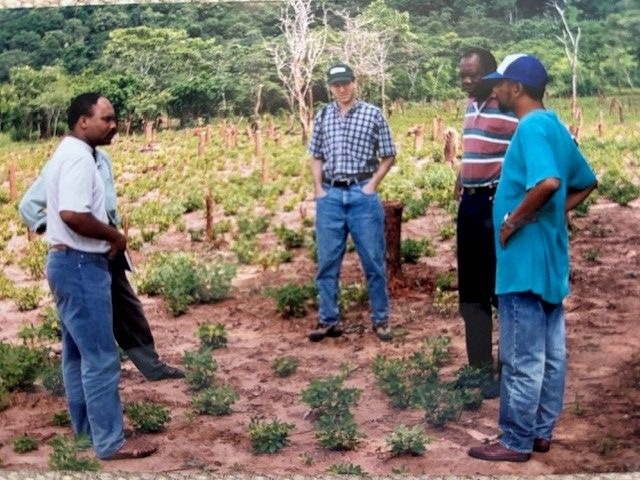
Matt: In international development at that time, monitoring and evaluation was shifting toward measuring actual financial returns rather than just telling qualitative, human-interest stories. Alberto Espinoza was the brainchild of this effort. Because there was no internet or cloud server to share data locally, execution was pure blocking and tackling. We went out into the field with paper charts, collected raw data from local farmers, hired local accountants when available, and even taught basic accounting to individuals and small cooperatives.
Eric: We had computers with early versions of Excel, PowerPoint, and Word. We’d input the data, print out these large documents, and then verbally walk local teams through the methodologies. Knowledge management across borders didn’t exist, so a big part of our job was trying to standardize these data collection practices across different regions.
Matt: That was the hardest part—getting buy-in and building local capacity. We or someone from the main office might visit for a week, but at the end of the day, TechnoServe’s local staff had to collect that data every single week. We had to teach them how to do it and show them why it mattered. Donors were starting to request ROI analysis in grant proposals explicitly, so helping local teams master monitoring and evaluation became essential for winning future grants and securing project funding.
How did this two-year experience shape your career paths and who you are today?
Eric: It was a launching pad. I had multiple discussions with Matt and TechnoServe staff about ‘Do I want to be more in the business side of the world or more in the development policy side of the world?’ I chose business in large part because of TechnoServe’s approach to business solutions to poverty. I decided to pursue a path where I supported entrepreneurs and helped their small businesses have positive societal impact. Ultimately, I got involved with healthcare venture capital. So it really helped clarify the path I wanted to go down. And it gave me so many good personal and professional experiences. Working with TechnoServe for two years was invaluable.
Matt: Mine is a path very similar to Eric’s. I was also interested in both policy and business. I really enjoyed doing the ROI analysis and the basic finance we were doing, and I realized I had a lot to learn. So I looked for places to go where I could learn more about finance and investing. I liked international work, so I ended up in a program at an investment bank focused on Latin America right after TechnoServe. I also went on to business school. Since business school, I have pursued an investment career across a variety of different sectors.
Personally, what were your takeaways?
Eric: I realized how people all around the world live so differently, yet are more similar than you would think in wanting some of the basic things in life and having similar interests. That definitely became clear to me through the work with TechnoServe.
Matt: We all live in our own bubbles, and mine had been growing up in Manhattan and attending college. TechnoServe expanded my view of the world. My kids always joke that when I’m in a taxi, and there’s a driver from Ghana, I’ll say, ‘Hey, what’s up? Where are you from in Ghana?’ and we talk about the Black Stars or politics. I feel really lucky to have worked directly with so many different people from many wonderful countries.
Your pilot project back in 1996 evolved into what is now the TechnoServe Fellows Program. What do you think of the program today?
Eric: We are thrilled and amazed by what it has become. It’s grown from literally just the two of us taking a leap of faith into a global program that has deployed over 1,300 fellows around the world. What strikes me most is how much more institutionalized and impactful it is now. TechnoServe has built these incredible formal relationships with top-tier management consulting firms like McKinsey, where young professionals can step away from their corporate tracks for three to twelve months, go to places like northern Mozambique or rural Latin America, and apply their expertise directly to ground-level problems. They add immense value to local communities and then return to their firms having grown both professionally and personally.
Matt: When we went to Peru, we were just a test case, two young grads whom Peter Reiling and the team took a chance on. Nobody back then could have dreamed of what the program looks like today. TechnoServe’s leadership, including CEO Will Warshauer, has invested so heavily in building out the program.
The caliber of the Fellows today is incredible. Unlike Eric and me, who went straight out of college with a lot of enthusiasm, today’s Fellows arrive supercharged with years of specialized corporate, financial, and strategic skills. They hit the ground running and can immediately activate a project from day one.
To close out, what advice would you give to current or future TechnoServe Fellows?
Eric: Don’t use the internet or your phone too much. Act like it’s 1996! When you’re in the field, put the screens away and get out there into the communities. Talk to people face-to-face, listen to their stories, and build real relationships. That’s where the real insight and transformation happen. Then, feel free to use the internet to sharpen your work!
Matt: Spend as much time as possible interacting with the clients—and not just about the work or the metrics. Hang out with them after work, have a beer, share a meal, and take the opportunity to connect with people whose life experiences are completely different from your own.
The fellowship is a two-way street. As much as you think you’re going to a country to help improve a project, the truth is that you end up getting far more back than you give. It completely changes your perspective and your life permanently for the better.

A Different Way to Make A Difference.
Discover how TechnoServe bridges the gap between “thinking big” and practical business solutions that help hardworking people move from poverty to prosperity around the world.

