


The Business of Biofertilizers: Engaging the Private Sector to Scale Agricultural Innovation in Mozambique
Biofertilizers can be a powerful tool for boosting farm yields and farmer incomes. How do we nurture the local businesses that produce them?
By George Makore and Iláuda Manala – TechnoServe
This article originally appeared in Agrilinks
In Mozambique, where smallholder farmers are the pillar of the agricultural sector, accessing innovative agricultural solutions can be a game-changer. Innovations such as biofertilizers promise to enhance crop yields and resilience, yet scaling their adoption remains a significant challenge.
Linda Germano and the challenge of scaling biofertilizers and other innovations
Linda Germano, an experienced farmer and advocate for sustainable farming practices, encountered difficulties convincing her fellow farmers to adopt biofertilizers. Many were hesitant, skeptical of the unfamiliar products, and often facing financial constraints. Linda’s goal was to demonstrate how such innovations could improve soil fertility, increase crop yields, and ensure more sustainable agricultural practices. However, scaling the adoption of biofertilizers required a much broader effort, involving both private-sector support and structured projects that attended to smallholders specific needs.
The important role of the private sector in addressing the challenge
Biofertilizers are natural fertilizers that contain live microorganisms, such as bacteria, fungi, or algae, which promote plant growth by increasing the availability of essential nutrients in the soil. Biofertilizers are eco-friendly alternatives to chemical fertilizers and contribute to sustainable agricultural practices by reducing the reliance on synthetic inputs.
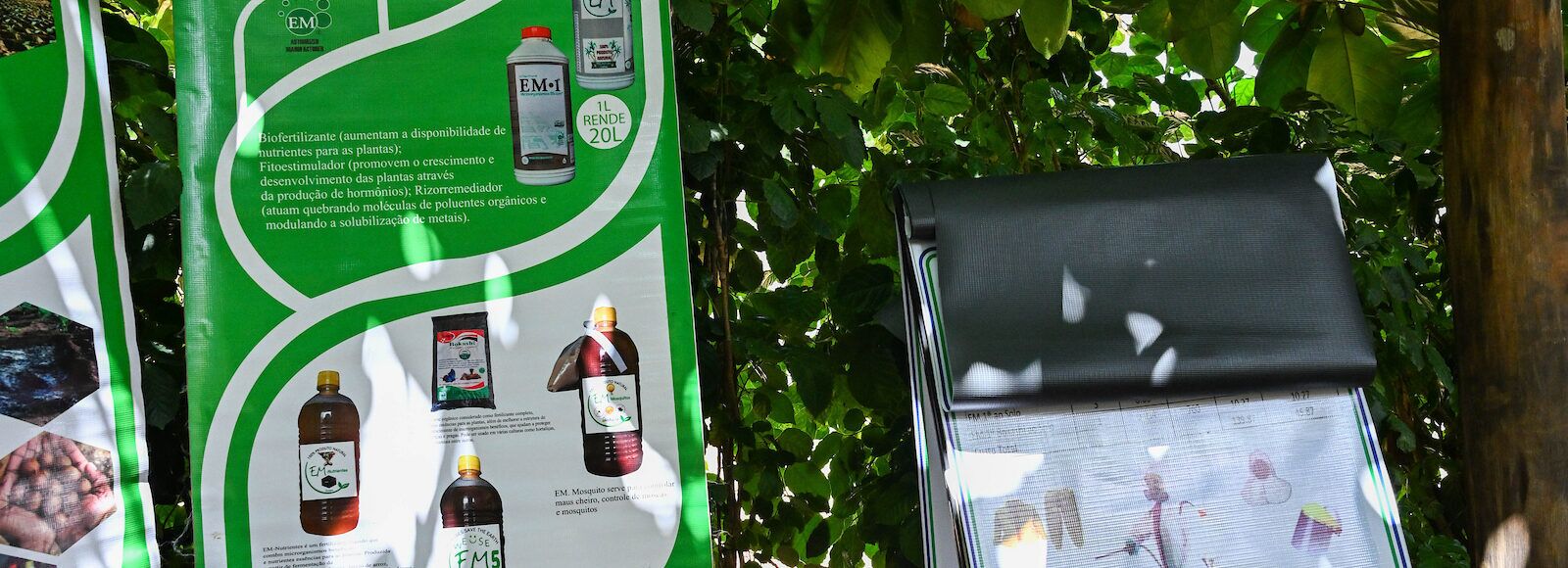
The private sector plays a crucial role in helping smallholder farmers access modern agricultural technologies. Companies like BioAgro, a Mozambican business that specializes in biofertilizers, have the expertise, products, and supply chains necessary to bring these innovations to scale. Their involvement, combined with projects designed to link them with smallholders, can break down barriers related to cost, awareness, and accessibility.
The FTF Premier-Oholo project and its approach to working with the private sector
The FTF Premier-Oholo, a five year project funded by USAID and SDC and implemented by TechnoServe, focuses on creating synergies between the private sector and smallholder farmers. The project aims to leverage the expertise and resources of companies like BioAgro to ensure that innovations such as biofertilizers are accessible and affordable for farmers. FTF Premier-Oholo’s approach emphasizes market-driven solutions, ensuring that both farmers and private-sector partners benefit economically while addressing critical challenges like food security and sustainability.
The partnership with BioAgro
In collaboration with BioAgro, the FTF Premier-Oholo project set out to build a sustainable pathway for the widespread adoption of biofertilizers. The partnership focused on training smallholder farmers on the benefits of using biofertilizers, providing them with access to the products, and facilitating financing mechanisms to make these products affordable.
For smallholder farmers, the partnership aimed to boost crop yields and soil health, reduce reliance on chemical fertilizers, and improve overall farm productivity. The initiative also sought to make biofertilizers more accessible and demonstrate their long-term economic and environmental benefits.
For BioAgro, the partnership presented a unique business opportunity. By working closely with smallholder farmers, the company expanded its market share and deepened its presence in the rural agricultural sector. The project also provided BioAgro with insights into how to tailor its products and marketing strategies to better meet the needs of smallholder farmers, creating a win-win scenario.
The partnership between FTF Premier-Oholo and BioAgro operated on a model of shared value creation. FTF Premier-Oholo facilitated farmer outreach and awareness-building, while BioAgro facilitated training and knowledge sharing on how to use the biofertilizers, as well as creating a distribution network via agrodealers from the communities, which will supply the inputs to the farmers. This collaboration allowed farmers to test the product, build confidence in its efficacy, and eventually become long-term customers.
Making private-sector engagement work for farmers, business, and the planet
Several key lessons emerged from this partnership. First, trust-building between farmers and private-sector actors is critical to the adoption of new technologies. Secondly, providing farmers with hands-on training and demonstrations helped break down initial resistance.
The success of the partnership with BioAgro largely hinged on the alignment of incentives. Smallholder farmers benefited from increased yields and better soil health, BioAgro expanded its customer base, and FTF Premier-Oholo fulfilled its mission of empowering farmers with sustainable agricultural practices. Additionally, the partnership was bolstered by strong communication channels, a well-structured distribution network, and ongoing farmer support.
The impact of private-sector engagement
The BioAgro intervention has had a measurable impact on the farming communities involved. With increased access to biofertilizers, farmers reported significant improvements in their crop yields and soil fertility. Additionally, many of the participating farmers have reduced their dependence on chemical fertilizers, leading to more sustainable farming practices.
“Since the signing of the agreement in March, more than 5,000 smallholder farmers have been trained in biofertilizer application, and we expect an average crop yield increase of 60% among participating farmers, and a 30% reduction in chemical fertilizer usage, contributing to improved soil health”, explains the BioAgro representative, Jose Efraim Solano.
Linda Germano and her farmer group experienced firsthand the transformative power of biofertilizers. Not only did their yields increase, but they also observed longer-term benefits such as improved soil quality and reduced input costs. The partnership provided Linda and her peers with both the knowledge and the tools they needed to improve their livelihoods.
The potential to scale innovation in the agricultural sector in Mozambique
The success of the FTF Premier-Oholo and BioAgro partnership signals vast potential for scaling agricultural innovations in Mozambique. By fostering more collaborations between private-sector actors and smallholders, the agricultural sector can become more resilient, productive, and sustainable. Such initiatives demonstrate how aligning the interests of farmers, businesses, and development programs can lead to long lasting impact and change in Mozambique’s rural farming communities.