




Project Years: 2014-2017
The Mobile Training Unit (MTU) Project
The Mobile Training Unit Project provided smallholder farmer training in Ghana and Kenya
Countries
The Opportunity: Helping Smallholder Farmers Close the Productivity Gap
In Sub-Saharan Africa, millions of smallholder farmers form the backbone of the rural economy but remain trapped in poverty due to a persistent gap between potential and actual yields. Agriculture in the region is characterized by low productivity; for instance, maize yields in the United States are six times greater than those in East and West Africa. This gap is driven by several systemic challenges: poor training on effective agricultural practices, limited access to high-quality inputs like fertilizer, and a significant lack of mechanization. Furthermore, Africa imports billions of dollars of food each year to meet consumer demand.
For agriculture to be sustainable, it must be profitable. Smallholders frequently contend with unstable prices due to poor post-harvest handling and a lack of access to profitable, formal markets. In northern Ghana, harsh climates and poor infrastructure further isolate farmers from services, while in western Kenya, the vital dairy and maize sectors are held back by limited infrastructure and poor market linkages.
The Strategy: Mobile Agricultural Training, Market Access, and Mechanization
The Mobile Training Unit (MTU) project improved smallholder livelihoods by promoting innovative agricultural extension services and fostering improved linkages to markets, inputs, and finance. The cornerstone of the strategy was the Mobile Training Unit, a modified box truck used to screen engaging training videos and host workshops in widely dispersed rural communities. This approach ensured that the multimedia training was effective, timely, and accessible to women, who often face domestic time constraints. The curriculum covers high-impact agronomy—such as proper spacing and soil fertility—alongside “farming as a business” skills like financial literacy and record-keeping.
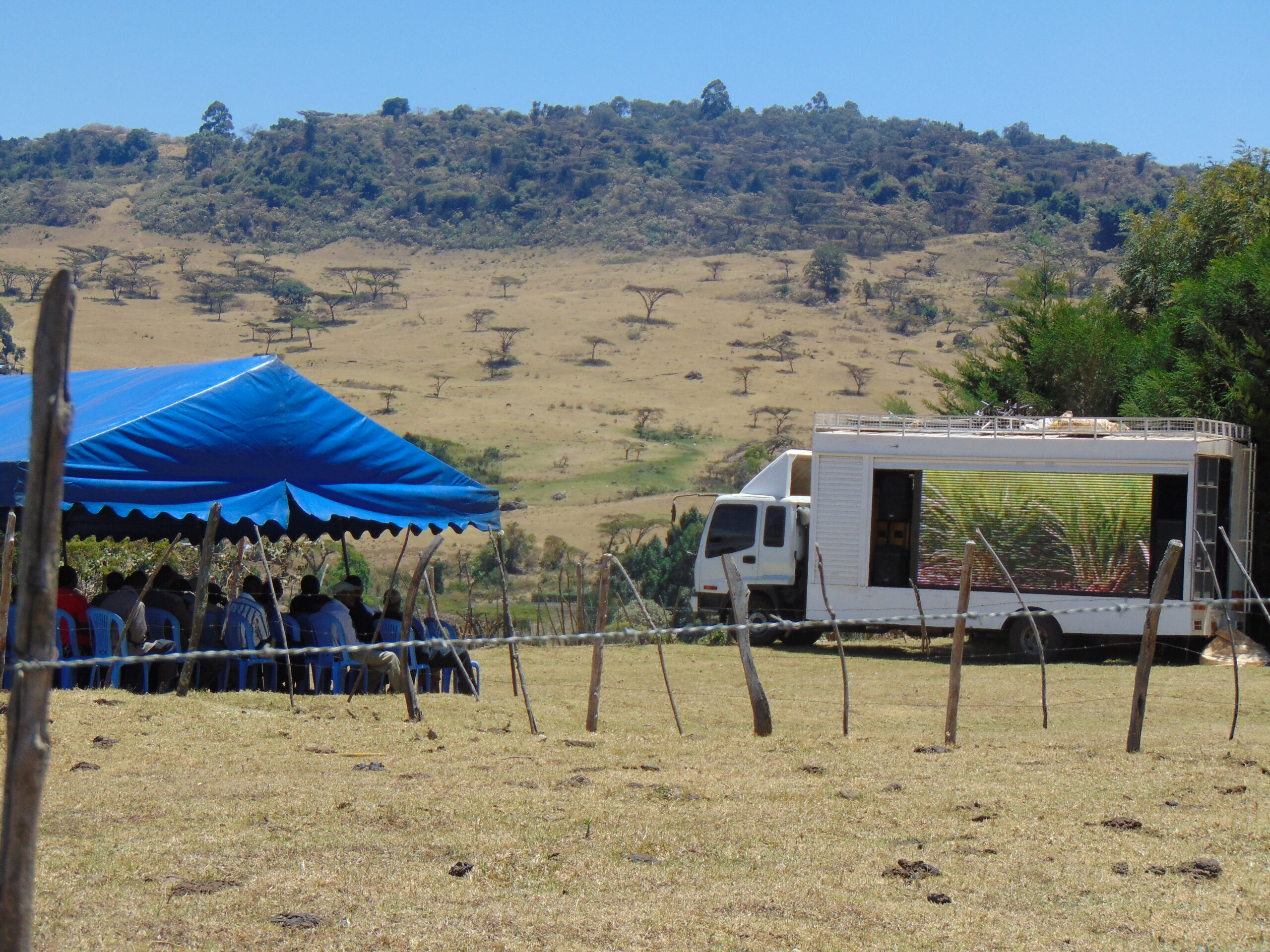
To ensure behavior change, the project supplemented video lessons with hands-on demonstrations and demonstration plots.
Beyond training, the project strengthened farmer business organizations (FBOs) to aggregate demand for services and negotiate sales with formal processors, which helped secure better prices and de-risk loans from commercial lenders. A critical component of the strategy was closing the mechanization gap by establishing sustainable mechanization service providers (MSPs). The project identified entrepreneurs, linked them to financing for tractor purchases, and trained them to provide professional plowing and planting services to smallholders.
Results: Higher Farmer Incomes, Better Yields, and Expanded Mechanization
Between 2014 and 2017, the MTU project has achieved significant economic and productivity milestones:
- Income Generation: Helped 47,194 beneficiaries earn an additional $29.9 million in attributable income.
- Yield Improvements: In Ghana, participating farmers saw yield increases between 73% and 460% depending on the crop. Specific maize yields for participants rose to 2,737 kg/ha compared to 508 kg/ha for reference farmers.
- Dairy Productivity: In Kenya, milk production at participating FBOs increased by 41%.
- Mechanization: Facilitated the sale of 48 tractors and established or strengthened 43 MSPs.
- Financial Inclusion: Facilitated $2.4 million in new financing for farmers and service providers.
- Women’s Economic Empowerment: Women represented one-third of total project beneficiaries. In Kenya, 78% of female participants demonstrated retention of good agricultural practices.