




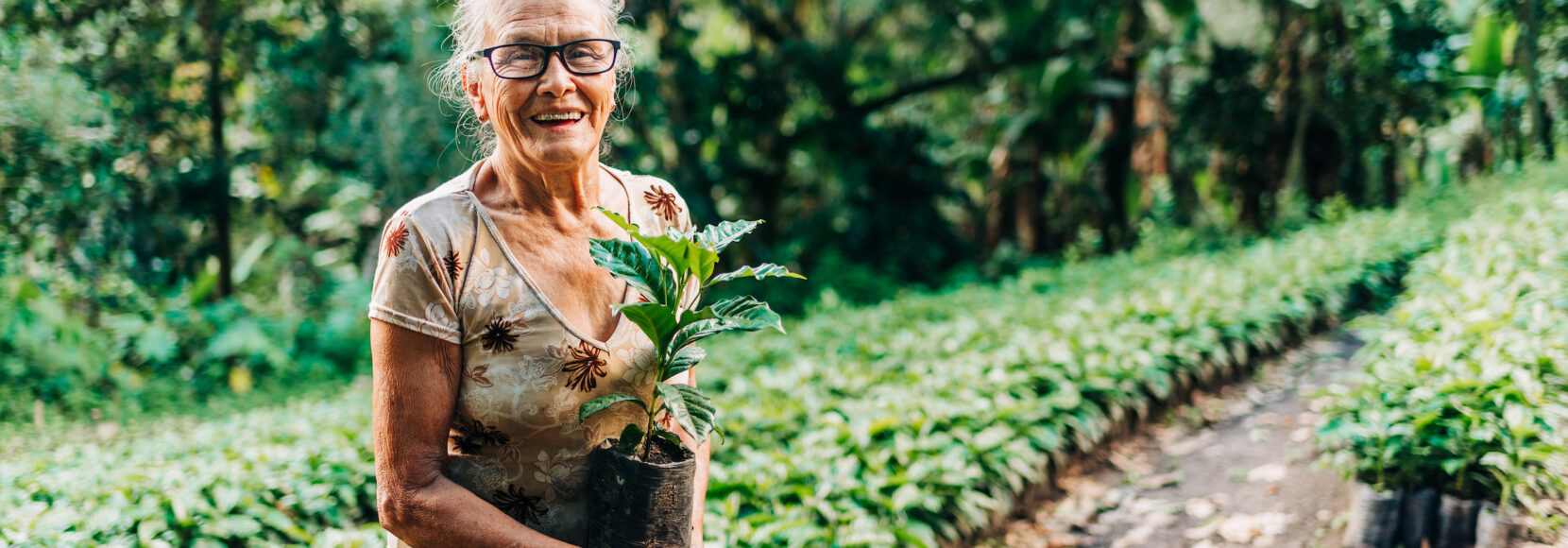
Project Years: 2014-2017
Better Coffee Harvest
The Better Coffee Harvest (Cosechemos Más Café) project was a four-year initiative funded to reduce poverty and increase farm sales for coffee farmers in El Salvador and Nicaragua.
Opportunity
Coffee is an important source of income for smallholder farmers in El Salvador and Nicaragua, but the coffee leaf rust epidemic damaged farms and weakened already limited productivity. At the start of the Better Coffee Harvest project, 89% of participating farmers in El Salvador and 55% in Nicaragua had farms affected by leaf rust. Many farmers also had limited access to healthy planting material, practical agronomic advice, and financing for farm rehabilitation.
These pressures were especially serious because participating farmers depended heavily on coffee: the crop accounted for nearly 80% of income among participants in El Salvador and 65% among those in Nicaragua. Rebuilding productivity required farmers to renovate aging or damaged plots while maintaining short-term income, a difficult trade-off because newly planted coffee can take several years to produce.
Strategy
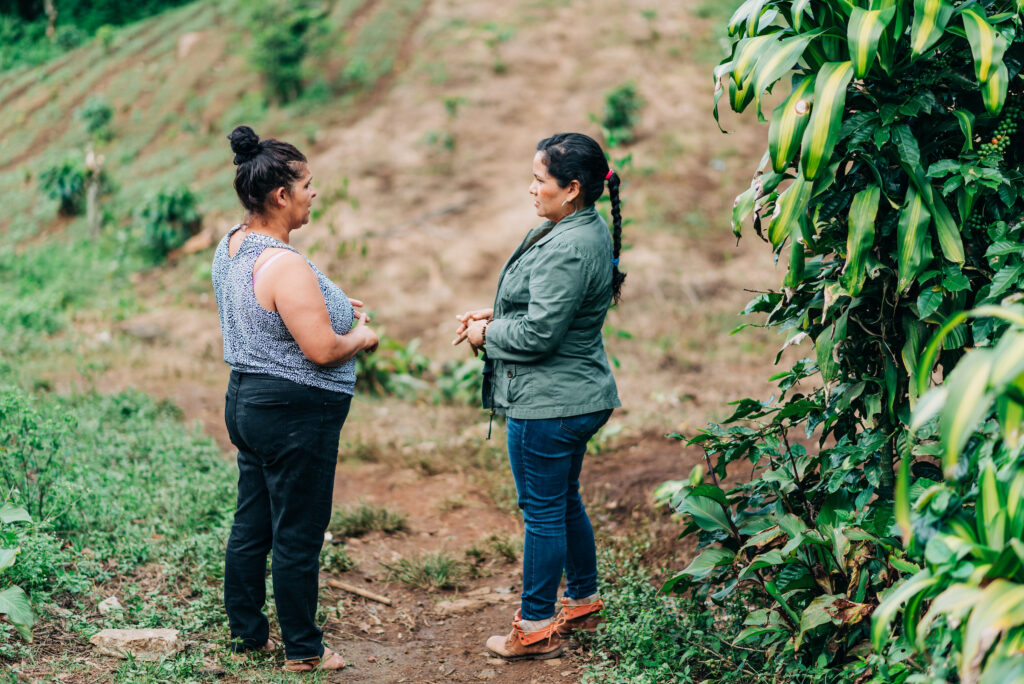
The four-year, $3.9 million Better Coffee Harvest project worked with smallholder coffee farmers to strengthen their farms and their connections to the coffee market. TechnoServe recruited community-based trainers and used its CREATE adult-learning approach, which emphasizes hands-on practice and peer learning. Farmers met monthly in groups of 20 to 30 at demonstration plots, where they learned techniques such as soil nutrition, tissue and shade management, leaf rust control, farm renovation, safe agrochemical use, financial management, and coffee marketing.
The project also worked with cooperatives, exporters, lenders and public agencies to improve access to planting material, technical services, finance and buyers. TechnoServe helped lenders offer more flexible products to smallholder farmers, trained farmers to make informed borrowing decisions and supported loan applications. In Nicaragua, the project partnered with the Institute of Plant and Animal Health (IPSA) to pilot certification for four coffee nurseries, helping them apply good agricultural practices and sell verified seedlings.
Results
Farmers trained: The project trained approximately 11,000 farmers overall. About 9,500 attended more than one training and were registered as project participants, exceeding the target of 6,000; 27% of registered participants were women.
Practice adoption: The project estimated that 92% of registered participants—equivalent to approximately 8,700 farmers—adopted at least one recommended good agricultural practice, and 25% adopted all the practices promoted by the project.
Higher productivity: The project estimated a 50% overall productivity gain by comparing baseline and endline data from a randomly selected cross-sectional sample of 274 farms. Reported cohort gains were 86% in El Salvador and 28% and 36% in Nicaragua.
Access to finance: The project facilitated $2.4 million in loans for nearly 2,000 farmers. This included direct loans from local lenders and financing channeled through cooperatives, enabling farmers to invest in their farms.
Demonstration plots: Farmers practiced new techniques at 411 coffee demonstration plots in El Salvador and Nicaragua; 23% of the plots were hosted by women. The project also established 81 plots for alternative crops such as plantain, chia and passion fruit.
Certified seedlings: Four Nicaraguan nurseries achieved IPSA certification and sold 28,000 certified coffee seedlings at a 60% premium over non-certified seedlings, generating $4,590 in sales.
Partners
U.S. Agency for International Development (USAID)
J.M. Smucker Company
PIMCO Foundation